
I’m thrilled to welcome author Robert Porter to What Cathy Read Next today to talk about his novel The Winter Raven: The Pirate of Boscastle Bay which was published on 10th September 2026. The Winter Raven is available to purchase as an ebook or in paperback from Amazon.
As you’ll learn from his guest post, when it comes to creating vivid historical fiction, for Robert it’s all about location, location, location.
About the Book
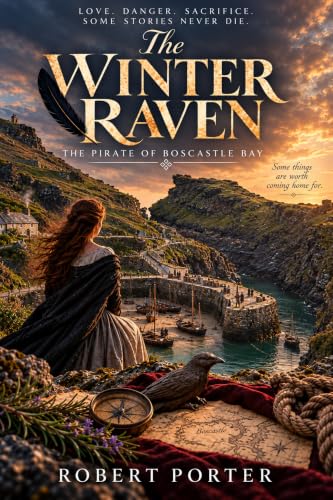
Boscastle, Cornwall. When pirate captain Elias Teach comes ashore to rob the village, he does not expect Anne Penrose – or the life she makes him imagine beyond the sea.
Across winters of danger, separation and return, their love becomes bound to stolen gold hidden beneath the floorboards of a white house overlooking the harbour. But the Royal Navy is closing in, and the future they have been quietly buying may cost more than either imagined.
Blending historical adventure, romance and Cornish folklore, The Winter Raven is a story of love, memory and the uneasy place where lived truth becomes legend.
Find The Winter Raven on Goodreads
The Pirate Came Second: Why Boscastle Had to Come First by Robert Porter
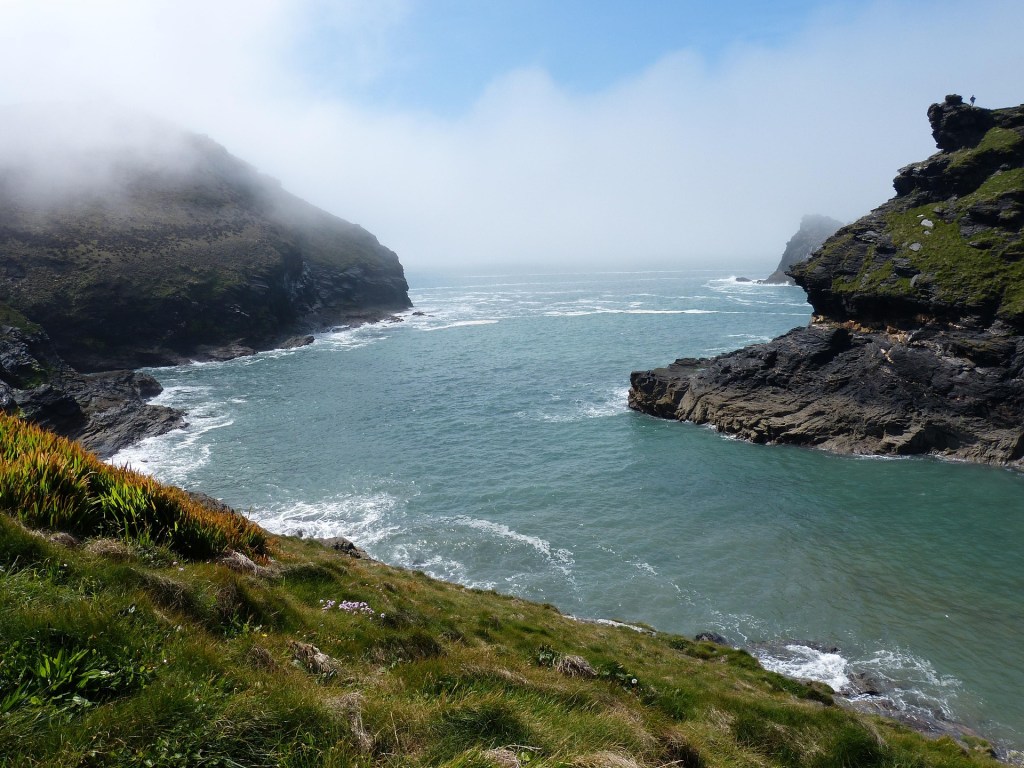
When I began writing The Winter Raven, I wasn’t looking for a picturesque Cornish harbour in which to drop a pirate. It happened the other way around. Boscastle came first.
I’ve known this part of Cornwall for years, and there is something about Boscastle that makes the imagination work a little harder. In summer it can be beautiful and welcoming, but picture it in winter: the crowds gone, rain driven sideways from the Atlantic, mist in the harbour mouth, slate roofs shining with water and the cliffs closing around the sea. It feels older. It feels like a place where a story might survive long after the people in it have gone.
That was the beginning. I started wondering what Boscastle might have felt like centuries ago, when a sail appearing beyond the harbour did not necessarily mean trade was coming. Sometimes it meant trouble. Somewhere in that thought, Captain Elias Teach began to exist.
I didn’t want Elias to become the familiar storybook pirate. No exaggerated swagger, no man who exists simply to be dangerous and romantic. I wanted a man who could command a ship and frighten people, certainly, but who could also be ridiculous, uncertain and unexpectedly vulnerable when confronted with something far more difficult than the sea: the possibility of an ordinary life.
Then came Anne Penrose. She was never going to be a woman standing patiently at a window waiting to be rescued. She argues with Elias, laughs at him, challenges him and sees the parts of him that the legend would eventually erase. Their relationship gradually became the heart of the book.
One of my favourite ideas in the novel is that the extraordinary thing they dream about isn’t treasure. It’s normality. A house. Horses. A kitchen garden. A fire that belongs to them. A door Elias can walk through without first looking over his shoulder. For two people living the lives they do, ordinary things become almost impossibly extravagant.
That contrast also shaped the treasure beneath the floorboards. Gold usually represents freedom in pirate stories. Here it becomes something sadder: a future converted into metal. The closer Elias and Anne get to having enough to escape, the more vulnerable that imagined life becomes.
I also wanted Boscastle’s folklore to work the way folklore often does in real life. Stories change as they are retold. Awkward facts disappear. Coincidences acquire meaning. People become cleaner, darker, braver or more tragic than they really were. By the end of The Winter Raven, there is a difference between what happened to Anne and Elias and what Boscastle chooses to remember about them.
That interested me enormously because history and legend often occupy the same landscape. We can stand in a real place, know that generations lived and worked there, and still find ourselves asking what might have happened on the same ground when nobody was recording it.
So although The Winter Raven contains piracy, stolen gold, danger, romance and Cornish folklore, I think its real subject is memory: what people preserve, what they change, and what gets lost between a life being lived and a story being told.
Perhaps that’s why Boscastle had to come first. Elias and Anne belong to the story, but the harbour is what makes their legend possible. Long after the characters have gone, the cliffs remain, the Atlantic still enters through that narrow harbour mouth, and winter still has a way of making old stories feel just a little less impossible.
About the Author

Robert Porter is a British author whose fiction spans historical adventure, supernatural horror, mystery, speculative fiction and dark fantasy. His stories explore memory, grief, consequence, identity and the choices ordinary people make when confronted by extraordinary circumstances.
In The Winter Raven he has turned to the wild Cornish coast and the age of piracy, weaving history, romance and folklore into a story about the difference between the lives people truly lived and the legends left behind.
Connect with Robert
Goodreads


