About the Book
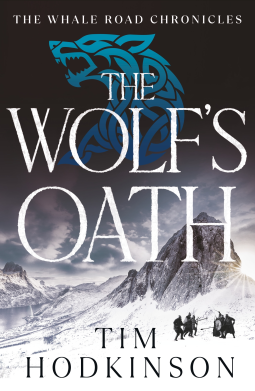
938 AD. Einar leads the Wolf Coats back to the northern realms to honour a comrade’s last request.
When they encounter a fearsome band of mercenaries the Wolf Coats are vehemently opposed to joining forces… until a violent skirmish makes both sides realise they will be stronger together.
Einar and his crew must prove themselves to their new allies by investigating strange tales of bloodshed in the far north. To complete this mission, Einar must cross swords with allies of his most bitter enemy.
Einar will either win renown and respect – or the infamy of death and dishonour.
Format: Paperback (432 pages) Publisher: Head of Zeus
Publication date: 8th October 2026 Genre: Historical Fiction
Find The Wolf’s Oath on Goodreads
Purchase The Wolf’s Oath from Bookshop.org [Disclosure: If you buy books linked to our site, we may earn a commission from Bookshop.org, whose fees support independent bookshops]
My Review
The Wolf’s Oath is the ninth book in The Whale Road Chronicles series. If you haven’t read the earlier books in the series don’t worry because there are brief recaps of previous events and introductions to the members of the Wolf Coats. They may have different backgrounds, faiths and personal histories but they are all skilled warriors bound by oaths of loyalty and comradeship.
The momentous events at the end of the last book, The Blazing Sea, mean Einar Thorfinnsson has been thrust into the role of leader of the Wolf Coats. It’s not something he wanted and he often feels the burden of responsibility for making life or death decisions. Nor has his leadership been met with universal approval. Only loyalty to the person from whom he inherited the role keeps the Wolf Coats united… for now. Einar knows that at some point he’s going to be challenged and the time will come when he must prove his worth as a leader.
With the promise of gold, the Wolf Coats travel to Hålogaland in the far north of Norway, an area inhabited by the Finni, a people steeped in magic. It’s an inhospitable place, a land of vast forests and bogs which is snowbound for much of the year. It’s also a place of folklore and superstition, with tales of elves and trolls who prey on the unwary. Not to mention the wolves and marauding bears. Their other reason for agreeing to undertake this long and dangerous voyage is the possibility it may allow them to fulfill a dying wish.
Their destination is the location of a fierce tussle for control between rival kings that has seen settlements destroyed and their inhabitants slaughtered without mercy. The identity of the assailants is unknown but there are strange reports of men with the heads of beasts, the dead returning to life and giants spouting fire. Einar and his comrades suspect there’s a more down to earth explanation especially as there’s one particular aspect they’ve encountered before, with deadly results.
Those who like their historical fiction to have plenty of action won’t be disappointed. There are brutal initiation tests, tavern punch-ups, ambushes, a holmgang (the Viking equivalent of a duel to the death) as well as plenty of narrow escapes. The climatic battle scene involves the Wolf Coats putting every last ounce of strength they have into maintaining a shield wall, although even that may not be enough.
As always there’s a wealth of authentic detail about everything from weaponry to social and religious customs. There are fantastic new characters to meet, as well as a few surprises for both the Wolf Coats and the reader.
I received an advance reader copy courtesy of Head of Zeus via NetGalley.
In three words:Thrilling, action-packed, immersive
Try something similar: A Night of Flames by Matthew Harffy
About the Author

Tim Hodkinson grew up in Northern Ireland where the rugged coast and call of the Atlantic ocean led to a lifelong fascination with Vikings and a degree in Medieval English and Old Norse Literature. Tim’s more recent writing heroes include Ben Kane, Giles Kristian, Bernard Cornwell, George R.R. Martin and Lee Child. After several years in the USA, Tim returned to Northern Ireland, where he lives with his wife and children.
Connect with Tim
Website | X/Twitter | Goodreads