Top Ten Tuesday is a weekly meme created by The Broke and the Bookish and now hosted by Jana at That Artsy Reader Girl.
The rules are simple:
Each Tuesday, Jana assigns a new topic. Create your own Top Ten list that fits that topic – putting your unique spin on it if you want.
Everyone is welcome to join but please link back to That Artsy Reader Girl in your own Top Ten Tuesday post.
Add your name to the Linky widget on that day’s post so that everyone can check out other bloggers’ lists.
Or if you don’t have a blog, just post your answers as a comment.
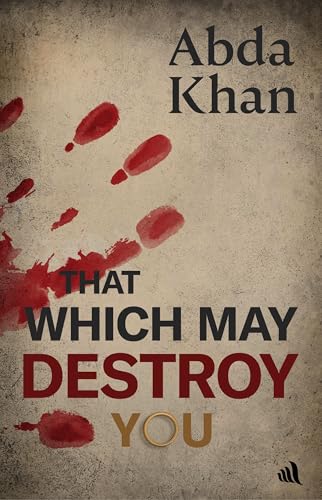
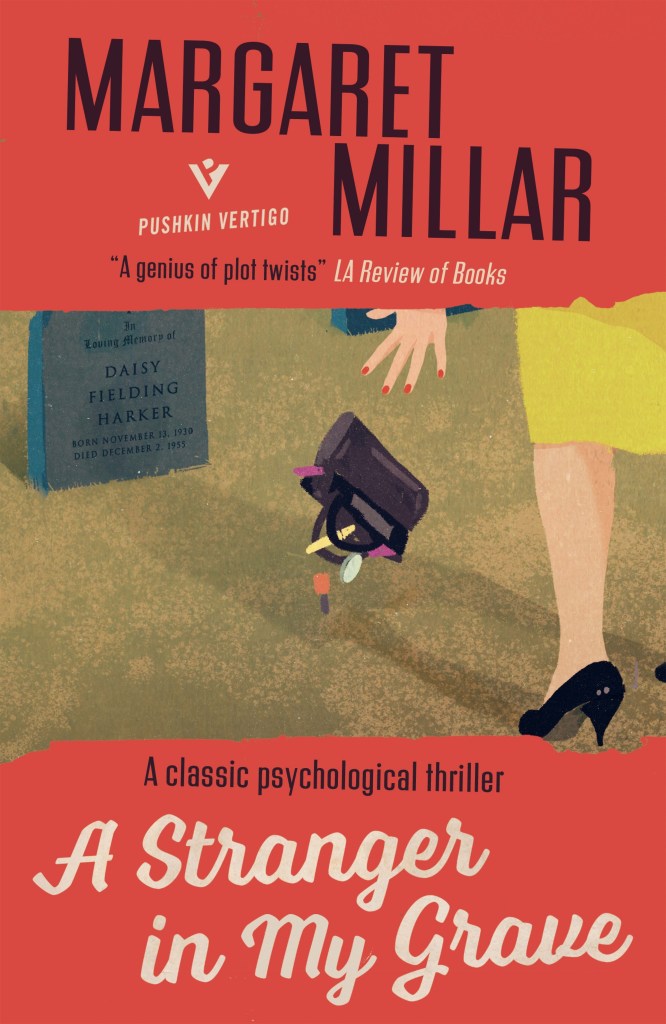
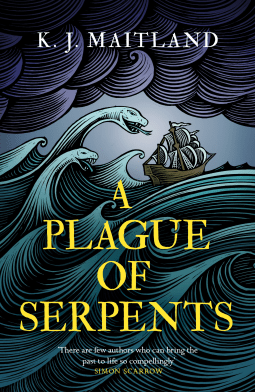
This week’s Top Ten Tuesday is a freebie on the theme of Halloween. My take is Things You Wouldn’t Want To Encounter On Halloween…especially in an empty house. Links from each title will take you to my review or the book description on Goodreads.
Wednesday – As always #WWWWednesday is a weekly opportunity to share what I’ve just read, what I’m currently reading and what I plan to read next… and to take a peek at what others are reading.
Thursday – I published my review of The Wolf’s Oathby Tim Hodkinson.
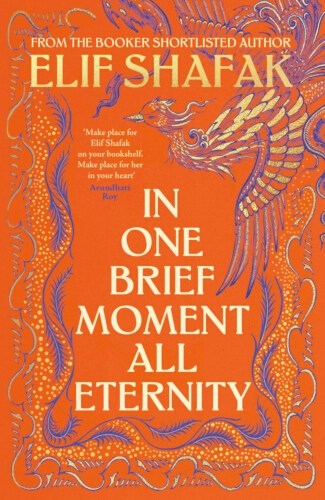
During a time of great turmoil, Gustave Flaubert created literature’s most scandalous heroine: Madame Bovary. He then poisoned her with arsenic. But what if, 175 years later, Emma – and the women history overlooked – could seize the quill from his hands and tell a different story?
In One Brief Moment All Eternity is a luminous reinvention of an iconic male writer, told through the eyes of the women – real and fictional – who shaped him: a devoted nursemaid, an Egyptian dancer and a passionate, jealous lover who refuses to be forgotten. Through their voices, visionary author Elif Shafak creates both an intimate portrait of a great artist and an epic meditation on storytelling itself: who gets remembered, who gets erased, and how can literature endure through political upheaval, war and injustice? When the world feels broken, how do we find the hope to carry on?
Shafak takes readers on an extraordinary journey through time and space, from Flaubert’s unusual childhood in a house that was part home, part hospital, part morgue, to nineteenth-century Paris during the Revolution, and onwards to Istanbul, Cairo, Palestine and Beirut. In this exhilarating tale, the questions at the heart of her work take on a thrilling new urgency: who gets to speak, and what would the silenced have said?
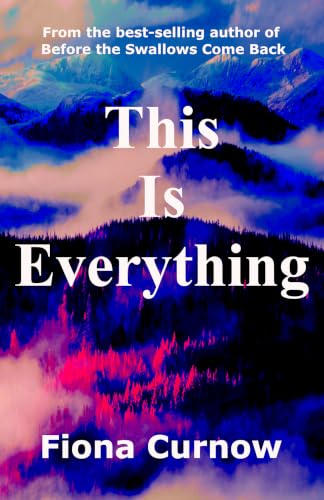
From the best-selling author of Before the Swallows Come Back comes a powerful story of escape, of survival, of the strength found in the wilderness for those who seek it, and of love.
This is unique. This is everything. They cannot be apart.
They thought she was broken. They called her ‘Psycho Susan.’ But then Rufus came along and saw her true beauty. Together, they faced the unimaginable – a murder that forced them into hiding in the harsh yet breathtaking Scottish Highlands. Alone now, Susan must tap into an inner strength she never knew existed.
Can she survive without him?
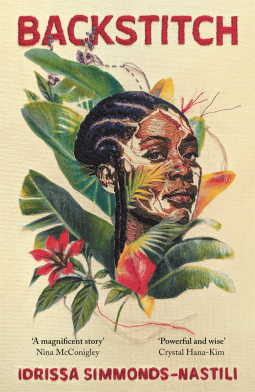
Backstitch by Idrissa Simmonds-Nastili (Mantle via NetGalley)
Serenity Marcelin is still reeling from the recent loss of her beloved mother when she agrees to take her six-year-old daughter, Jouvay, to carnival.
There, in the pulsing heat of the crowd, Serenity loses her grip on Jouvay’s hand for a second, and the little girl disappears into the night.
Close to losing hope, the arrival of an ancestral ghost in her small apartment convinces Serenity that the key to this mystery lies in her family’s shocking past . . .
Told through three generations of the Marcelin family, and moving from Haiti during the US occupation to the vibrant streets of New York, Backstitch weaves together the intimate secrets of a family with the sweeping history of a nation.
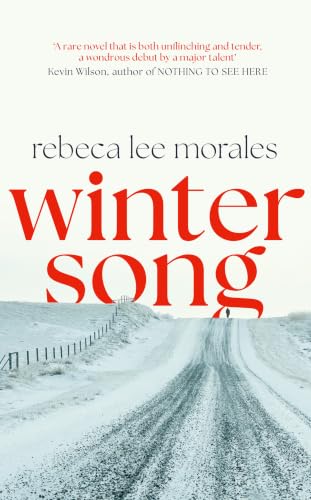
Winter Song by Rebeca Lee Morales (The Borough Press via NetGalley)
It is 1986, deep winter, in the hinterlands of Minnesota, a place so remote that the world beyond its borders barely registers. Two men face each other down across this frozen landscape: Byron Lugo, just released from prison for a hit-and-run he swears he didn’t commit, and Gordon Trent, the weary police chief who brought him in.
As Byron struggles to claw back his old life in a town convinced of his guilt, his determination forces Trent to assess his judgement, his choices, and ultimately his legacy.
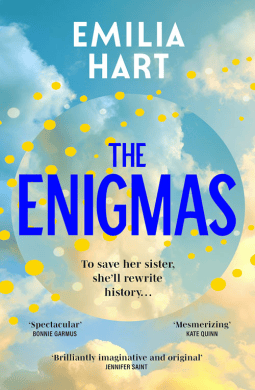
The Enigmas by Emilia Hart (The Borough Press via NetGalley)
What would we risk to save the people we love?
It is 1940, and Beatrice Bone does not want to turn twenty-eight. She longs for adventure like the heroines of her favourite novels, but instead finds herself locked away in her parents’ house by a mother determined to keep her safe from a world at war.
Then her sister Clemmie gives her a birthday gift: a pocket watch, inscribed with two words. Memento Mori. Remember you must die.
Days later, Clemmie is dead.
In her grief, Beatrice would do anything to wrench time backwards. And then, impossibly, she finds that she can.
But what future will unfold when the past is rewritten?
What I’m currently reading
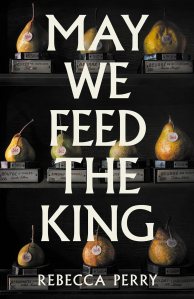
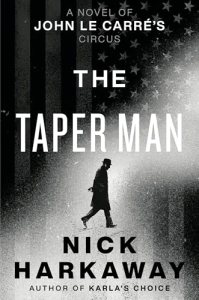
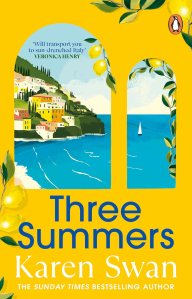
I’m close to finishing May We Feed the King by Rebecca Perry, I’m reading The Taper Man by Nick Harkaway from my NetGalley shelf and I’m listening to the audiobook of Three Summers by Karen Swan, my book club’s pick for October.