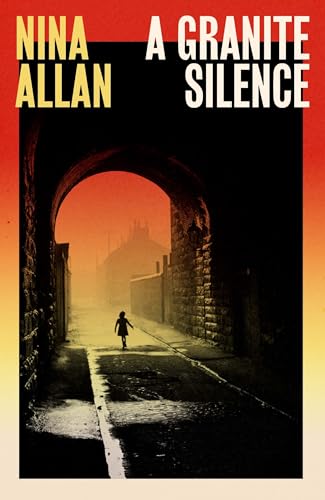
Book Review – A Granite Silence by Nina Allan

About the Book

A Granite Silence is an exploration – a journey through time to a particular house, in a particular street, Urquhart Road, Aberdeen in 1934, where eight-year-old Helen Priestly lives with her mother and father.

Among this long, grey corridor of four-storey tenements, a daunting expanse of granite, working families are squashed together like pickled herrings in their narrow flats. Here are Helen’s the Topps, the Josses, the Mitchells, the Gordons, the Donalds, the Coulls and the Hunts.

Returning home from school for her midday meal, Helen is sent by her mother Agnes to buy a loaf from the bakery at the end of the street. Agnes never sees her daughter alive again.

Nina Allan explores the aftermath of Helen’s disappearance, turning a probing eye to the close-knit neighbourhood – where everyone knows everyone, at least by sight – and with subtlety and sympathy, explores the intricate layers of truth and falsehood that can coexist in one moment of history.

Format: ebook (352 pages) Publisher: riverrun
Publication date: 10th April 2025 Genre: Historical Fiction

Find A Granite Silence on Goodreads

Purchase A Granite Silence from Bookshop.org [Disclosure: If you buy books linked to our site, we may earn a commission from Bookshop.org, whose fees support independent bookshops]

My Review

In A Granite Silence the author takes a very different approach from many other historical novels based on true crime cases. Although, in fictional form, the facts of the case from the crime itself through the investigation, identification of the culprit and eventual trial are described, there’s great inventiveness in the way this is done.

The author takes the reader on a series of journeys exploring the social environment, the early lives of Helen’s mother and father, as well as those who interact in various ways with the Priestly family such as neighbours, teachers, etc. These are a combination of fact and fiction in varying degrees. In some cases they are almost completely a flight of the author’s imagination perhaps sparked by a particular real life character, an object or event.

As well as the author’s own commentary on her research, three other female characters with an interest in the case appear, a theme common to all being that of digression. There’s Rose, a journalist who moves into an Aberdeen apartment hoping to write a book about the Priestly case but who becomes intrigued by the story of the apartment’s previous occupant. Then there’s Pearl who, like the author, has set out to write a historical novel about Helen’s death but becomes distracted by the need to resolve a personal mystery. Lastly there’s Susana, a Russian author for whom the Priestly case inspires a work of experimental fiction.

I admired the author’s inventive approach although there were times the book went off at too much of a tangent for me and I struggled with its disjointed structure. For example, I confess to skimming a lengthy chapter about Robert Burns’s epic poem Tam o’ Shanter just because Helen wore a blue tam o’shanter hat. Characters come and go, some storylines finish in dead ends and the narrative moves back and forth in time. That’s either going to spark your interest or test your powers of concentration, possibly your patience.

As the investigation progresses, particularly the forensic analysis, details of the crime emerge that are shocking in nature. Is it prurient to want to know this sort of detail? Would we, like so many people at the time, jump to a conclusion about the person responsible? Would we treat a refusal to answer questions – the ‘granite silence’ of the book’s title – as evidence of guilt?

At one point, the author acknowledges her desire for knowledge, albeit in a different context but I think applicable to her approach in this book. ‘As always, I want to know more. I want to discover the personalities and predicaments at the heart of the case, to get to know their history at a level that does them justice.’

A Granite Silence is not a novel with a linear structure. Think of it more as an exploration of the different ways in which true crime stories can be told.

In three words: Inventive, discursive, original
Try something similar: The Mouthless Dead by Anthony Quinn

About the Author
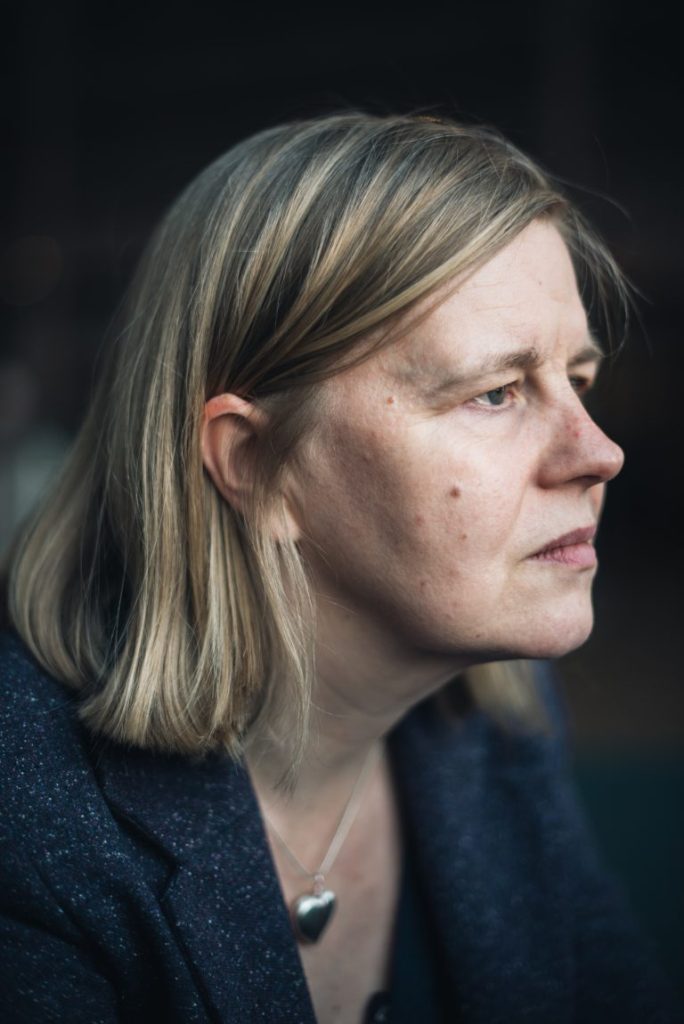
Author photo by Diana Patient

Nina Allan is a novelist and critic. In 2018 she was named as one of the Guardian‘s Fresh Voices: 50 Writers You Should Read Now. She is the recipient of the British Science Fiction Award, the Kitschies Red Tentacle and the Grand Prix de L’imaginaire. In 2025 her novel The Good Neighbours was awarded the Prix Medicis Etranger. Her most recent novel is A Granite Silence, a historical true crime mystery. The Illuminated Man: Life, Death and the Worlds of J. G. Ballard, written together with her husband Christopher Priest, is published by Bloomsbury Continuum in 2026.

Connect with Nina
Website

Book Review – The Eights by Joanna Miller

About the Book

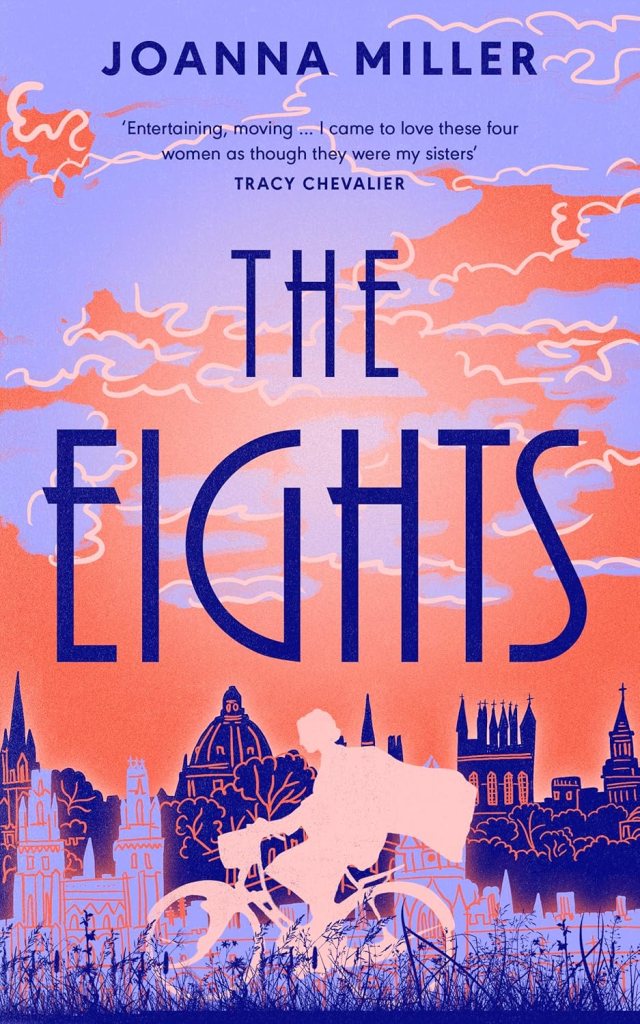
Front cover of The Eights by Joanna Miller

They knew they were changing history. They didn’t know they would change each other.

Oxford, 1920. For the first time in its 1000-year history, the world’s most famous university has admitted female students. Giddy with dreams of equality, education and emancipation, four young women move into neighbouring rooms on Corridor Eight. They have come here from all walks of life, and they are thrown into an unlikely, life-affirming friendship.

Dora was never meant to go to university, but, after losing both her brother and her fiancé on the battlefield, has arrived in their place. Beatrice, politically-minded daughter of a famous suffragette, sees Oxford as a chance to make her own way – and her own friends – for the first time. Socialite Otto fills her room with extravagant luxuries but fears they won’t be enough to distract her from her memories of the war years. And quiet, clever, Marianne, the daughter of a village vicar, arrives bearing a secret she must hide from everyone – even The Eights – if she is to succeed.

But Oxford’s dreaming spires cast a dark shadow: in 1920, misogyny is still rife, influenza is still a threat, and the ghosts of the Great War are still very real indeed. And as the group navigate this tumultuous moment in time, their friendship will become more important than ever.

Format: ebook (369 pages) Publisher: Penguin
Publication date: 3rd April 2025 Genre: Historical Fiction

Find The Eights on Goodreads

Purchase The Eights from Bookshop.org [Disclosure: If you buy books linked to our site, we may earn a commission from Bookshop.org, whose fees support independent bookshops]

My Review

One of the brilliant things about The Eights is how it explores the impact of the First World War not just on those directly affected – the bereaved, those left with life-changing physical injuries or psychologically damaged – but on wider society. And how, two years on, it still permeates many aspects of life including a kind of survivor’s guilt in which it feels wrong to find enjoyment in things. ‘Still, it would be nice to look at the sky, a painting, or a flower one day and admire it just for itself, to feel no dread, no shame.’

Having achieved the right to attend Oxford University, the four women who become friends when they are allocated to the same corridor in St Hugh’s College might have expected to be able to concentrate on their studies. However what they encounter is continuing opposition to women’s right to university education, even outright hostility. They have to endure everything from ragging by male students to dismissive remarks about women’s intellectual ability from staff of other Oxford colleges. University publications include articles in which Oxford’s women are lambasted for being ‘prudish old maids one week and frivolous husband-hunters the next’, are mocked for being either ‘too dowdy or too attractive’, categorised as being ‘too feeble-minded or too diligent’, criticized for breaking rules or slavishly adhering to rules. Essentially the women cannot win, there is no room for error. They are always held to higher standards than their male counterparts.

The author gives the four women different social backgrounds, back stories and motivations for studying at Oxford University.

Otto is the most lively character, always the first to suggest a jape or an outing and not afraid to ignore the strict rules laid down for female students. What we learn, however, is the confident exterior she presents to the world is a mask. Her sense of guilt about her shortcomings as a VAD caring for severely wounded men during the war is never far away. She’d always imagined she’d be up to tackling any challenge but knows she failed this particular one. There’s a particularly sobering moment when she realises cruel gossip she overhears is about her. We learn Otto is a brilliant mathematician so perhaps a role in code-breaking beckons in years to come?

My favourite character was Beatrice. I loved seeing how she grew in self-confidence, following a distressing incident earlier in her life, and became more comfortable in her own skin. Dora represents the many young women whose future – marriage, starting a family – looked assured but was suddenly changed because of the war. Now women outnumber eligible young men or those that do remain carry the mental and physical scars of war. Dora’s story also allows the author to introduce an element of mystery. The gentle Marianne’s secret wasn’t particularly hard to guess but the author still wrongfooted me about one aspect of it.

The singular terminology of Oxford University features throughout the novel – tutes, cuppers, chap rules, the Bod, the Rad. Luckily there is a glossary to help with the more unfamiliar terms. There’s also a very interesting list of key dates in the development of women’s education, including the founding of Somerville College where Vera Brittain and Winifred Holtby (both of whom make brief appearances in the novel) studied, to the appointment of Baroness Amos as the first black woman to head an Oxford college in 2020. Plus, always a joy, there’s a map.

As The Eights discover, the University is a place of rules. For the female students, the rules are particularly strict, laughably so to our modern eyes with permission required for all sorts of minor things or the presence of chaperones. Descriptions of events such as the Summer Eights rowing races or May Morning celebrated on 1st May which begins at 6am with Magdalen College Choir singing a hymn from Magdalen Tower, immerse you in the rituals of Oxford life.

If you are fond of a romantic storyline you’ll find it in this book. If you’re interested in women’s emancipation then you’ll learn much about that struggle. But, above all, The Eights is an engaging story of female friendship.

In three words: Fascinating, emotional, heartwarming
Try something similar: Testament of Youth by Vera Brittain

About the Author

Joanna was raised in Cambridge and studied English at Exter College, Oxford. After a decade working in education, she set up an award-winning poetry gift business. She has recentlygraduated from Oxford agai, with a dilpoma in creative writing. She lives with her husband and three children in Hertfordshire. The Eights is her first novel.

Connect with Joanne
Website | X | Facebook | Instagram