
About the Book
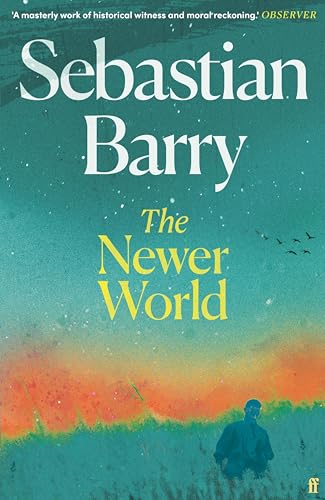
I knew as I made my way home that there was no home. All the old things . . . were gone forever.
Against the rapidly shifting landscape of post Civil War America, Tennyson Bouguereau – freed man, devoted brother, nascent singer, conflicted soldier and wanted man – journeys to find meaning and belonging.
From the relative safety of home in Tennessee with his sister Rosalee, he is offered the possibility of a whole new life in Nashville, until a surprising trip to Victorian England changes everything.
Format: Hardback (272 pages) Publisher: Faber & Faber
Publication date: 10th September 2026 Genre: Historical Fiction
Find The Newer World on Goodreads
Purchase The Newer World from Bookshop. org [Disclosure: If you buy books linked to our site, we may earn a commission from Bookshop.org, whose fees support independent bookshops]
My Review
In The Newer World Sebastian Barry returns to the characters who first appeared in Days Without End, which won the Walter Scott Prize for Historical Fiction 2017, and its sequel, A Thousand Moons.
Days Without End told the story of Thomas McNulty and John Cole, whilst A Thousand Moons continued their story but from the point of view of Winona, the orphaned Indian girl they adopted. Our narrator in this book is the wonderfully named Tennyson Bouguereau, a freed man living with his twin sister Rosalee on a small Tennessee farm owned by Lige Magan. Also living there now are Thomas and John, who both served with Lige in the army, and their daughter Winona. Although The Newer World can be read as a standalone it does overlap with events in the earlier books. Personally, I found myself wishing I’d had time to reread the first two books before reading this one to refresh my memory about how they intersect.
In Tennyson Bouguereau, the author has once again created a distinctive and unforgettable narrative voice. As he sets out to recount the story of his life, he warns, ‘I’m not going to tell you just a pretty story. I will give you the actual matters.’ So we learn of his tragic family history, the cruelty endured by enslaved people and that being freed doesn’t bring an end to hatred, bigotry and violence. That deference remains a way to divert attention from yourself, although even that is not necessarily a guarantee of safety, as he discovers.
Following the outcome of a violent attack on the farm, Tennyson is forced to flee for his life. He receives a lifeline from an enlightened lawyer in the form of a place at a college for black freedmen and women in Nashville. There he meets George, a fellow student and ex-soldier who takes Tennyson under his wing. He also meets a young woman, Minnie, who captures his heart. As members of the college’s choir Tennyson, George and Minnie travel the country performing the songs sung in the fields by slaves. Eventually the choir travels to England where audiences greet their performances with acclaim rather than the hostility they experience in America.
‘Then noise, noise never heard before, not just like that, those held-in lungs now filled again with air, everywhere arms were raised, human persons embracing, now one hat thrown into the air, now a hundred, now a thousand, a stampede of cries, the hats turning in the half-darkness and seeming to float in those weird new seconds without clocks, such shouts thrown upward after them, wild sparks of freedom, a brimming fire of joy.’
Tennyson’s friendship with George will last for decades and inform many of Tennyson’s life choices. Together they share many experiences, both good and bad.
Tennyson’s life is one shaped by external events which on many occasions leave him feeling adrift. Rosalee’s letters are infrequent and because of his itinerant lifestyle he often learns of events long after they have taken place. He aches to return to the farm and to Rosalee, but is fearful of the consequences. Even if he does make it back what will he find? In fact, is there such a thing as ‘home’ for him anymore?
I was completely absorbed by Tennyson’s story. I really loved the sense of a man looking back on his life and reflecting on both the good and the bad points with insight and a degree of equanimity.
‘No one admires an old man – an old man is for the muckheap. But, granting that, there isn’t a living child that will not be old by and by. It’s the by and by that confounds you, how quick that comes. And all the things that bothered you and hampered your gait when you were young, they begin to seem like vanished riches. […] We have got our sole legend, our passage through, our mark we left on the path, where we stubbed our toes, where we broke things off. So I guess that’s old man’s riches, what he has got anyhow.’
It’s possible The Newer World is a finale to the trilogy and, if so, it’s a fitting one that has immersed the reader in the lives of very different characters. However, there’s enough in the final pages to make me think the story needn’t necessarily end here.
I received an advance reader copy courtesy of Faber & Faber via NetGalley.
In three words: Powerful, moving, evocative
About the Author
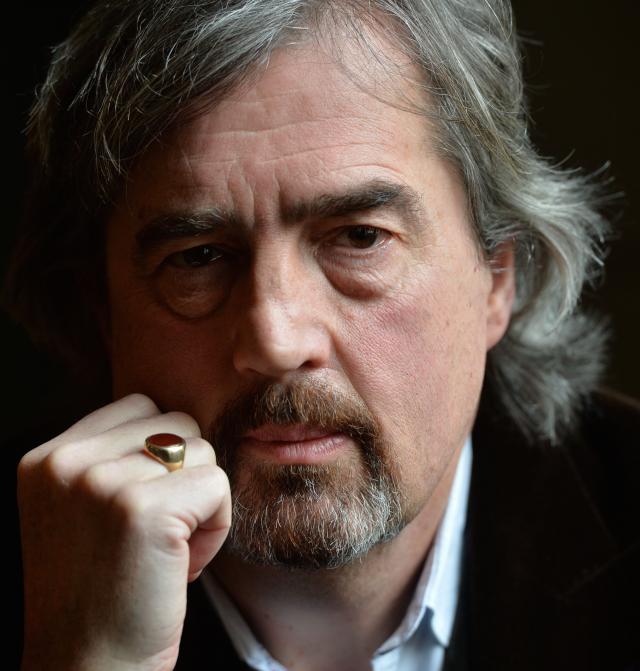
Sebastian Barry was born in Dublin in 1955. The 2018-2021 Laureate for Irish Fiction, his novels have twice won the Costa Book of the Year award, the Independent Booksellers Award and the Walter Scott Prize. He had two consecutive novels shortlisted for the Man Booker Prize, A Long Long Way (2005) and the top ten bestseller The Secret Scripture (2008), and has also won the Kerry Group Irish Fiction Prize, the Irish Book Awards Novel of the Year and the James Tait Black Memorial Prize.
He lives in County Wicklow. (Photo: Publisher author page)


I’ve just reviewed this one today as well and had similar feelings about it. Sebastian Barry always writes so beautifully and I loved Tennyson’s narrative voice.
LikeLiked by 1 person
Yes, I saw you’d reviewed it and deliberately didn’t read it until I’d finished writing mine!
LikeLiked by 1 person
And given that you both read and reviewed it you know that I will be highlighting it for the reading challenge statistics post which will go up today!
Thanks to you both for sharing your reviews with the Historical Fiction Reading Challenge!
LikeLike