
I’m delighted to welcome author Gabriel Tait to What Cathy Read Next today. Gabriel’s novel Meeks was published in September 2023 and is available to purchase in paperback or as an ebook from Amazon UK. Canadian readers can purchase it here.
The Ranleigh Tapes, the follow-up to Meeks, was published in 2025 and Echo, the final book in the trilogy, is due out next year.
In Gabriel’s fascinating guest post he explains why it wasn’t until he turned fifty that he was able to write the novel he’d had in his head for thirty years. Aspiring authors… it’s never too late!
About the Book
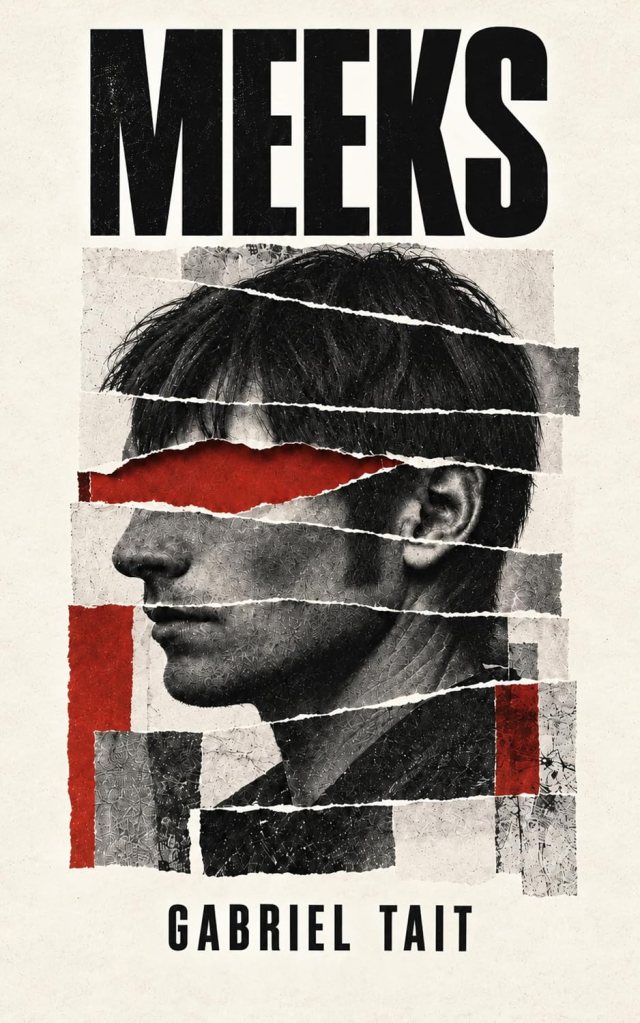
Ranleigh Meeks believes a better life is waiting for him. He is right. That is where the trouble begins.
Meeks follows one man’s increasingly desperate pursuit of the person he believes he was meant to become.
Darkly funny, emotionally raw and deeply unsettling, it asks how much of ourselves we can abandon before there is no one left to come home.
Find Meeks on Goodreads
Why I Didn’t Start Writing Fiction Until I Was Fifty – A Guest Post by Gabriel Tait
I didn’t start writing fiction until I was about fifty. Before that, I’d worked in sales and marketing, raised a family and spent years rebuilding my life in recovery. Writing a novel wasn’t something I’d been quietly doing on weekends.
But I did have an idea.
I’d come up with it when I was about twenty. It had a hook and a strong pivot, and those were the things that kept it alive in my head. I carried it around for the next thirty years without doing anything about it.
A year or two before I started writing, I told my children the story. They thought it sounded interesting and encouraged me to write it. So when I began thinking about doing something completely unexpected at fifty, the idea was already there.
I wouldn’t call it a midlife crisis. I don’t subscribe to those. I wanted to do something I hadn’t done before. Something that would surprise my family, but more importantly, surprise me.
So I sat down to write a novel.
The first thing I did was reread Stephen King’s On Writing. I figured that if I followed his advice closely enough, I might make it through a first draft. The working title was The Desert. It eventually became Meeks.
I didn’t have a detailed outline. I didn’t really know who Ranleigh Meeks was. The characters, structure and much of the story developed as I went along. There were Post-it notes everywhere around my desk, mostly to keep the timelines straight.
Even the opening got away from me. What I thought would be a short prologue became thirteen chapters covering roughly two days in nine-year-old Ranleigh’s life. Apparently, I had more to say about a visit to Grandma than I’d anticipated.
I started writing in October and finished the first draft in May. It was around 130,000 words.
Then I put it away for six weeks, following King’s advice. When I picked it up again, parts felt as though someone else had written them. Some passages were surprisingly good. Others were almost laughably bad. I found the whole experience quite amusing.
But the bones were there.
Over roughly six drafts, I cut material, removed characters, changed settings and reworked the structure. I also typed the entire novel out again with each new draft. It gave me plenty of opportunities to become thoroughly sick of the main character’s original name, Raymond.
His replacement eventually turned up on a Toronto street sign: Ranleigh Avenue.
Looking back, I don’t think I could have written Meeks when I first had the idea at twenty. I needed the thirty years in between. By fifty, I’d experienced addiction, hit my own bottom and spent almost two decades in recovery. I’d listened to thousands of other people’s stories.
That experience helped me write Ranleigh as a human being who was struggling. I didn’t want to lecture readers or turn him into a caricature of an addict. I wanted to tell a psychological thriller that kept people turning the pages.
When I published Meeks, I thought I’d finished his story. Readers began asking about his childhood, and those questions helped inspire The Ranleigh Tapes. It took a completely different form: a fictional memoir presented through a recorded confession.
I still don’t really consider myself a writer, in quotes. Writing was a byproduct of wanting to tell Ranleigh Meeks’s story.
I carried the idea for thirty years. I never expected it to become three books.
About the Author

Gabriel Tait is a Toronto novelist and the author of Meeks and The Ranleigh Tapes. He began writing fiction at fifty, returning to a story idea he had carried for nearly thirty years. His books explore addiction, identity and self-deception.
Connect with Gabriel
Website | TikTok


