
About the Book
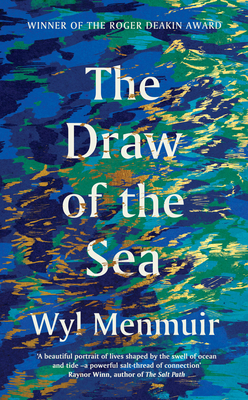
Since the earliest stages of human development, the sea has fascinated and entranced us. It feeds us, sustaining communities and providing livelihoods, but it also holds immense destructive power which can take all those away in an instant.
It connects us to far away places, offering the promise of new lands and voyages of discovery, but also shapes our borders, carving divisions between landmasses and eroding the very ground beneath our feet.
In this beautifully-written meditation on what it is that draws us to the waters’ edge, author Wyl Menmuir tells the stories of the people whose lives revolve around the sea in the Cornish community where he lives.
Format: Hardback (299 pages) Publisher: Aurum
Publication date: 5th July 2022 Genre: Nonfiction
Find The Draw of the Sea on Goodreads
Purchase The Draw of the Sea from Bookshop.org [Disclosure: If you buy books linked to our site, we may earn a commission from Bookshop.org, whose fees support independent bookshops]
My Review
I was fortunate enough to meet Wyl when we were both members of the judging panel for the Winston Graham Historical Prize 2026. At the time he was engaged in restoring a sixteen foot wooden Wayfarer dinghy at the National Maritime Museum in Falmouth. The project is documented in his latest book, Seaworthy, due for publication in 2028 but if you can’t wait that long you can find lots about the restoration on his YouTube channel.
For many years now my husband and I have made an annual trip to Falmouth and it’s always a thrill when the train crosses the Tamar Bridge and we know we’ve arrived in Cornwall. Therefore it was an obvious choice for me to pick up Wyl’s book The Draw of the Sea since much of the book focuses on Cornwall, his adopted county, along with the Scilly Isles. (Since The Draw of the Sea was published, Wyl has written two further books: The Heart of the Woods, about the role of trees and woodlands in our lives, and The Spirit of Stone, which explores the ways in rock and earth form part of our identities, histories and futures.)
The Draw of the Sea is the product of Wyl’s conversations with people who are drawn to, and interact, with the sea in different ways. Everyone from sailors, fishermen, surfers and marine biologists to pilot gig rowers, artists and even mermaids. As he notes wryly, ‘Ask ten different people what they see when they look at the coastline and you will get eleven different answers.’ The beachcombers (known as ‘wreckers’ in Cornwall), watching for the approach of storms or scanning online forums for news of container spills. Surfers, watching for the perfect wave. Gig rowers and sea swimmers, seeking out flat, sheltered water.
There is a really engaging personal element to the book. We get to learn a lot about Wyl’s own interests: surfing, sailing, swimming, beachcombing. There’s a lovely section in which he describes a day out with his wife, son and daughter searching for cowrie shells on a sandbar. ‘While the finding of cowries is an individual pursuit, the keeping of them is not. We admire each other’s finds and then pool them. At home, we have a glass jar on a shelf on the French dresser to which we add our cowries. […] They are a family archive of time spent together. […] They are heavy with memory, of the sensation of the sun on my back, the squelch of bladder-wrack and kelp beneath my feet, of the sound of the children laughing together.’
His curiosity and willingness to ‘get stuck in’ is evident as he tries his hand at crafting a belly board, learning how to free dive and joining the crew of a three-masted tall ship in Svalbard.
As you might expect, there is a strong ecological message. One of the very early chapters focuses on the prevalence of plastic and other detritus of human activity amongst things washed up by the sea. Bizarrely, this includes LEGO pieces from a container spill in the 1990s, with particular items being prized by collectors. And he describes the rise of protest groups such Surfers Against Sewage. Perched on a cliff top looking out to the horizon, he observes, ‘It would be easy to believe the sea went on forever, that it would take all we could throw at it and then some. It is the kind of thinking that got us to where we are now, the kind of thinking that runs along the lines that the seas are big enough to restore themselves, that they will continue to provide as they always have done, the the warning signs we are seeing now are blips.’
The book has some wonderful black and white photographs. I particulary enjoyed the Glossary of Sea Words which includes many old Cornish words. For example, ‘bremming’ the term for the glow caused by a school of mackerel when they disturb phospherescent blooms or ‘cowsberny’ to describe a sea that is the colour of cow dung.
The Draw of the Sea is a fascinating book that will make you reflect on your own relationship with the sea, whether that’s memories of childhood seaside holidays building sandcastles, cliff top birdwatching, walking coastal paths or simply enjoying the sheer thrill of watching waves crash against the shore.
The Draw of the Sea is book 15 of my 20 Books of Summer.
In three words: Thought-provoking, insightful, expansive
Try something similar: Dark, Salt, Clear by Lamorna Ash
About the Author

Wyl Menmuir is an award-winning author based in Cornwall. His 2016 debut novel, The Many, was longlisted for the Man Booker Award Prize and his second novel, Fox Fires, was published in 2021. Wyl has written for BBC Radio 4’s Open Book, The Guardian and The Observer, and his short fiction has been published by the National Trust and Nightjar Press among others. He is co-creator of the Cornish writing centre, The Writers’ Block, and lectures in creative writing at Falmouth University.
Connect with Wyl
Website | Facebook | Instagram | YouTube


