
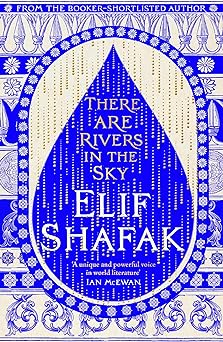
About the Book
In the ruins of Nineveh, an ancient city of Mesopotamia, there lies, hidden in the sand, fragments of a long-forgotten poem, the Epic of Gilgamesh.
In Victorian London, an extraordinary child is born at the edge of the dirt-black River Thames. Arthur’s only chance of escaping poverty is his brilliant memory. When his gift earns him a spot as an apprentice at a printing press, Arthur’s world opens up far beyond the slums, with one book sending him across the seas: Nineveh and Its Ruins.
In Turkey in 2014, Narin, a Yazidi girl living by the River Tigris, waits to be baptised with water brought from the holy Lalish in Iraq. The ceremony is cruelly interrupted, and soon Narin and her grandmother must journey across war-torn lands in the hope of reaching the sacred valley of their people.
In London in 2018, broken-hearted Zaleekhah, a hydrologist, moves to a houseboat on the Thames to escape the wreckage of her marriage. Zaleekhah foresees a life drained of all love and meaning, until an unexpected connection to her homeland changes everything.
Format: Hardcover (484 pages) Publisher: Viking
Publication date: 8th August 2024 Genre: Historical Fiction
Find There Are Rivers in the Sky on Goodreads
Purchase There Are Rivers in the Sky from Bookshop.org [Disclosure: If you buy books linked to our site, we may earn a commission from Bookshop.org, whose fees support independent bookshops]
My Review
This was a book club pick and I’m so grateful to the person who chose it because it has been sitting on my bookshelf ever since I bought a copy at last year’s Henley Literary Festival. I loved it and, with one exception, all the other book club members enjoyed the book as well.
I can’t summarise it better than the first sentence on the inside front cover: ‘This is the story of one lost poem, two great rivers and three remarkable lives – all connected by a single drop of water.’ I usually run a mile at the prospect of any element of magical realism in a book but I found it easy to accept the concept that a single drop of water could manifest itself in different forms, repeatedly changing from liquid to solid to vapour and back again over vast periods of time. ‘Water is the consummate immigrant, trapped in transit, never able to settle.’
The drop of water is not the only thing that connects the three characters and their stories. There are myriad others, some very small details – an oak tree, the colour lapis lazuli, mudlarking – that give you moments of pleasure when you spot them. And there are larger themes such as environmental pollution, climate change, migration, and social and economic inequality, that run through all three stories.
Storytelling is a big part of Narin’s story. Her grandmother tells her stories from Yazidi culture as they make the long journey to Iraq. It’s poignant because not only have the Yazidi been reduced in number because of systemic persecution but Narin is losing her hearing so this is her last chance to commit them to memory. Memory is another theme, particularly in relation to immigrants who carry with them stories from their heritage even while adjusting to a new one, making them members of what the author dubs ‘the memory tribe’.
Arthur’s story is the standout part of the book, not just because of the depth of his characterisation but because of the epic journey the author sends him on fuelled by his learning of the ancient city of Nineveh, once the largest city in the world but reduced to a ruin over the centuries. Arthur’s possesses a photographic memory, is able to solve complex mathematical problems in his head and has the ability to interpret patterns. (Today we might classify him as neurodivergent.) His ability to see patterns enables him to decipher the cuneiform tablets displayed in the British Museum, in particular those fragments that record, in incomplete form, the ancient poem the Epic of Gilgamesh. It fuels in him an insatiable desire to travel to the site of Nineveh in the hope of uncovering the lost fragments that tell the story of a great flood, predating that of Noah’s Ark in the Bible. (Arthur is based on George Smith, the first person to translate the Epic of Gilgamesh.)
In Arthur’s story, I loved the way the author conjured up the sights and sounds of Victorian London, the London of Dickens who actually makes a fleeting appearance. ‘Above and around him London wakes up – the scullery maids, the crossing-sweepers, the fish-curers, the dog-killers, the caddy-butchers, the costermongers, the coffin-makers, the rat-catchers, the long-song-sellers . . . Noise escalates, movements multiply; the city gushes forth, like a fountain that never runs dry.’
Perhaps, as some of my fellow book club members felt, the author tries to cram in too many ideas, some of which are not developed, and perhaps Zaleekhah’s story is the least compelling but, for me, the quality of the writing and the wonderful connections between the storylines outweighed any shortcomings. I also love a historical novel that teaches me things I did not know and makes me want to find out more about them. There Are Rivers in the Sky did just that. I very rarely reread books but this one may be the exception.
In three words: Epic, immersive, multi-layered
Try something similar: The Romantic by William Boyd
About the Author
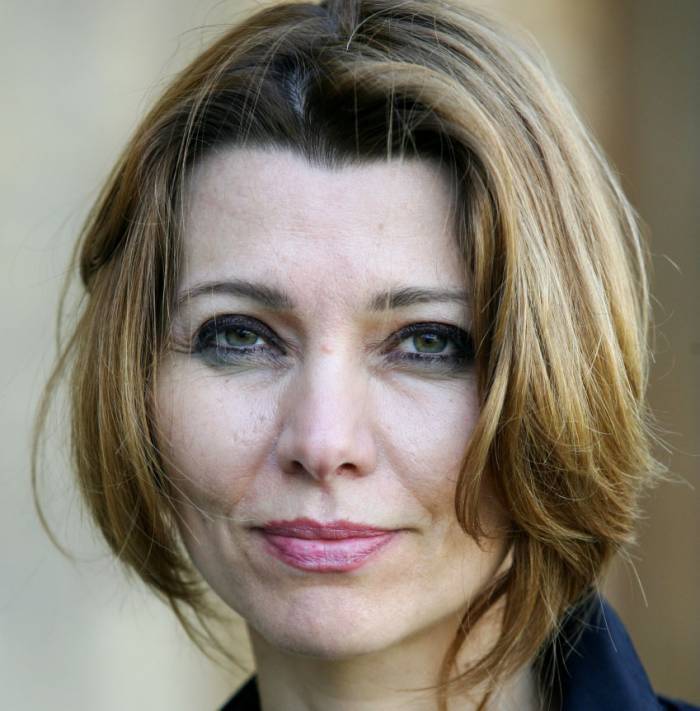
Elif Shafak is an award-winning British Turkish novelist, whose work has been translated into fifty-six languages. The author of nineteen books, twelve of which are novels, she is a bestselling author in many countries around the world. Shafak’s last novel, The Island of Missing Trees, was a top ten Sunday Times bestseller and was shortlisted for the Costa Novel Award and the Women’s Prize for Fiction. Her novel 10 Minutes 38 Seconds in This Strange World was shortlisted for the Booker Prize and the RSL Ondaatje Prize.
Connect with Elif
Website | X/Twitter | Instagram

 What Cathy Read Next...
I have read a couple of Elif Shafak novels now and have LOVED them both. I highly recommend the Island of Missing Trees if you haven’t read that! I really need to get myself organised and read another one of her books before too long.
Thanks for sharing this review with the Historical Fiction Reading Challenge.
LikeLike
I have a copy of The Island of Missing Trees but haven’t yet got around to reading it. I must make time.
LikeLike