Buchan of the Month: Mr. Standfast by John Buchan

Buchan of the Month

JohnBuchanThrillersAbout the Book

“First we must go through the Valley of the Shadow…And there is the sacrifice to be made…the best of us.”

It is 1917 and Richard Hannay is brought out of the battlefield to perform the desperate task of tracking down and destroying a network of German spies.  Hannay’s opponent is Moxon Ivery, the bland master of disguise, who seeks to outwit Hannay and he and his agents are pursued through England, Scotland, France and Switzerland.

For its pace and suspense, its changes of scene, and thrilling descriptions of the last great battles against the Germans, Mr Standfast offers everything that has made its author so enduringly popular.

Format: Paperback (354 pp.)        Publisher: Oxford University Press
Published: 1993 [1919]                  Genre: Thriller, Adventure

Purchase Links*
Amazon.co.uk  ǀ  Amazon.com  ǀ Hive.co.uk (supporting UK bookshops)
*links provided for convenience, not as part of any affiliate programme

 Find Mr. Standfast on Goodreads


My Review

Mr. Standfast is the third book in my Buchan of the Month reading project.  For a spoiler-free introduction to Mr. Standfast, including details of its first publication and context, click here.  To find out more about the project and my reading list for 2018, click here.

Before I say any more, I’ll confess that Mr. Standfast is a book I’ve read many times before and it happens to be one of my favorite Buchan books (alongside Sick Heart River, which I shall be reading later this year).  For me, it has everything: a mystery, some thrilling set pieces, great characters, numerous locations, a touch of romance and some chilling scenes on the battlefields of World War One France.  I always get a bit tearful at the end.  As well as being a very entertaining book, Mr. Standfast explores some serious themes – courage, fortitude, sacrifice.

Since the title refers to one of the characters in John Bunyan’s The Pilgrim’s Progress, it’s probably no surprise that Mr. Standfast has a number of allusions and references to Bunyan’s work.  The Pilgrim’s Progress was an important text for Buchan and it informs many of the themes in Mr. Standfast mentioned above.  Full disclosure: my dissertation for my MA in English from The Open University was on the subject of the influence of The Pilgrim’s Progress on John Buchan’s books.  Don’t worry, I’m not going to test your patience by quoting from it extensively.  However, just a few thoughts on the connections between the two texts…

In his autobiography Memory-Hold-The-Door, Buchan attributes his regard for The Pilgrim’s Progress to ‘its picture of life as a pilgrimage over hill and dale, where surprising adventures lurked by the wayside, a hard road with now and then long views to cheer the traveller and a great brightness at the end of it’.   The reference to the journey being ‘over hills and dales’ acknowledges that life brings moments of difficulty and challenge as well as ease, involving either physical or mental effort. The  journey features ‘surprising adventures’ – the use of the word ‘adventures’ rather than ‘experiences’ suggesting that these will be exciting episodes – but these ‘lurk’ by the wayside.  There is a sense of the unexpected, of danger in the choice of the word ‘lurk’.  All of these elements I feel are apparent in Mr. Standfast.

As well as having thematic influences, The Pilgrim’s Progress, as a physical object, plays a role in Mr. Standfast.  It acts variously as a prize, a code-book and a source of moral comfort.

For example, The Pilgrim’s Progress is one of Peter Pienaar’s few cherished possessions; with the Bible, it acts as a source of comfort during his captivity in a German prisoner-of-war camp.  Pienaar, one of the most endearing characters in Mr. Standfast, is described as ‘puzzling over it’, using it as one of his ‘chief aids in reflection’ and for ‘self-examination’.  Peter searches The Pilgrim’s Progress for examples that he can apply to his own predicament.  Charmingly, Peter takes everything in The Pilgrim’s Progress literally and talks about the character Mr. Standfast ‘as if he were a friend’.  Arguably, Peter’s identification with the characters in The Pilgrim’s Progress in part inspires his actions at the end of the book.

For Richard Hannay, The Pilgrim’s Progress has a more practical and utilitarian function; he describes it as one of his ‘working tools’.  For example, it alerts Hannay to the fact that someone has searched his belongings as he observes ‘a receipted bill which I had stuck in The Pilgrim’s Progress to mark my place had been moved’.  Later, it provides a method of authenticating the character Hannay has adopted (he likes his disguises!).  Producing his copy of The Pilgrim’s Progress to the old postmistress of a Highland village, it creates a shared cultural connection between them as she comments, ‘I got it for a prize in the Sabbath School when I was a lassie’.

One of the most notable roles for The Pilgrim’s Progress in Mr. Standfast is as a means of communication between Hannay and his comrades.  This discourse operates at two levels: as a common language to express feelings, anxieties and hopes and, at a practical level, as a code for secret communications between the characters.  In particular, The Pilgrim’s Progress becomes a key part of the burgeoning relationship between Mary Lamington and Hannay.   At one point, Hannay sends a message of reassurance for Mary: ‘If you see Miss Lamington you can tell her I’m past the Hill Difficulty.  I’m coming back as soon as God will let me’.

There is a lot more I could say on the links between the two texts but I’ll just close by saying that Mr. Standfast is a great story even if you have no knowledge of The Pilgrim’s Porogress.  If, however, you are familiar with Bunyan’s work, you’ll have fun spotting other references and allusions.  I think Mr. Standfast is the best of Buchan’s Richard Hannay adventures and one of the finest books he wrote.

Follow my blog with Bloglovin

In three words: Thrilling, action-packed, moving

John BuchanAbout the Author

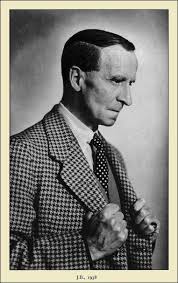
John Buchan (1875 – 1940) was an author, poet, lawyer, publisher, journalist, war correspondent, Member of Parliament, University Chancellor, keen angler and family man.  He was ennobled and, as Lord Tweedsmuir, became Governor-General of Canada.  In this role, he signed Canada’s entry into the Second World War.   Nowadays he is probably best known – maybe only known – as the author of The Thirty-Nine Steps.  However, in his lifetime he published over 100 books: fiction, poetry, short stories, biographies, memoirs and history.

You can find out more about John Buchan, his life and literary output by visiting The John Buchan Society website.

An Engineered Injustice (Philadelphia Legal #2) by William L. Myers, Jr.

Philadelphia Legal Series

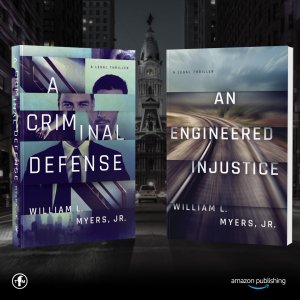
I’m delighted to welcome William L. Myers, Jr., author of the legal thriller, An Engineered Injustice, to What Cathy Read Next today.  An Engineered Injustice is the second book in the Philadelphia Legal series, the follow-up to the bestselling and much praised, A Criminal Defense.  I’ll admit I don’t read an awful lot of crime fiction or legal thrillers but I think I can spot the prospect of a good story when I see it.  Therefore, I quickly accepted William’s offer of a review copy of his book.  I’m really looking forward to reading An Engineered Injustice.  In the meantime, I’m pleased to bring you a fantastic Q&A with William.

If you’re tempted to enter the world of Philadelphia Legal, you can find purchase links below.

Follow my blog with Bloglovin


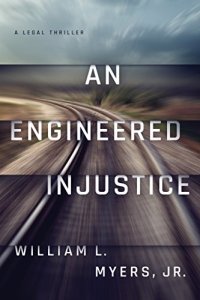
An Engineered InjusticeAbout the Book

What if the deadliest train wreck in the nation’s history was no accident?

When a passenger train derails in North Philadelphia with fatal results, idealistic criminal defense attorney Vaughn Coburn takes on the most personal case of his young career. The surviving engineer is his cousin Eddy, and when Eddy asks Vaughn to defend him, he can’t help but accept. Vaughn has a debt to repay, for he and his cousin share an old secret – one that changed both their lives forever.

As blame for the wreck zeros in on Eddy, Vaughn realizes there’s more to this case than meets the eye. Seeking the truth behind the crash, he finds himself the target of malicious attorneys, corrupt railroad men, and a mob boss whose son perished in the accident and wants nothing less than cold-blooded revenge. With the help of his ex-con private investigator and an old flame who works for the competition, Vaughn struggles to defeat powerful forces – and to escape his own past built on secrets and lies.

Format: ebook, paperback (317 pp.) Publisher: Thomas & Mercer (Amazon Publishing)
Published: 23rd January 2018             Genre: Crime, Thriller, Mystery

Purchase Links*
Amazon.co.uk ǀ  Amazon.com
*links provided for convenience, not as part of any affiliate programme

Find A Criminal Defence and An Engineered Injustice on Goodreads


Interview with William L. Myers, Jr., author of An Engineered Injustice

William, welcome to What Cathy Read Next!  Without giving too much away, can you tell me a bit about An Engineered Injustice?

An Engineered Injustice is a fast-paced, plot driven novel built around the crash of an Amtrak passenger train. The novel’s protagonist, attorney Vaughn Coburn, is the cousin of Eddy Coburn, the train’s engineer.  When Eddy turns to Vaughn for help, Vaughn has no choice but to answer the call; he owes Eddy as a result of something that happened when they were younger, an event that threw Eddy’s life into a tailspin while Vaughn skated through and went on to success. At the outset of the story, Vaughn expects he’s only going to have to help Eddy through the NTSB investigation. But Vaughn quickly realizes that the train crash was no accident and that Eddy is being set up to face criminal charges.

As the story unfolds, Vaughn finds himself pitted against the most powerful forces in Philadelphia, the villains who actually caused the crash and, even more worrisome, Jimmy Nunzio, a mob leader whose son was killed in the crash and who is seeking blood vengeance. Vaughn teams up with Erin Doyle, his strong-willed ex-girlfriend, and the two of them embark on a bold and dangerous plan to unmask the villains and save Eddy before Nunzio decides take his revenge. The protagonists’ quest takes them on a roller-coaster of ups and downs, both in and outside the courtroom and it isn’t clear until the very end whether they will succeed, or even live through it themselves.

An Engineered Injustice is the second book in your Philadelphia Legal series (the first being A Criminal Defense).  How, if at all, are the two books connected?

An Engineered Injustice takes place in the same world as does A Criminal Defense – the same law firm and the same city. Many of the characters are the same, though Vaughn, a secondary character in A Criminal Defense takes the lead in An Engineered Injustice, while Mick takes a supporting role. Perhaps the main differences in An Engineered Injustice are the introduction of Erin Doyle, Vaughn’s love interest, and Philly crime boss, Jimmy Nunzio.  In Erin Doyle, I wanted to pair Vaughn with a woman every bit his match in wits, legal skills and courage. Erin fits that bill, and then some. Jimmy Nunzio, a truly terrifying personality, was a fun character to write, and he will play a major role in the third book in the Philadelphia Legal series, which is entitled A Killer’s Alibi. Another difference between A Criminal Defense and An Engineered Injustice is that the latter is much more fast-paced than the former and places the protagonists in physical peril. [Great news for fans that there’s going to be a third book in the series!]

Your leading characters are attorneys: Mick McFarland in A Criminal Defense and Vaughn Coburn in An Engineered Injustice.  How much of them is based on your own experience as an attorney?

I’ve drawn parts of each character from attorneys I’ve had the fortune (and misfortune) to come up against in my practice. Mick is Machiavellian, very much the puppeteer. I’ve encountered one or two attorneys like that along the way. You learn a lot from them, usually the hard way. Vaughn is young and idealistic, like and I so many of my colleagues were when we first started out. He sets out to do the right thing but finds that sometimes he has to adopt an “ends justifies the means” attitude.

In both books, the lead character faces a conflict between finding the truth and bonds of friendship or family.  What is it about this that interests you? 

I believe this kind of conflict ads a layer of richness to the story and depth to the characters because it places great stress on the characters, who have to choose between working to achieve true justice and protecting the ones they love.

Is there a scene in the book you found particularly challenging or rewarding to write?  If so, why?

In A Criminal Defense, the hardest scenes to write were the confession scenes where the various culpable parties admit to their sins. I had to begin the scenes by making the reader think it was going to play out one way, and then pivot to the real shockers.  In An Engineered Injustice, the hardest scenes to write were the ones where Vaughn is facing off with Nunzio. I wanted to really bring home the danger Vaughn was in.

You’ve had a successful career as an attorney.  At what point did you decide to write a novel?

I’d like to say I’m an overnight success but I have actually been writing novels for twenty years. It took me that much time – and sweat – to learn the craft, and I always tell aspiring writers to stick with it, and, when reading other authors, to “read for craft” – that is, to read with an eye to learning.

What’s the key to keeping a reader turning the pages when writing a crime thriller?

The key, I believe, is to keep them guessing.  Make sure there are enough crests and valleys – and surprises! – along the way that the reader never knows what to expect and feels compelled to turn the page to see what’s going to happen next.

Do you have a special place to write or any writing rituals?

I like to say I do my best writing when I’m not writing. What I mean by that is that many of my best ideas, best scenes, best exchanges of dialogue, happen when I’m not sitting in front of my computer. Every morning, I walk my dogs in Valley Forge Park, and I can’t tell you how many times I’ve stopped, pulled out my iPhone and dictated for up to five minutes. (It irks the dogs to no end.) I also write during the day by stealing a few minutes here and there while practicing law. I find the writing breaks actually help my legal work, and vice versa.

Which other writers do you admire or enjoy reading?

I love Michael Connelly’s Bosche books and his Lincoln Lawyer series. Another favourite is Dennis Lehane. Perhaps my all-time favourite is Elmore Leonard; I enjoy his terse writing style and spot-on dialogue.

What are you working on next?

I’m just finishing the third book in the Philadelphia Legal series, entitled A Killer’s Alibi.  Mick returns as the protagonist to match wits with Jimmy Nunzio, who fights Mick every step of the way as Mick tries to clear him from murder charges.


William L Myers, Jr.About the Author

William L. Myers, Jr. is the 2017 No. 6 bestselling Kindle author for his debut novel, A Criminal Defense (Part 1 of the Philadelphia Legal series.) Once you pick up his legal thriller and bestselling novel, A Criminal Defense, it becomes obvious he is not new to the intricacies of the legal profession. Open A Criminal Defense and you’ll find yourself lost in a labyrinth of deceits and hidden agendas, a world where everyone has a secret. You never know what is going to happen next or when the plot is going to take another unexpected turn.  In Part 2, An Engineered Injustice (now available on Amazon), you’ll really feel what it’s like to be a young attorney in the trenches, beating the streets, against all odds.

Born in 1958 into a blue-collar family, Mr. Myers inherited a work-ethic that propelled him through college and into the Ivy League at The University of Pennsylvania School of Law. From there, Mr. Myers started his legal career in a Philadelphia-based mega defense firm. After ten years defending corporate America, he realized his heart wasn’t in it. So, with his career on the fast track to success – he gave it all up and started his own firm. It was time to start fighting for the common guy.  That was twenty-five years ago and, since then, he has focused on representing railroad employees and other honest, hard-working people who have been injured by others. He has represented thousands of clients in his tenure and has become a highly-regarded litigation attorney up and down the Eastern Seaboard.

Connect with William

Author Page  ǀ  Facebook  ǀ  Twitter  ǀ  Instagram ǀ Goodreads