
Welcome to day one of the blog tour for Those I Have Lost by Sharon Maas which is published today. My thanks to Sarah Hardy for inviting me to take part in the tour and to Bookouture for my digital review copy via NetGalley.
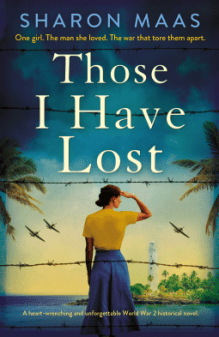 About the Book
A family on a faraway island. Seas crawling with Japanese spies. A terrible war creeping ever closer…
1940. When Rosie loses her mother and is sent to Sri Lanka to live with her mother’s friend Silvia and her three sons, her world changes in a heartbeat. As she is absorbed into the bosom of a noisy family, with boys she loves like brothers, she begins to feel at home.
But the war in Europe is heading for Asia. Searching for comfort from the bleak news and the bombings, Rosie meets a heroic soldier on leave, and falls in love for the first time. Yet the war will not stop for passion; he must move on, and she must say goodbye, knowing she might never see him again. She is left with just a memory.
Meanwhile, one by one, the men she considers brothers leave to fight for their island paradise. As she waits in anguish for letters that never come, tortured by stories of torpedoed ships and massacres of innocent families, she realises that she, too, must do her bit. Rosie volunteers to work in military intelligence, keeping secrets that will help those she loves and protect her island home. But then two telegrams arrive with the chilling words ‘missing believed captured’ and ‘missing believed dead’. Who of those that she loves will survive the devastating war, and who will she lose?
Format: ebook (430 pages) Publisher: Bookouture
Publication date: 9th July 2021 Genre: Historical Fiction
Find Those I Have Lost on Goodreads
Purchase links
Amazon UK
Link provided for convenience only, not as part of an affiliate programme
My Review
The early parts of the book deal with Rosie’s childhood, first in Madras and then in Sri Lanka (known at the time as Ceylon) where she is sent to live on the tea plantation owned by her late mother’s friend, Silvia (who Rosie refers to as Aunt Silvia) and her husband Henry. Rosie spends time with the two younger sons of the family, Victor and Andrew. (The eldest son, Graham, is away at boarding school in England.) She finds the two brothers very different in character. Whilst Andrew is ‘soft and gentle’, Victor is all ‘hard, tight-balled muscle and rough in manner’.
Since the brothers are away at boarding school for much of the time, initially it’s not quite the new family situation Rosie imagined when she left her grief-stricken father behind in Madras. However, she takes comfort in knowing she’s following the wishes of her late mother and in her friendship with a Tamil girl, Usha, the daughter of the family’s housekeeper. Even though their social positions are very different, Rosie has inherited the unusually enlightened views of her parents and their ‘sharp and disapproving eye for racial arrogance’. Unfortunately, things becomes complicated when Rosie can’t stop herself from interfering in affairs of the heart. She clings to the hope that one day she will have an opportunity to put things right.
Although I found the sections of the book covering Rosie’s childhood and early adolescence interesting, it was the outbreak of war in Europe that really brought the story alive for me. When its impact eventually reaches Ceylon it means big changes for all the family, including Rosie. The book description above gives you a pretty good idea how events unfold from this point on but I won’t spoil your reading enjoyment by answering the questions it poses at the end. Safe to say, in war nothing is certain, and grief and loss are only a telegram away. A section of the book I particularly enjoyed was one towards the end which focuses on Rosie’s war work, including an unexpected reunion.
The book’s prologue remained in the back of my mind throughout, making me wonder how the events it described would connect to Rosie’s story. Have patience, because eventually the different strands of the story do come together; in fact, fragments of the picture are revealed before that.
The author skilfully handles the multiple storylines whilst at the same time bringing to life the culture of both India and Sri Lanka through the descriptions of food, clothing and daily domestic life. Although a fairly chunky read, the book’s setting, the wartime backdrop and the element of romance means Those I Have Lost offers plenty for readers to enjoy.
In three words: Emotional, detailed, eventful
Follow this blog via Bloglovin
 About the Author
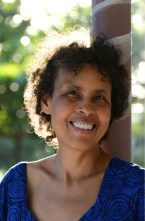
Sharon Maas was born into a prominent political family in Georgetown, Guyana, in 1951. She was educated in England, Guyana, and, later, Germany. After leaving school, she worked as a trainee reporter with the Guyana Graphic in Georgetown and later wrote feature articles for the Sunday Chronicle as a staff journalist. Her first novel, Of Marriageable Age, is set in Guyana and India and was published by HarperCollins in 1999. In 2014 she moved to Bookouture, and now has ten novels under her belt. Her books span continents, cultures, and eras. From the sugar plantations of colonial British Guiana in South America, to the French battlefields of World War Two, to the present-day brothels of Mumbai and the rice-fields and villages of South India, Sharon never runs out of stories for the armchair traveller.
Connect with Sharon
Website | Twitter

 How time flies because it’s time for another Classics Club Spin and a welcome prompt to read a book from my Classics Club list.


