My Week in Books – 22nd March 2026

With the distraction of being a member of the judging panel for the Winston Graham Historical Prize over, I applied myself to catching up with reviews. Still some to go though…

Monday – I published my reviews of Words for Patty Jo by Jill Arlene Culiner and The Pretender by Jo Harkin, shortlisted for the Winston Graham Historical Prize and longlisted for the Walter Scott Prize for Historical Fiction 2026.

Tuesday – This week’s Top Ten Tuesday topic was Books With Green Covers in honour of it being St. Patrick’s Day.

Wednesday – As always WWW Wednesday is a weekly opportunity to share what I’ve just read, what I’m currently reading and what I plan to read next… and to take a peek at what others are reading. I also published my review of short story collection What Remains After a Fire by Kanza Javed, longlisted for the Dylan Thomas Prize 2026.

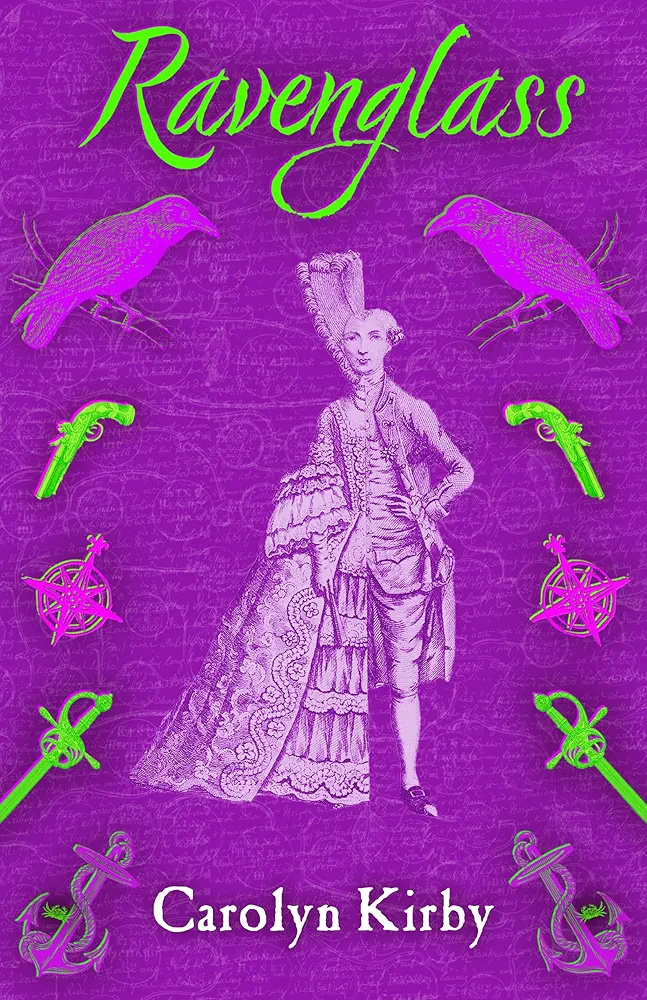
Friday – I shared my review of Ravenglass by Carolyn Kirby.

Saturday – I joined other gardeners for the #SixonSaturday meme, sharing six things happening in my garden this week.
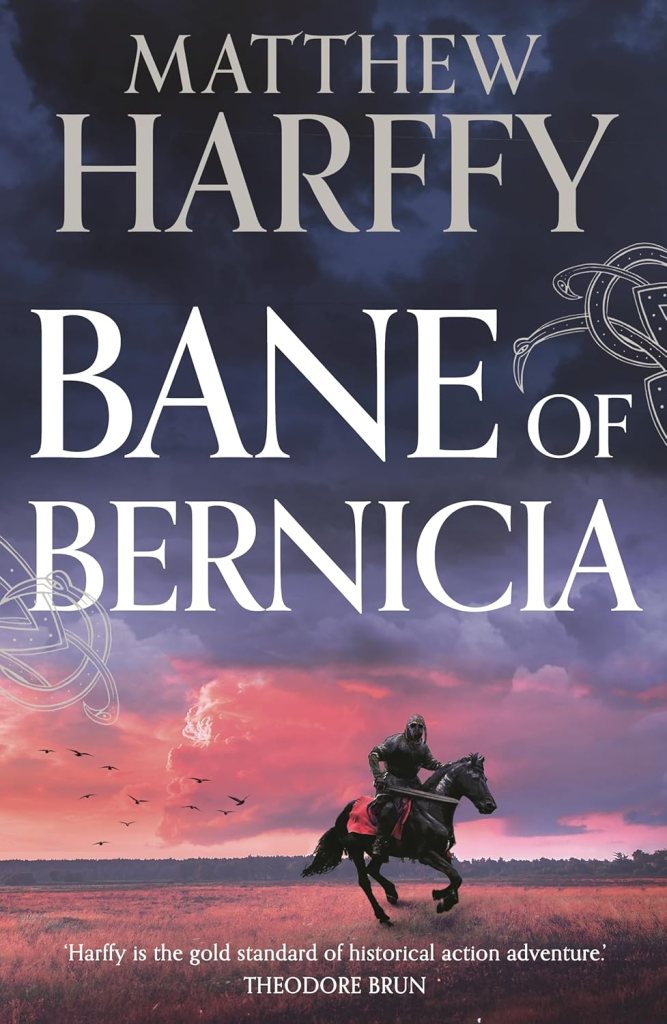
Bane of Bernicia (The Bernicia Chronicles #11) by Matthew Harffy (Head of Zeus via NetGalley)

Returning from a dangerous mission to Rome, warlord Beobrand looks forward to peace at home, but bloodshed remains his constant companion.

While bringing criminals to justice Beobrand believes he has discovered a secret alliance between two of Bernicia’s the Picts and the Mercians.

He hastens to warn his king, but finds Oswiu distracted, preparing to marry his eldest son to the daughter of former adversary Penda of Mercia, who remains as slippery as ever.

Dismayed, Beobrand finds himself blamed for breaking the truce with the Mercians, and must fight once more for his life. Worse, Penda insists on taking Oswiu’s young son as a hostage.

Beobrand is surprised when Queen Eanflæd concocts a plot to rescue her son and orders him to take part. It will take all their guile to achieve their goal… and keep their heads, when half the kingdoms of Albion want Bernicia destroyed.
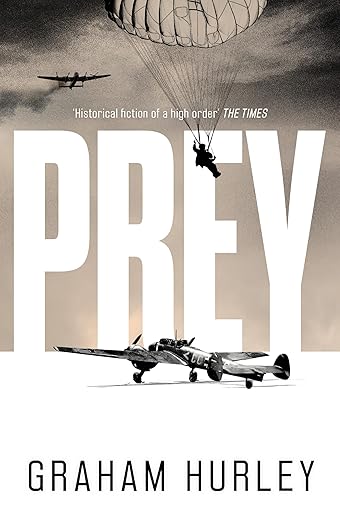
Prey (Spoils of War #11) by Graham Hurley (Head of Zeus via NetGalley)

1943. The war is turning against the Third Reich, but the Luftwaffe are eagerly exploiting a lethal blind spot in the RAF’s Lancaster bombers with their innovative upward-firing cannon.

MI5’s Tam Moncrieff lobbies ceaselessly for a solution in the face of officials’ indifference. His quest sees him accompanying a bombing raid deep into Nazi Germany that will change the course of the war.

The target is the Nazis’ flagship city of Nuremberg. With bright moonlight and clear visibility, the conditions are perfect… for the enemy. The Luftwaffe are jubilant as they take out plane after plane.

With so many men dead or captured, can RAF Bomber Command overcome their darkest hour, when the predators have become the prey?
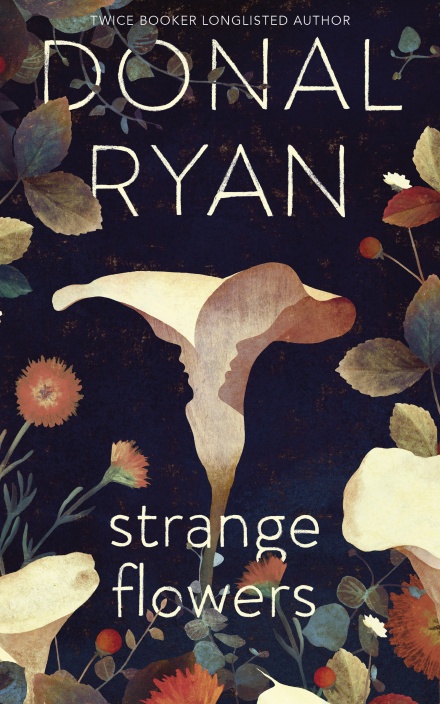
Strange Flowers by Donal Ryan (Doubleday)

In 1973 Moll Gladney goes missing from the Tipperary hillside where she was born. Slowly her parents, Paddy and Kit, begin to accept that she’s gone forever. But she returns, changed, and with a few surprises for her family and neighbours.

Nothing is ever the same again for the Gladneys, who learn that fate cares little for duty, that life rarely conforms to expectation, that God can’t be relied upon to heed any prayer.

A story of exile and return, of loss and discovery, of retreat from grief and the saving power of love.
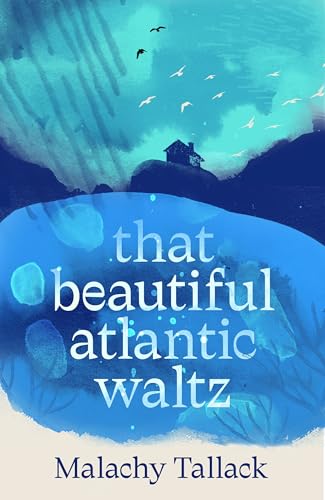
That Beautiful Atlantic Waltz by Malachy Tallack (Canongate)

1957. Sonny is working on a whaling ship in the South Atlantic, reckoning with the most vicious storms he has ever seen. It’s a brutal way to make a living. When he finally returns to his Shetland home to build a life with his wife and young son, the legacy of his time at sea is felt by all of them.

In present day Shetland, Jack is an old man, living alone in the cottage where he grew up, in the shadow of a hill. And it is here, one evening, that something appears on his doorstep. Something that throws off the rhythm of his solitary existence in the most profound way.

This is a story of unlikely friendship, longing, the power of music and the pull of home. It is about a life revisited – and reimagined.

I’m reading a review copy of Sweep the Cobwebs Off the Sky and listening to the audiobook of The Wasp Trap, my book club’s pick for March


  • Book Review: Love Lane by Patrick Gale
  • Book Review: Seascraper by Benjamin Wood
  • Book Review: A Private Man by Stephanie Sy-Quia
  • Book Review: Sweep the Cobwebs Off the Sky by Mary O’Donnell
  • Book Review: The Wasp Trap by Mark Edwards

Book Review – Ravenglass by Carolyn Kirby @novelcarolyn @northodoxpress

About the Book

In 18th century Whitehaven, Kit Ravenglass grows up in a house of secrets. A shameful mystery surrounds his mother’s death, and his formidable, newly rich father is gambling everything on shipping ventures. Kit takes solace in his beloved sister Fliss, and her sumptuous silks, although he knows better than to reveal his delight in feminine fashion. As the family’s debts mount, Kit’s father turns to the transatlantic slave trade – a ruthless and bloody traffic to which more than a fortune might be lost.

At a private Naval Academy, Kit is jolted into unruly boyhood and scandal before his first taste of life at sea. Adventures will see him turn fugitive and begin living as ‘Stella,’ before being swept into the heady violence of Bonnie Prince Charlie’s rebellion. Driven by love, revenge and a desire to live truly and freely, Kit must find a way to survive these turbulent times – and to unravel the tragic secrets of the Ravenglass family.

Format: Paperback (448 pages) Publisher: Northodox Press
Publication date: 25th September 2025 Genre: Historical Fiction

Find Ravenglass on Goodreads

Purchase Ravenglass from Bookshop.org [Disclosure: If you buy books linked to our site, we may earn a commission from Bookshop.org, whose fees support independent bookshops]

My Review

It was only as I was planning my trip tomorrow to see Carolyn Kirby interview fellow author Andrew Taylor at Oxford Literary Festival (event details here) that I realised I’d never published my review of this wonderful book, one of my favourite historical novels of last year.

From his earliest years, Kit has felt uncomfortable in male attire and found pleasure in wearing his sister’s clothing. He even invents a female persona for himself, whom he christens Stella. It is something he knows will inevitably bring him into conflict with his father. ‘For more than anything, my father wanted me to be manly. And so it was my fate to always let him down.’

The opening section of the book is set in Whitehaven, a port on the north-west coast of England. It’s a ‘wind blasted’ town where the presence of the sea constantly assails the senses. There’s the ‘the crack of sailcloth, the creaking of hulls and the disquieting growls of the shipmen’, the taste of salt on the tongue and the odour of the harbour, a ‘rumbling, pulsing shit-slopping belly’. The town’s fortunes rest on trade, with ships coming and going carrying coal and other cargo. Sadly it’s also reliant on the increasingly lucrative slave trade with Kit’s father being a leading share-holder of the Resolve, a slave ship.

The author immerses the reader in daily life in 18th century Whitehaven, introducing us to archaic industries such as the milling of snuff. I particularly loved the description of the Lammas Day fair where activities include boxing bouts, races and a cockerel eating competition (yes, really). ‘Prentices and servant-girls, all in their best holland coats and camlet petticoats, crowd around peddlers of trinket-toys and ribbands.‘ Unfortunately events take a darker turn with Kit an unwilling witness to an example of everything he abhors about being a man.

Determined to purge his son of his ‘unmanly’ tendencies, Kit is sent to sea by his father where he experiences the rigours of life on board a ship where, on the lower decks, ‘nothing is odourless’, including the old seaman he is expected to share a hammock with. Completely against his nature, Kit finds himself having to demonstrate ‘manliness’, whether that’s uttering oaths, entertaining the crew with bawdy, bloodthirsty songs or climbing the mast in a storm. It typifies Kit’s struggle between what is expected of him as a man and what he instinctively feels to be his true identity.

Following a series of tragic events, Kit takes to the road dressed as a woman, resurrecting Stella. What follows is a series of adventures that have a picaresque quality, involving encounters with a multitude of colourful characters. For example, millinery shop owner Mrs McMemeny, complete with green velvet eye patch. Kit’s travels take him to Carlisle, Edinburgh and beyond, often buffeted by external events such as the Jacobite Revolution. And sometimes Kit discovers he’s got people completely wrong.

As well as being a thrilling adventure story, Ravenglass explores themes of sexuality and identity. Events often turn on items of clothing: a sulphur-yellow quilted petticoat, an embroidered silk waistcoat. And a person’s true sex is often revealed through bodily functions: menstruation or lack of menstruation, the way you pass urine, the inconvenient growth of hair.

A small niggle is that I would have liked more detail about Kit’s later years but aside from that I loved everything about Ravenglass. It’s a historical romp with a wonderfully engaging central character and authentic detail. A great example of accomplished storytelling.

In three words: Sweeping, immersive, spirited
Try something similar: The Romantic by William Boyd

About the Author

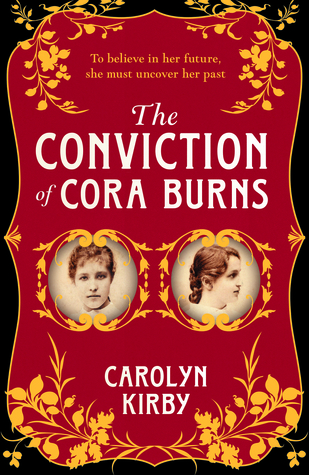
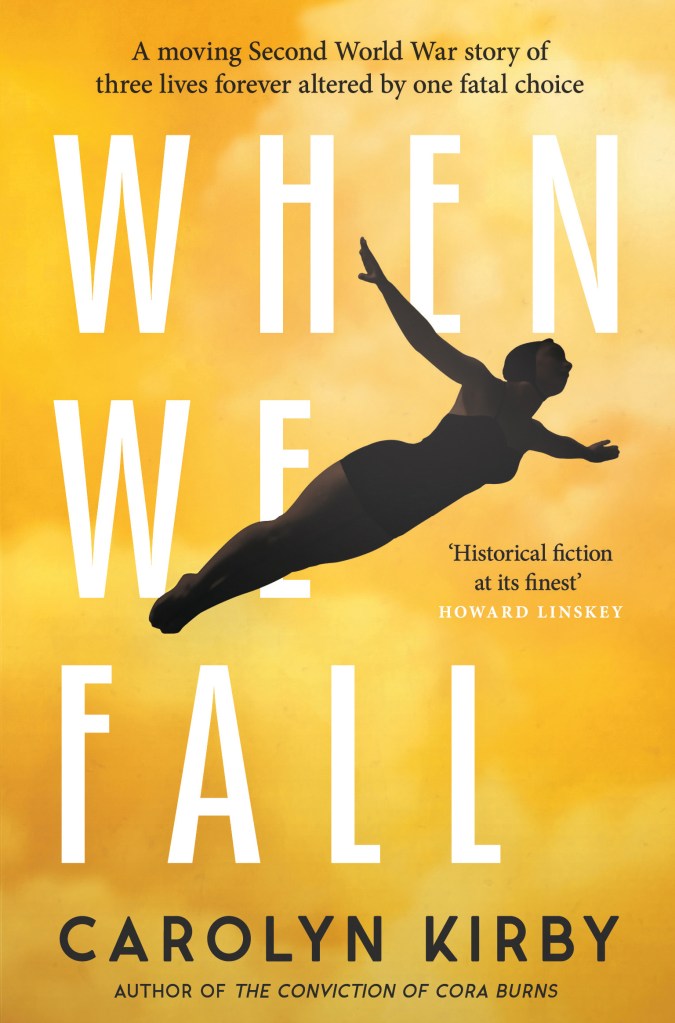
Carolyn Kirby’s debut novel The Conviction of Cora Burns was chosen for awards by the Historical Writers Association and by the Specsavers/Crimefest debut crime fiction prize. Carolyn’s second novel When We Fall was one of The Times’ top 20 historical novels of 2020. Originally from the northeast of England, Carolyn studied history at St Hilda’s College, Oxford and she is now on the organising committee for the annual St Hilda’s Crime Fiction Weekend.

Connect with Carolyn
Website | X/Twitter | Facebook