About the Book
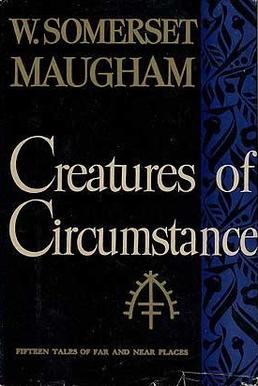
Creatures of Circumstance is a collection of fifteen short stories by the British writer W. Somerset Maugham. It was his last collection of stories, all of which had been previously been published in magazines.
Format: Hardback (314 pages) Publisher: Heinemann
Publication date: January 1947 Genre: Fiction, Short Stories
Find Creatures of Circumstance on Goodreads
My Review
Creatures of Circumstance was the book chosen for me in the latest Classics Club spin. I did read it by the deadline (4th October) but didn’t get round to writing my review until now.
As is often the case with short story collections, it is a mixed bag. First published in 1947, some of the attitudes expressed, particularly towards women and people of other nationalities, have dated badly.
The collection’s title gives a clue to its overriding theme, an exploration of how people react to circumstances forced upon them and how the decisions they make as a result shape their lives.
Having enjoyed Maugham’s Ashenden, a collection of linked stories featuring a spy in the First World War (based on the author’s own experience working for British Intelligence), it was nice to see him pop up again in ‘The Sanatorium’ and also as an attentive listener in another couple of stories.
‘Winter Cruise’ is an amusing story about a woman’s experiences as the only passenger on a cruise. The crew tire of her incessant talking, which is actually born of her keen interest in other people, and come up with a solution to ensure peaceful meal times. It works but also ensures she has a most memorable cruise.
‘A Man from Glasgow’ is a creepy story, which might have been written by M. R. James, in which a man is so unnerved by the sound of laughter from a nearby empty house reputed to have been previously inhabited by a madman, he decides to flee the country. But it turns out he’s not yet put enough distance between him and the house.
The standout story in the collection is ‘The Unconquered’ set in occupied France in World War 2. Two German soldiers arrive at a farm where they threaten the farmer’s family, eat the family’s meagre supply of food and get drunk on the farmer’s wine. One of them, Hans, then rapes the farmer’s daughter. When she falls pregnant he is unprepared for the intensity of her hatred towards him.
About the Author

William Somerset Maugham (1874 – 1965) was born in Paris. He spoke French even before he spoke a word of English, a fact to which some critics attribute the purity of his style.
His parents died early and, after an unhappy boyhood, which he recorded poignantly in Of Human Bondage, Maugham became a qualified physician. But writing was his true vocation. For ten years before his first success, he almost literally starved while pouring out novels and plays.
During World War I, Maugham worked for the British Secret Service . He travelled all over the world, and made many visits to America. After World War II, Maugham made his home in south of France and continued to move between England and Nice till his death in 1965.