Book Review – The Correspondent by Virginia Evans

About the Book

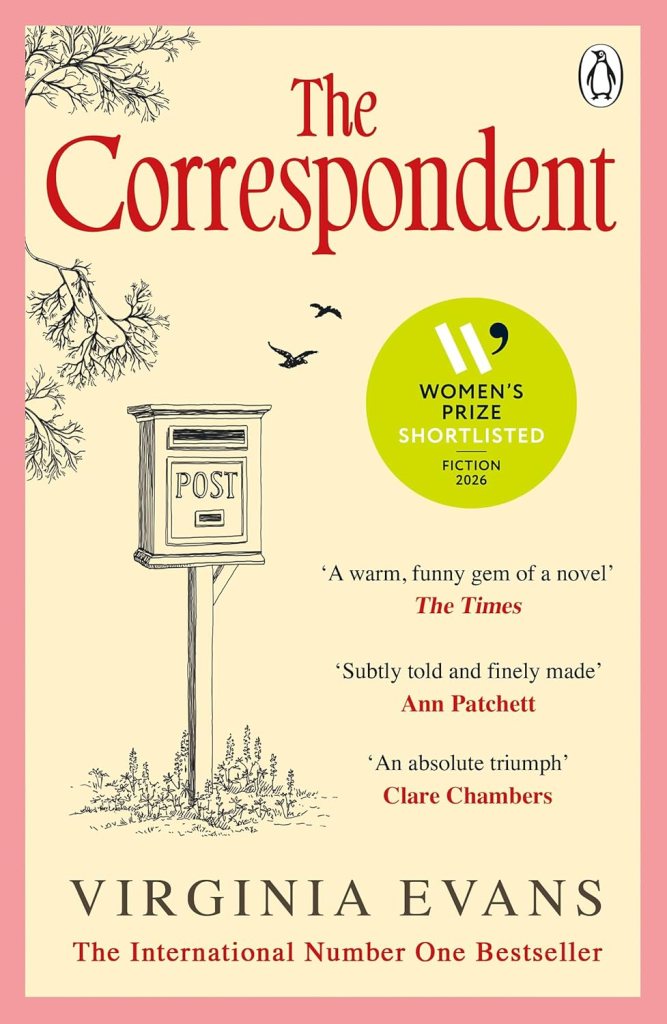
Sybil Van Antwerp is seventy-three, slowly losing her sight and always writing letters . . .

To her children. Her favourite authors. Her ex-sister-in-law. The journalist poking into her past.
Her doctor. Suitors. Kindly neighbours. The infuriating gardening club.

All receive Sybil’s witty, wise correspondence, rich with everyday concerns.

But there is one letter that she has never sent. It concerns the darkest period of her life. To post it, Sybil must find forgiveness within herself.

The hardest letter to write is the one you’d never dare to send.

Format: Paperback (320 pages) Publisher: Penguin
Publication date: 10th June 2026 Genre: Contemporary Fiction

Find The Correspondent on Goodreads

Purchase The Correspondent from Bookshop.org [Disclosure: If you buy books linked to our site, we may earn a commission from Bookshop.org, whose fees support independent bookshops]

My Review

If you’re part of the book world, or possibly even if you’re not, you’ll be aware of The Correspondent. It’s won literary prizes, topped bestseller lists and appeared again and again in readers’ ‘Books of the Year’ lists. What a disappointment then that my experience was rather different.

Inveterate letter writer Sybil Van Antwerp claims her letters are the story of who she is but in fact her letters are a carefully edited version of her life. The ‘real’ Sybil and her real story are contained within the unsent letter she adds to from time to time and that appears every so often between Sybil’s public letters. Despite a little camouflage, it wasn’t too difficult to guess the person to whom she was writing. I also worked out quite early on, thanks to an angry letter she sends to a newspaper editor, the true circumstances of the tragic event that occurred many years earlier and why it has overshadowed just about everything in her life ever since.

Sybil is a person of contradictions. She takes a personal interest in the lives of people she hardly knows, such as the customer service representative of a technology company, with sometimes unwelcome consequences for them, yet rarely communicates with her daughter. She can be obsessive, exemplified by her long campaign to continue to be permitted to audit a course in English Literature. Her letters to the Head of the Department become increasingly insistent but, ironically, when they meet face-to-face she gets on quite well with them.

I thought her preference for letters over telephone conversations showed a desire for control and to keep people at a distance. She even writes notes to her neighbour, the lovely Theodore.

From the blub I was expecting more humour. The bits that did make me laugh were Sybil’s tussles with her gardening club and her less than complimentary letter to author Kazuo Ishiguro informing him she felt Never Let Me Go wasn’t half as good as The Remains of the Day. Even here, there’s a sense of superiority. Perhaps others more generously would say chutzpah.

I struggled to feel any emotional connection with Sybil, although I was not without sympathy for the awful thing that happened to her. For me she was a rather sad, self-centred and embittered person. However, I appreciate I’m probably in the minority here and part of me feels bad for expressing negative thoughts about a book so many people have obviously loved.

This was a book club pick and it turned out members were pretty evenly divided between those who loved Sybil, those who didn’t and those with mixed feelings. So I wasn’t alone after all! The most common description of the book was ‘an easy read’. Personally, I expect a bit more literary ambition from a Women’s Prize-winning book although I admire the author’s bravery in trying to pull off an epistolary novel.

The book provoked an interesting debate about the demise of letter writing, or perhaps more specifically, of handwritten communication. The view was an email creates an expectation of an immediate response whereas letters do not. That letters require more thought and, as in Sybil’s case, may go undergo numerous drafts, whereas an email is often dashed off. Personally any email of importance I write undergoes plenty of redrafting so I’m not quite convinced it’s the format that makes the difference.

About the Author

Virginia Evans is from the East Coast of the United States. She attended James Madison University for her Bachelor’s in English literature. After starting a family, she went back to school for her Master’s of Philosophy in creative writing at Trinity College in Dublin, Ireland. She now lives in Winston-Salem, North Carolina, with her husband, Mark, two children, Jack and Mae, and her red Labrador, Brigid. (Photo: Amazon author page)

Connect with Virginia
Website | Instagram

#WWWWednesday – 14th October 2026

Hosted by Taking on a World of Words, this meme is all about the three Ws:

  • What are you currently reading?
  • What did you recently finish reading?
  • What do you think you’ll read next?

Why not join in too?  Leave a comment with your link at Taking on a World of Words and then go blog hopping!


May We Feed the King by Rebecca Perry (Granta)

She is a curator, who spends her time dressing the rooms of historic buildings to bring them to life. But in the lush private quarters of a medieval palace, she finds herself so transfixed by the reign of an almost-forgotten King that the edges of her life begin to blur.

He is a reluctant ruler with no hunger for power, rushed to the throne after the untimely deaths of his older brothers. But it isn’t long before whispers begin to fly around the court. And with the growing belief that the King is not fit for the throne comes the idea that another might rule in his stead.

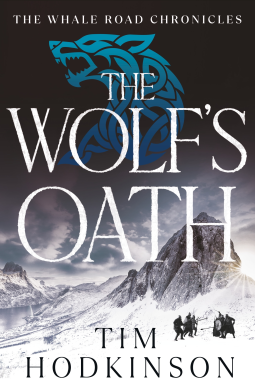
The Wolf’s Oath (The Whale Road Chronicles #9) by Tim Hodkinson (Head of Zeus via NetGalley)

Einar and the Wolf Coats sail back to the northern realms in order to honour a dying man’s last wish by placing his sword into the hands of his son.

As they get closer to their destination, they encounter a fearsome band of Viking mercenaries. Einar is keen to join forces, but the Wolf Coats are vehemently opposed… until a violent skirmish makes both sides realise they will be stronger together.

First though the Wolf Coats must pass a prove themselves to their new allies by discovering the truth behind strange tales of bloodshed in the far north.

Einar soon realises he may have signed up for more than he intended, for he must cross swords with allies of his bitter Eirik, the Serpent King.

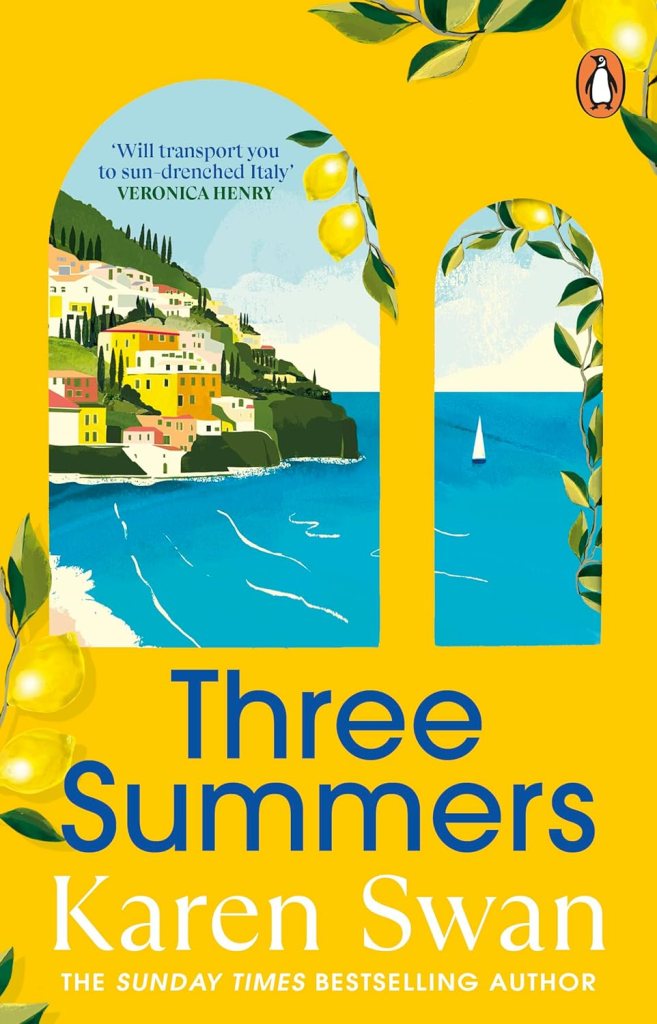
Three Summers by Karen Swan (audiobook, Penguin)

1957: The summer of innocence
Amongst the lemon trees, Rafaella Parisi impatiently waits for the summer visitors to arrive in her small fishing village on the coast of Puglia. She may be dating Fon Giannelli, but there is one person she longs to see: Cosimo – son of the wealthy Franchetti family.

1958: The summer everything changes
After a devastating accident at the lavish Franchetti villa, Rafa makes a vow that changes the course of all their futures.

1961: The summer they meet again
When Rafa and Cosi’s worlds collide, Rafa faces an agonizing choice. Is she willing to risk the life she has for the future she once dreamed of?

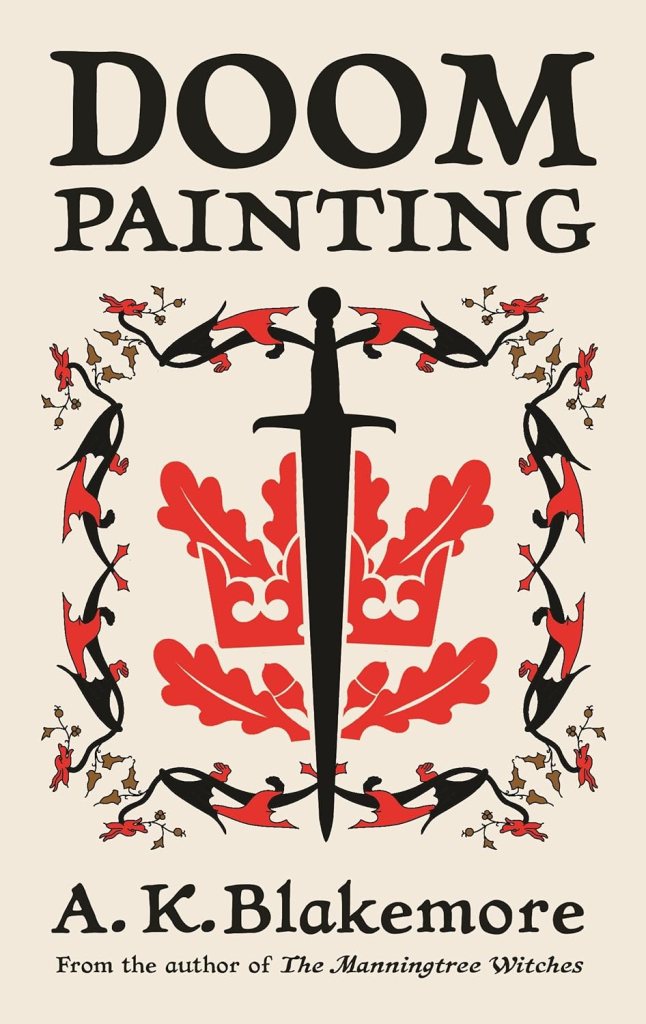
Doom Painting by A. K. Blakemore (Granta)

It is 1381. England, reeling from plague and years of conflict abroad, is a tinderbox waiting to spark. Two childhood friends ride into the town of Brentwood, Essex, where they come upon an altercation with a local Justice bent on squeezing more coin from the masses. Thus begins a rebellion of the common folk – loyal to the king, but not to those wealthy landowners who curtail their freedoms; the multitude finding cause against the powers that threaten their livelihoods.

Set over sixteen days, Doom Painting roves across England as the revolt grows and swells and the rebels march to London to take their demands to the child-king Richard II. Out of the rebellion emerges its enigmatic and charismatic leader Wat Tyler, an opportunistic and mercurial rogue whose morality is birthed by the cause, and who shapes an identity for the English which has never been lost. (Review to follow)

Head of a Traveller by Nicholas Blake (Pan) #1949Club

Staying with a friend in Oxfordshire, poet turned amateur detective Nigel Strangeways pays a visit to Robert Seaton, a distinguished British poet whom Nigel greatly admires but whose reputation has been on the decline of late. Seaton proves to be an irascible, temperamental man, and his unconventional household, featuring a resentful daughter and mute dwarf servant, simmers with tension.

When a headless corpse is found floating in the river by the Seaton’s house just a few weeks later, the poet becomes the prime suspect. But whose body is it? (Review to follow)

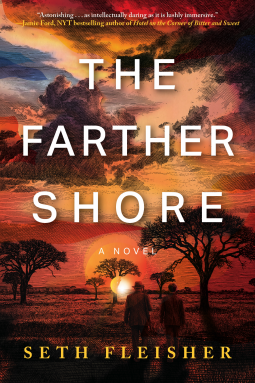
The Farther Shore by Seth Fleisher (Green City Books via NetGalley)

Southern Africa, turn of the twentieth century. Marais is a brilliant naturalist and iconoclastic journalist whose evolving theories about memory, addiction, and the hive mind are decades ahead of their time. But when tragedy strikes, he disappears into a remote African forest—leaving behind his newborn child and his conscience, and embarking on research that will haunt both their lives.

Thirty years later, his son Charles—now a professor of ancient Buddhist history at Harvard—discovers that the university’s most powerful faculty are mining his father’s research to bolster theories of racial hierarchy. Accompanied by a mysterious Jewish graduate student whose fate has become entangled with his own, Charles must journey to South Africa to confront his father, heal his fractured past, and stop a sinister plot taking root at the world’s most prestigious institution.