
#WWWWednesday – 9th December 2020

WWWWednesdays

Hosted by Taking on a World of Words, this meme is all about the three Ws:

  • What are you currently reading?
  • What did you recently finish reading?
  • What do you think you’ll read next?

Why not join in too?  Leave a comment with your link at Taking on a World of Words and then go blog hopping!


Currently reading

A review copy, an audiobook and a book for a blog tour…
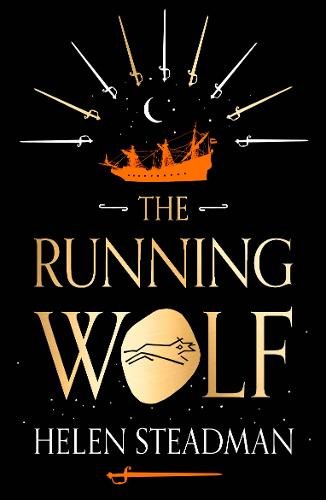
9781911293538The Running Wolf by Helen Steadman (review copy, courtesy of the author and Impress Books)

When a German smuggler is imprisoned in Morpeth Gaol in the winter of 1703, why does Queen Anne’s powerful right-hand man, The Earl of Nottingham, take such a keen interest?

At the end of the turbulent 17th century, the ties that bind men are fraying, turning neighbour against neighbour, friend against friend and brother against brother. Beneath a seething layer of religious intolerance, community suspicion and political intrigue, The Running Wolf takes us deep into the heart of rebel country in the run-up to the 1715 Jacobite uprising.

Hermann Mohll is a master sword maker from Solingen in Germany who risks his life by breaking his guild oaths and settling in England. While trying to save his family and neighbours from poverty, he is caught smuggling swords and finds himself in Morpeth Gaol facing charges of High Treason.

Determined to hold his tongue and his nerve, Mohll finds himself at the mercy of the corrupt keeper, Robert Tipstaff. The keeper fancies he can persuade the truth out of Mohll and make him face the ultimate justice: hanging, drawing and quartering. But in this tangled web of secrets and lies, just who is telling the truth?
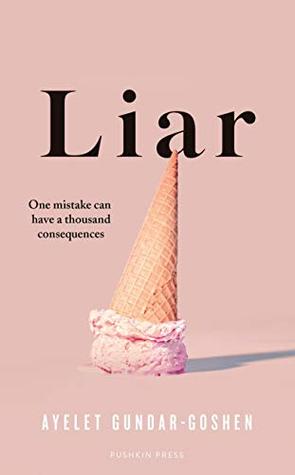
LiarLiar by Ayelet Gundar-Goshen (audiobook)

One mistake can have a thousand consequences

Nofar is just an average teenage girl – so average, she’s almost invisible. Serving customers ice cream all summer long, she is desperate for some kind of escape. Then one afternoon, a terrible lie slips from her tongue. And suddenly everyone wants to talk to her: the press, her schoolmates, and the boy upstairs – the only one who knows the truth.

Then Nofar meets Raymonde, an elderly immigrant whose best friend has just died. Raymonde keeps her friend alive the only way she knows how – by inhabiting her stories. But soon, Raymonde’s lies take on a life of their own.
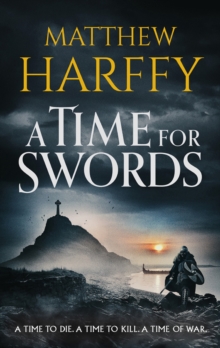
A Time For SwordsA Time For Swords by Matthew Harffy (eARC, courtesy of Head of Zeus via NetGalley)

There had been portents – famine, whirlwinds, lightning from clear skies, serpents seen flying through the air. But when the raiders came, no one was prepared. They came from the North, their dragon-prowed longships gliding out of the dawn mist as they descended on the kingdom’s most sacred site.

It is 8th June AD793, and with the pillage of the monastery on Lindisfarne, the Viking Age has begun. While his fellow monks flee before the Norse onslaught, one young novice stands his ground. He has been taught to turn the other cheek, but faced with the slaughter of his brothers and the pagan desecration of his church, forgiveness is impossible. Hunlaf soon learns that there is a time for faith and prayer… and there is a time for swords.


Recently finished

Links from the titles will take you to my reviews

Becoming Alfie by Neil Patterson

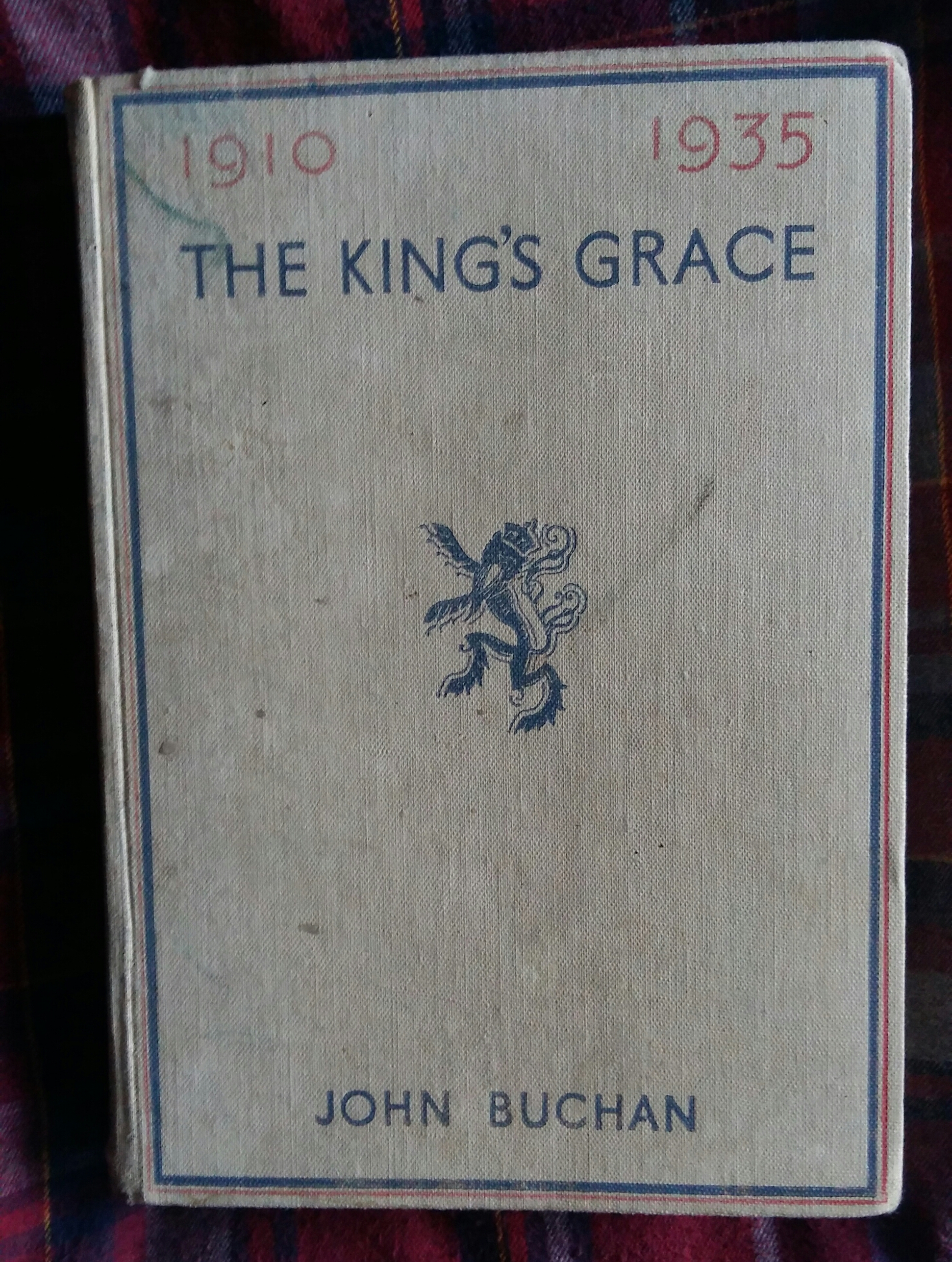
The King’s Grace by John Buchan

The Smallest Man by Frances Quinn (proof copy, courtesy of Simon & Schuster) 

“My name is Nat Davy. Perhaps you’ve heard of me? There was a time when people up and down the land knew my name, though they only ever knew half the story.

The year of 1625, it was, when a single shilling changed my life. That shilling got me taken off to London, where they hid me in a pie, of all things, so I could be given as a gift to the new queen of England.

They called me the queen’s dwarf, but I was more than that. I was her friend, when she had no one else, and later on, when the people of England turned against their king, it was me who saved her life. When they turned the world upside down, I was there, right at the heart of it, and this is my story.”

Inspired by a true story, and spanning two decades that changed England for ever, The Smallest Man is a heartwarming tale about being different, but not letting it hold you back. About being brave enough to take a chance, even if the odds aren’t good. And about how, when everything else is falling apart, true friendship holds people together. (Review to follow for blog tour)


What Cathy (will) Read Next
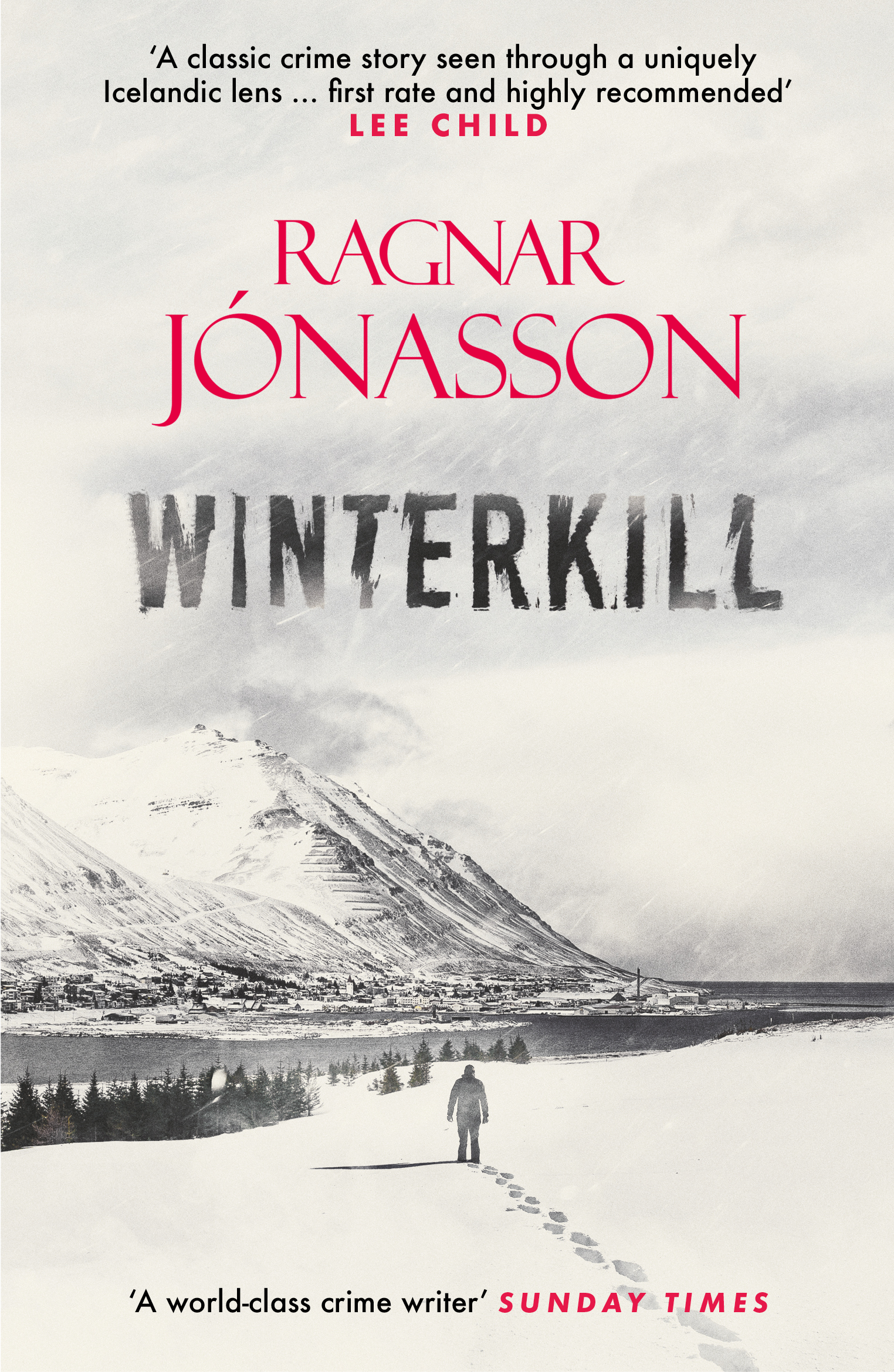
Winterkill proof coverWinterkill (Dark Iceland #6) by Ragnar Jónasson, trans. by David Warriner (eARC, courtesy of Orenda Books) 

Easter weekend is approaching, and snow is gently falling in Siglufjörður, the northernmost town in Iceland, as crowds of tourists arrive to visit the majestic ski slopes. Ari Thór Arason is now a police inspector, but he’s separated from his girlfriend, who lives in Sweden with their three-year-old son. A family reunion is planned for the holiday, but a violent blizzard is threatening and there is an unsettling chill in the air.

Three days before Easter, a nineteen-year-old local girl falls to her death from the balcony of a house on the main street. A perplexing entry in her diary suggests that this may not be an accident, and when an old man in a local nursing home writes ‘She was murdered’ again and again on the wall of his room, there is every suggestion that something more sinister lies at the heart of her death…

As the extreme weather closes in, cutting the power and access to Siglufjörður, Ari Thór must piece together the puzzle to reveal a horrible truth… one that will leave no one unscathed.

#BookReview The King’s Grace by John Buchan #ReadJB2020

Buchan of the Month Banner 2020.jpg

20201108_125639-1About the Book

This sympathetic portrait starts with the death of Edward VII and George V’s accession. It was a reign that saw many changes including the Union of South Africa, the First World War and the General Strike of 1926. John Buchan wrote, ‘This book is not a biography of King George, but an attempt to provide a picture – and some slight interpretation – of his reign, with the Throne as the continuing thing through an epoch of unprecedented change.’

Format: Hardcover (156 pages) Publisher: Hodder & Stoughton
Publication date: April 1935      Genre: Nonfiction, History

Find The King’s Grace on Goodreads


My Review

My Buchan of the Month for November was The King’s Grace which was published in the UK by Hodder & Stoughton in April 1935. You can read my earlier blog post introducing the book here.

In that post, I included a comment by Buchan’s first biographer, Janet Adam Smith, that The King’s Grace was not a piece or “royal tushery” but a history of the events of the reign. The opening few chapters definitely prove that to be the case concentrating as they do on a number of constitutional crises facing the new King, including a dispute between the House of Commons and the House of Lords (the lower and upper chambers of the UK Parliament) and the Irish Home Rule Bill. Although demonstrating Buchan’s customary attention to detail and clarity of prose, I’ll admit I would have welcomed a bit of “royal tushery” to enliven this section of the book.

Of more interest were the later parts of the chapter entitled The Restless Years, covering the period up to the outbreak of the First World War. Here Buchan eloquently describes the tensions both at home and abroad. When it comes to Britain he notes that “behind all the self-confidence of prosperity there was a sense of impermanence, as if good things would not last, and black clouds were banking beyond the horizon“. Writing about Germany, he identifies the “deadly peril in the conjunction of a flamboyant Emperor, ambitious of ranking with the makers of history, an army and navy burning to prove their prowess to the world, an aristocracy intolerant of all democratic ideals, rulers of industry at once resultant and nervous, popular teachers preaching a gospel of race arrogance, and throughout the nation a vague half-mystical striving towards a new destiny“. Replace Emperor with Chancellor, and sadly he could have been describing the situation before the Second World War.

As might be expected from the author of the multi-volume Nelson’s History of the War, the chapters covering the First World War are detailed and contain commentary on the successes and failures, both strategic and tactical.  Buchan is at his most eloquent when describing the global nature of the war and its impact.

“Far-away English hamlets were darkened because of air raids; little farms in Touraine, in the Scottish Highlands, in the Apennines, were untilled because there were no men; Armenia had lost half her people; the folk of North Syria were dying of famine; Indian villages and African tribes had been blotted out by plague; whole countries had ceased for the moment to exist, except as geographical terms. Such were but a few of the consequences of the kindling of war in a world grown too expert in destruction…”

In her biography of John Buchan, Janet Adam Smith argues this passage illustrates his horror of war and explains his backing for Chamberlain’s attempt to reach a peace agreement at Munich.

Another telling moment in the book is the description of the moment the First World War ends ‘in the fog and the chill’ of the morning of 11th November 1918. “Suddenly, as the watch-hands touched eleven, there came a sound of expectant silence, and then a curious rippling sound, which observers far behind the front likened to the noise of a light wind.  It was the sound of men cheering from the Vosges to the sea.”  However, as Buchan points out, “Victory dawned upon a world too weary for jubilation, too weary even for comprehension”.

Towards the end of the book, Buchan reflects on the societal changes that have taken place since King George’s accession in 1910.  He observes that the cinema is now ‘a universal habit’ and – a little regretfully it seemed to me – that in the City ‘the top-hat had largely gone’ and ‘club life was a declining thing’.  He adopts a rather dismissive tone about changes to the landscape and increasing urbanization describing ‘towns spreading into mushroom suburbs and ancient villages blotched with bungalows’.

Some of his observations about the geopolitical changes in the period following the First World War seem distinctly prophetic. “This instinct to crowd together might at first sight to offer some hope for a union of nations. But unfortunately, the new internal integration of people was apt to be a narrow chauvinist basis; the refuge they sought must be isolated, exclusive, a border keep bristling with defences, and not an open law-abiding city to which all are welcome.” 

Although entitled The King’s Grace, King George V himself is absent for much of the book, although Buchan does include vital moments when the King’s presence raised morale or lessened tensions.  A patriotic advocate of the monarchy as part of our constitution, for Buchan it is “the mystical, indivisible centre of national union“, and “the point around which coheres the nation’s sense of a continuing personality“.

The most memorable lines for me were in the closing paragraph of the book, in which Buchan writes, “the true task of leadership is not to put greatness into humanity, but to elicit it, since the greatness is already there… The king has led his people, for he has evoked what is best in them“.

My final Buchan of the Month for 2020 will be The Long Traverse, published posthumously in 1941.

In three words: Detailed, factual, eloquent

Follow this blog via Bloglovin


John BuchanAbout the Author

John Buchan (1875 – 1940) was an author, poet, lawyer, publisher, journalist, war correspondent, Member of Parliament, University Chancellor, keen angler and family man.  He was ennobled and, as Lord Tweedsmuir, became Governor-General of Canada.  In this role, he signed Canada’s entry into the Second World War.   Nowadays he is probably best known – maybe only known – as the author of The Thirty-Nine Steps.  However, in his lifetime he published over one hundred books: fiction, poetry, short stories, biographies, memoirs and history.

You can find out more about John Buchan, his life and literary output by visiting The John Buchan Society website.

Sources:

Janet Adam Smith, John Buchan: A Biography (OUP, 1985 [1965])