
Top Ten Tuesday is a weekly meme created by The Broke and the Bookish and now hosted by Jana at That Artsy Reader Girl.
The rules are simple:
Each Tuesday, Jana assigns a new topic. Create your own Top Ten list that fits that topic – putting your unique spin on it if you want. Everyone is welcome to join but please link back to That Artsy Reader Girl in your own Top Ten Tuesday post. Add your name to the Linky widget on that day’s post so that everyone can check out other bloggers’ lists. Or if you don’t have a blog, just post your answers as a comment.
 This week’s topic is a Freebie on the theme of the Christmas/Holiday Season. I’ve chosen three Christmas scenes from books plus some illustrations from one of my favourite books, An Edwardian Christmas by John S. Goodall.
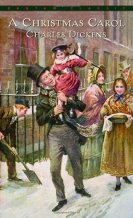 Scrooge and the Ghost of Christmas Present visit Bob Cratchit’s family on Christmas Day (A Christmas Carol by Charles Dickens)
“At last the dishes were set on, and grace was said. It was succeeded by a breathless pause, as Mrs. Cratchit, looking slowly all along the carving-knife, prepared to plunge it into the breast; but when she did, and when the long expected gush of stuffing issued forth, one murmur of delight arose all around the board, and even Tiny Tim, excited by the two young Cratchits, beat on the table with the handle of his knife, and feebly cried Hurrah!
There never was such a goose. Bob said he didn’t believe there ever was such a goose cooked. It’s tenderness and flavour, size and cheapness, were the themes of universal admiration. Eked out by apple-sauce and mashed potatoes, it was a sufficient dinner for the whole family; indeed, as Mrs. Cratchit said with great delight (surveying one small atom of a bone upon the dish), they hadn’t ate it all at last!”
 Marmee persuades her daughters to give their Christmas breakfast to a poor family (Little Women by Louisa May Alcott)
“They were soon ready, and the procession set out. Fortunately it was early, and they went through back streets, so few people saw them, and no one laughed at the queer party.
A poor, bare, miserable room it was, with broken windows, no fire, ragged bedclothes, a sick mother, wailing baby, and a group of pale, hungry children cuddled under one old quilt, trying to keep warm. How the big eyes stared and the blue lips smiled as the girls went in.
“Ach, mein Gott! It is good angels come to us!” said the poor woman, crying for joy.
“Funny angels in hoods and mittens,” said Jo, and set them to laughing.
In a few minutes it really did seem as if kind spirits had been at work there. Hannah, who had carried wood, made a fire, and stopped up the broken panes with old hats and her own cloak. Mrs. March gave the mother tea and gruel, and comforted her with promises of help, while she dressed the little baby as tenderly as if it had been her own. The girls meantime spread the table, set the children round the fire, and fed them like so many hungry birds, laughing, talking, and trying to understand the funny broken English.
“Das ist gut!” “Die Engel–kinder!” cried the poor things as they ate and warmed their purple hands at the comfortable blaze. The girls had never been called angel children before, and thought it very agreeable, especially Jo, who had been considered a ‘Sancho’ ever since she was born.
That was a very happy breakfast, though they didn’t get any of it. And when they went away, leaving comfort behind, I think there were not in all the city four merrier people than the hungry little girls who gave away their breakfasts and contented themselves with bread and milk on Christmas morning.”
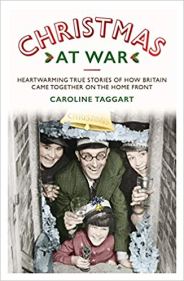 A nurse recalls Christmas Day on duty during WW2 (Christmas at War by Caroline Taggart)
“On Christmas Day we were up and had breakfast at the usual time -7.10am – but there were eggs and bacon for breakfast. Seven-thirty we were on duty and plenty to do. I was on the maternity ward and we had a busy day there. We had painted in large letters on one of the windows at the top of the ward ‘Business as Usual’. And we got what we asked for! Three babies were born. The third arrived just before the King’s Speech in the afternoon. I was glad he arrived when he did: I had been looking forward all day to hearing the King speak. The babies were two boys and a girl. The only one to get a Christmassy name was the girl, who was called Carol.”


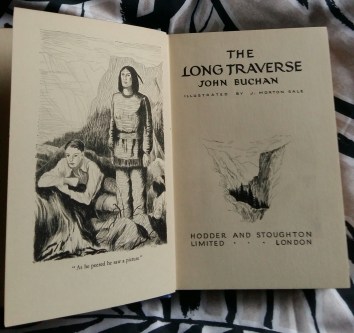 My own copy (pictured right) is a first edition although without dust jacket sadly. However on the plus side, it contains illustrations by John Morton-Sale, whose work appeared in books by J. M. Barrie, Beverley Nicholls and others.


