
About the Book
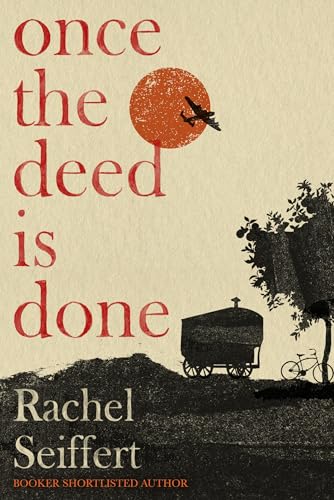
Northern Germany, 1945. Dead of night and dead of winter, a boy hears soldiers and sees strangers – forced labourers – fleeing across the heathland by his small town: shawls and skirts in the snowfall. The end days are close, war brings risk and chance, and Benno is witness to something he barely understands.
Peace brings more soldiers – but English this time – and Red Cross staff officers. Ruth, on her first posting from London, is given charge of a refugee camp on the heathland, crowded with former forced labourers. As ever more arrive, she hears whispers, rumours of dark secrets about that snowy night.
The townspeople close ranks, shutting their mouths and minds to the winter’s events, but the town children are curious about the refugees on their doorstep, and Benno can’t carry his secret alone.
Format: Hardcover (464 pages) Publisher: Virago
Publication date: 6th March 2025 Genre: Historical Fiction
Find Once the Deed Is Done on Goodreads
Purchase Once the Deed Is Done from Bookshop.org [Disclosure: If you buy books linked to our site, we may earn a commission from Bookshop.org, whose fees support independent bookshops]
My Review
Once the Deed Is Done is set in the closing months of World War II. American and British forces are on Germany’s western borders and Soviet troops are closing in on Berlin. Millions of people have been displaced during the six years of war including those taken from their homes by the Nazis to work as forced labour on farms and in factories. Told from multiple points of view, the book explores the impact of the war on the displaced people but also German citizens now facing the prospect of defeat.
Ruth Novak, a Red Cross officer, has been posted to one of the camps set up to house displaced people on the site of a munitions factory outside the small town of Lüneburg in Lower Saxony. Initially her focus is on the needs of the former factory workers most of whom are suffering from extreme malnutrition as a result of their ill treatment. But day by day other displaced people arrive at the camp seeking food and shelter. What many of them are also seeking is news of loved ones. Ruth diligently records their details on index cards, to which she adds names of people they want to trace. ‘Always more names to add to her records. Each a dear friend, or a grown son, or a neighbour to someone.’ But how to begin to reunite people in the chaotic aftermath of war? Ruth becomes equally concerned about the fate of those in a rumoured ‘winter transport’ of labourers which no-one in the town seems to want to talk about. And her superiors insist there are other priorities. As it turns out, Ruth was right to be concerned although I suspect most readers will have a good idea about what might have happened.
Meanwhile the residents of Lüneburg are having to come to terms with their country’s defeat as well as the growing number of people housed in the camp which seems to expand almost daily, impinging more and more on the town and its resources. Some are mourning those killed in the war, others are anxiously awaiting news of when their loved ones will return whilst those who actively supported the Nazi regime face being brought to account. For some though the end of the Nazi regime comes as a relief.
The phrase ‘Everyone has their lost’ sums up the book. The German people’s belief in their country’s invincibility has been shattered and their homeland is now war-ravaged and divided. For many of the displaced people in the camp returning home means going back to villages destroyed by war, or in the case of Polish and Ukranian workers, to places now under the influence of the Soviet Union meaning they no longer have their national or cultural identity. Young people who grew up through the war years have had their childhoods stolen. And then of course there are the missing, those lost perhaps never to be found.
The book sheds a welcome spotlight on the plight of displaced people. Although set in World War II, it’s not difficult to come up with contemporary parallells. Arguably, the same is true when it comes to the issue of complicitly. As Ruth comments at one point, ‘This country… These people. They let all this happen right under their noses?’
Once the Deed Is Done is one of the five books shortlisted for the Walter Scott Prize for Historical Fiction 2026. The winner will be announced on 11th June at the Borders Book Festival.
In three words: Powerful, insightful, thought-provoking
About the Author
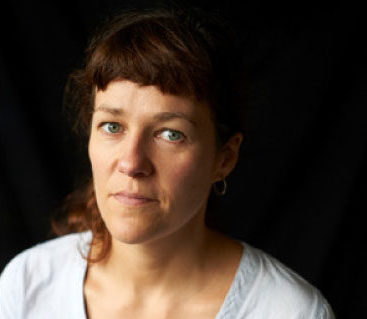
Rachel Seiffert is one of Virago’s most critically acclaimed contemporary novelists. Her first book, The Dark Room (2001), was shortlisted for the Man Booker Prize and made into the feature film Lore. In 2003, she was named one of Granta’s Best of Young British Novelists, and in 2011 she received the E.M. Forster Award from the American Academy of Arts and Letters. Field Study, her collection of short stories published in 2004, received an award from PEN International. Her second novel, Afterwards (2007), third novel The Walk Home (2014) and fourth novel A Boy in Winter (2017) were all longlisted for the Women’s Prize for Fiction. Her books have been published in eighteen languages. (Photo: Author website)
Connect with Rachel
Website | Instagram


This does sound very interesting!
Thanks for sharing your review with the Historical Fiction Reading Challenge!
LikeLiked by 1 person