
Hosted by Taking on a World of Words, this meme is all about the three Ws:
- What are you currently reading?
- What did you recently finish reading?
- What do you think you’ll read next?
Why not join in too? Leave a comment with your link at Taking on a World of Words and then go blog hopping!
What I’m Currently Reading
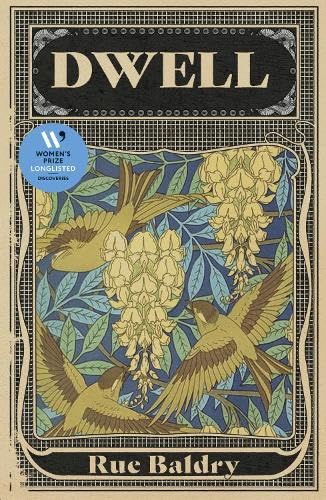
Dwell by Rue Baldry (ARC, Northodox Press)
For a while they are within a painting, both openly staring, with the only movement the glittering of dust motes. Light halos the marble-white figure on the floor, burnishing his hair, sharpening his features with shadows…
January 1919. A new gardener at a snowbound boys’ boarding school catches everyone’s attention. There is a rumour that he is a war hero.
Nineteen-year-old Albert is haunted by his experiences in The Great War, and fighting the temptation of one particular prefect. What they want is illegal. Being caught would ruin them both.
When Albert’s past catches up to him, their quest for a place where love can safely dwell comes under even greater threat.
Dwell uncovers those experiences of ordinary gay men in the early twentieth century which had to be kept secret in their lifetimes. It is a tender, evocative coming-of-age love story exploring themes of privilege and oppression, healing from trauma, redemption, belonging, and hope.
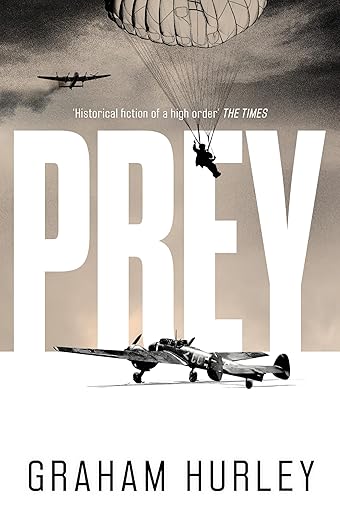
Prey by Graham Hurley (Head of Zeus via NetGalley)
1943. The war is turning against the Third Reich, but the Luftwaffe are eagerly exploiting a lethal blind spot in the RAF’s Lancaster bombers with their innovative upward-firing cannon.
MI5’s Tam Moncrieff lobbies ceaselessly for a solution in the face of officials’ indifference. His quest sees him accompanying a bombing raid deep into Nazi Germany that will change the course of the war.
The target is the Nazis’ flagship city of Nuremberg. With bright moonlight and clear visibility, the conditions are perfect. for the enemy. The Luftwaffe are jubilant as they take out plane after plane.
With so many men dead or captured, can RAF Bomber Command overcome their darkest hour, when the predators have become the prey?
What I’ve Just Read
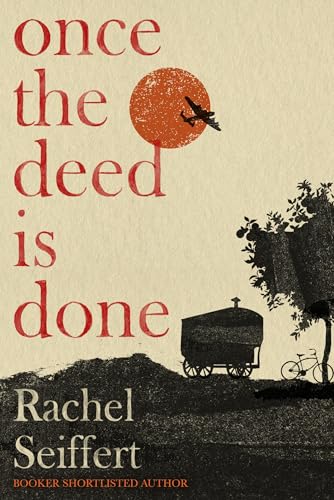
Once the Deed Is Done by Rachel Seiffert (Virago) Shortlisted for the Walter Scott Prize for Historical Fiction 2026
Northern Germany, 1945. Dead of night and dead of winter, a boy hears soldiers and sees strangers – forced labourers – fleeing across the heathland by his small town: shawls and skirts in the snowfall. The end days are close, war brings risk and chance, and Benno is witness to something he barely understands.
Peace brings more soldiers – but English this time – and Red Cross staff officers. Ruth, on her first posting from London, is given charge of a refugee camp on the heathland, crowded with former forced labourers. As ever more keep arriving, she hears whispers, rumours of dark secrets about that snowy night.
The townspeople close ranks, shutting their mouths and minds to the winter’s events, but the town children are curious about the refugees on their doorstep, and Benno can’t carry his secret alone. (Review to follow)
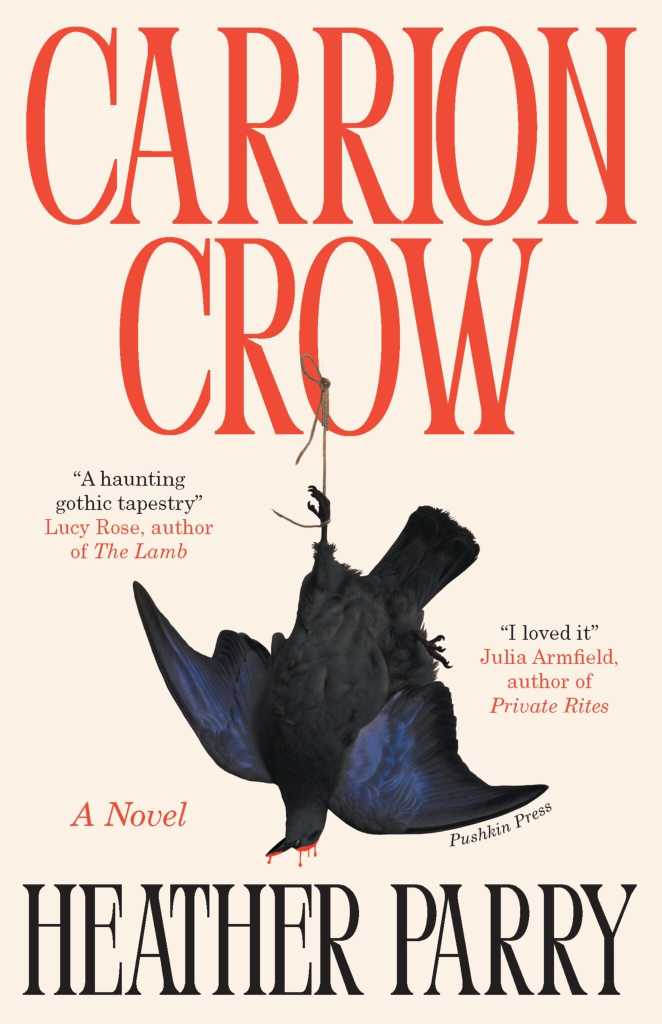
Carrion Crow by Heather Parry (Transworld)
What I’ll Be Reading Next
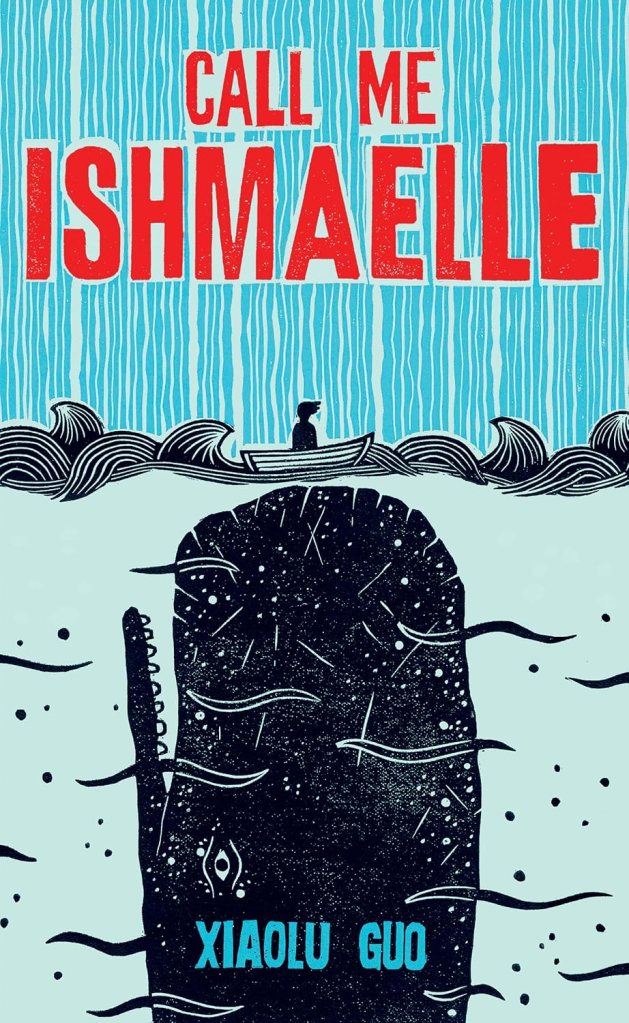
Call Me Ishmaelle by Xiaolu Guo (Chatto & Windus)
1843. Ishmaelle is born in a small village on the stormy Kent coast where she grows up swimming with dolphins. After her parents and infant sister die, her brother, Joseph, leaves to find work as a sailor. Abandoned and desperate for a life at sea, Ishmaelle disguises herself as a cabin boy and travels to New York.

As the American Civil War breaks out in 1861, Ishmaelle boards the Nimrod, a whaling ship led by the obsessive Captain Seneca, a Black free man of heroic stature who is haunted by a tragic past. Here, she finds protectors in Polynesian harpooner, Kauri, and Taoist monk, Muzi, whose readings of the I-Ching guide their quest.

Through the bloody male violence of whaling, and the unveiling of her feminine identity, Ishmaelle realises there is a mysterious bond between herself and the mythical white whale, Moby Dick.


I’m currently reading The Last Aquarius by Eve Langlais
In the last week I finished:🥁
1 Explosive Evidence by Cindi Myers
2 Beneath a Trojan Moon by Anna Hackett
3 An Ordinary Sort of Evil by Kelley Armstrong
4 Platform Decay by Martha Wells
5 On a Cyborg Platform by Anna Hackett
Next up will be the new Nora Roberts. Or Kaylea Cross
Gill
LikeLiked by 1 person
I’m always amazed by how many books you get through in a week. I know it isn’t a competition but I’m struggling to finish more than one or two per week at the moment which I used to do easily before. And I’m retired so don’t have the excuse of work.
LikeLiked by 1 person
I hear you loud and clear. I used to read 20 books a month easily. Now I seem to average 6. But we do have our gardens, Cathy.
LikeLiked by 1 person
I don’t do much else tbh now I’m retired. Also, the 2 Anna Hacketts were novellas
LikeLiked by 1 person
Prey sounds really good. Is it inspired by true events? The book description nearly makes it sound like non-fiction.
Happy reading! x
LikeLike
Yes, it is inspired by real events but with a good helping of espionage and mystery.
LikeLiked by 1 person
Great selection! I love the sound of Prey.
LikeLike