
About the Book
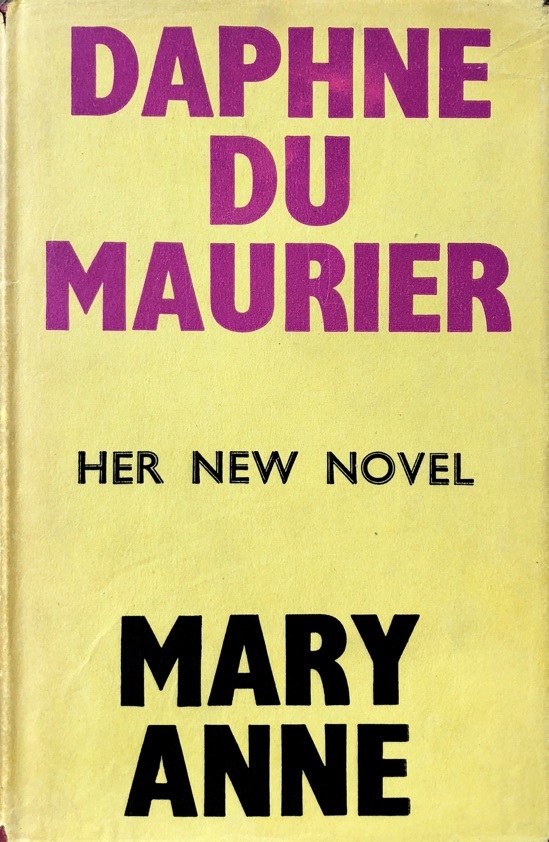
She set men’s hearts on fire and scandalized a country.
In Regency London, the only way for a woman to succeed is to beat men at their own game. So when Mary Anne Clarke seeks an escape from her squalid surroundings in Bowling Inn Alley, she ventures first into the scurrilous world of the pamphleteers. Her personal charms are such, however, that before long she comes to the notice of the Duke of York.
With her taste for luxury and power, Mary Anne, now a royal mistress, must aim higher. Her lofty connections allow her to establish a thriving trade in military commissions, provoking a scandal that rocks the government – and brings personal disgrace.
Format: Hardcover (379 pages) Publisher: Victor Gollancz
Publication date: 1st January 1954 Genre: Historical Fiction
Find Mary Anne on Goodreads
Purchase Mary Anne from Bookshop.org [Disclosure: If you buy books linked to our site, we may earn a commission from Bookshop.org, whose fees support independent bookshops]
My Review
Mary Anne is the first book from my new Classics Club list. Set during the Napoleonic Wars it’s a fictional account of the life of Daphne du Maurier’s own great-great-grandmother, Mary Ann Clarke. From 1803 to 1808, Mary Anne was the mistress of Frederick, Duke of York and Albany (the ‘Grand Old Duke of York of the nursery rhyme) who was the second son of King George III.
Mary Anne’s story is one of a woman determined to rise above the circumstances of her birth and provide a better life for her three children, the product of a disastrous early marriage to a man with whom she was smitten but who turned out to be an inveterate gambler and drunkard. Scarred by this experience Mary Anne is encouraged to use her beauty and charm to attract a succession of wealthy men willing to support her increasingly lavish lifestyle. Throughout she keeps her marriage a secret, presenting herself as a widow.
When she comes to the notice of the Duke of York, it looks like she’s hit the jackpot. He appears besotted with her although she knows, given his position and the fact he is married, she will never be anything more than his mistress. Having said that I thought she developed a genuine affection for him. However, even the Duke proves unable to fund Mary Anne’s lifestyle – the dinner parties, the gowns, the jewellery – resulting in her running up debts with numerous traders. Forced to look elsewhere for money she becomes involved in using her influence with the Duke to obtain military commissions for those willing to pay.
Unfortunately it all comes tumbling down when her relationship with the Duke comes to an end. Mary Anne finds herself facing financial ruin and embarks on a campaign of revenge threatening to reveal his personal letters. Eventually she goes one step too far with catastrophic consequences.
Mary Anne makes a lively, very engaging heroine. She is quick-witted and charming but at the same time there’s a ruthless streak to her. And the line ‘Hell hath no fury like a woman scorned’ could have been written with her in mind. Although she professes to be acting in the interests of her children, they have to move frequently from place to place whenever creditors threaten and Mary Anne is forced to seek a new patron.
The book’s major flaw is that it gets bogged down in a lengthy section describing a Parliamentary inquiry into the Duke of York which reads like a court transcript. Apparently du Maurier herself wasn’t entirely satisfied with the book acknowledging that some of it read more like newspaper reportage.
I listened to the audiobook narrated by Nathalie Buscombe as the text in my hardback copy was too small to read comfortably. I thought she did a great job of conveying the wit and charm that proved so irresistible to Mary Anne’s male acquaintances.
In three words: Lively, fascinating, detailed
Try something similar: England’s Mistress: The Infamous Life of Emma Hamilton by Kate Williams
About the Author
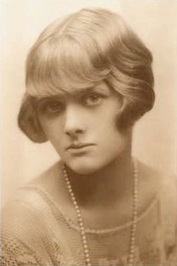
Daphne du Maurier (born May 13, 1907, London, England—died April 19, 1989, Par, Cornwall) was an English novelist and playwright, daughter of actor-manager Sir Gerald du Maurier, best known for her novel Rebecca (1938).
Du Maurier’s first novel, The Loving Spirit (1931), was followed by many successful, usually romantic tales set on the wild coast of Cornwall, where she came to live. She also wrote historical fiction, several plays, and Vanishing Cornwall (1967), a travel guide. Her popular Rebecca was made into a motion picture in 1940.
Du Maurier was made a Dame Commander in the Order of the British Empire in 1969. She published an autobiography, Growing Pains, in 1977; the collection The Rendezvous and Other Stories in 1980; and a literary reminiscence, The Rebecca Notebook and Other Memories, in 1981. (Source: Britannica)

 What Cathy Read Next...
This book was my first taste of DdM and I was hooked! Helped by the fact I discovered my secondhand copy in a cute north England village in 2007 when we were travelling. It was the right book at the right time.
I obviously blocked out the court transcript 😊
LikeLike
I’ve got a few more of hers on my Classics Club list. The next one might be The King’s General.
LikeLiked by 1 person
This is one of my least favourite du Maurier novels because of the long court case section you mentioned. I did enjoy the bits about Mary Anne’s earlier life, though.
LikeLike
Yes, that section really dragged. Because I was listening to the audibook I speeded up those chapters!
LikeLike
Good review. I wasn’t sure when I started reading this one, but I eneded up loving it!
LikeLike
I really enjoyed most of it, it was just the court case sections that dragged. I was listening to the audiobook so speeded up those chapters!
LikeLiked by 1 person
I have du Maurier on my list of classics to read! One day I will get to it!
Thank you for sharing your review with The Historical Fiction Reading Challenge! I appreciate your continued support of the challenge.
LikeLiked by 1 person