Blog Tour/Guest Post: The Dark Isle by Clare Carson

TheDarkIsleBanner

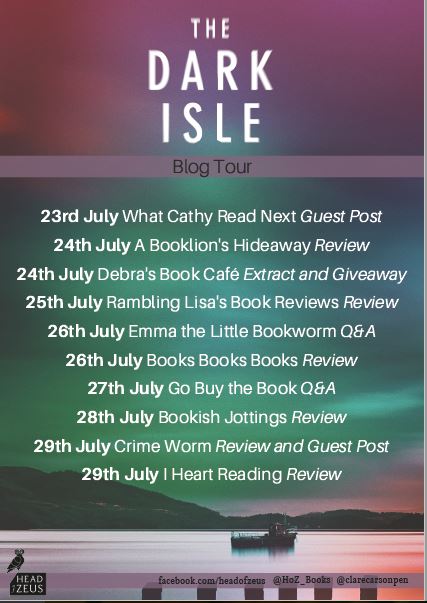
I’m delighted to host today’s stop on the blog tour for The Dark Isle by Clare Carson, the thrilling conclusion to the Sam Coyle trilogy. And I’m thrilled to say Clare has written a fascinating article about how she goes about communicating a sense of time and place in her writing.
Follow my blog with Bloglovin


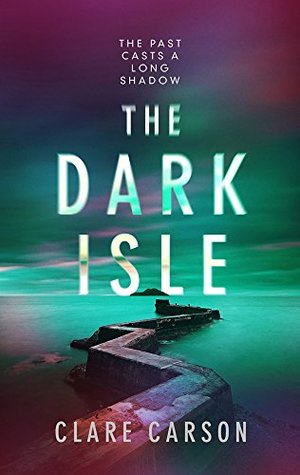
TheDarkIsle2About the Book

Sam grew up in the shadow of the secret state. Her father was an undercover agent, full of tall stories about tradecraft and traitors. Then he died, killed in the line of duty. Now Sam has travelled to Hoy, in Orkney, to piece together the puzzle of his past. What she finds is a tiny island of dramatic skies, swooping birds, rugged sea stacks and just four hundred people. An island remote enough to shelter someone who doesn’t want to be found. An island small enough to keep a secret…

Format: Hardcover Publisher: Head of Zeus Pages: 416
Publication: 1st June 2017 (UK) Genre: Thriller    

Purchase Links*
Amazon.co.uk ǀ Amazon.com ǀ
*links provided for convenience, not as part of any affiliate programme

Find The Dark Isle on Goodreads


Guest Post: ‘The Dark Isle: Finding a Sense of Time and Place’ by Clare Carson

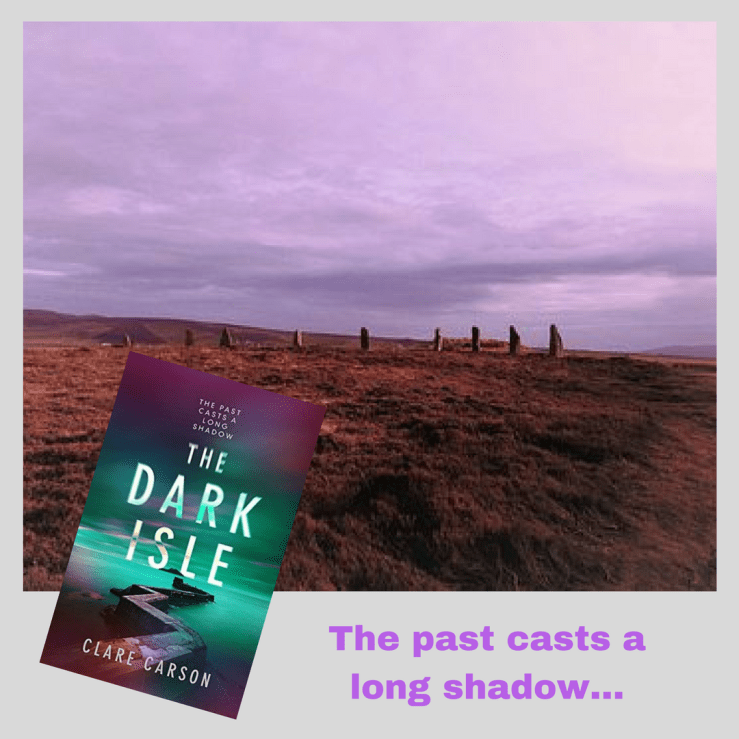
The Dark Isle is set in Orkney and London in 1976 and 1989. The sense of place and time is integral to the story – I try to bring landscapes to life by portraying them through the eyes of the characters I’m writing about. In The Dark Isle, places are described as seen through the eyes of Sam, the protagonist, both as a child and as a young woman.

I learned to see landscapes in different ways when I was researching women’s health in rural Zimbabwe. Zimbabwe is a country of extremes; it has beautiful, lush green valleys and cool mountains, but these are often places that were once owned by white Rhodesians. Most poor black women were pushed by the colonial government into the arid lowlands where barely anything grows.

I wanted to talk to these women, so I ended up staying for a year in a sun-scorched village, ringed by thorn bushes. I hated it for the first few weeks. I could barely move in the heat and the giant crickets and millipedes that roamed the sandy paths made me recoil. But after a while, as I talked to more women, I started to see the village differently. There was a human geography and history – the chief’s house, sacred grounds and trees, the traditional healer’s hut, the bushlands where the guerrillas hid and camped during the war of independence. There was even some greenery in the small gardens carefully tended by women growing a few vegetables to add to their meagre diet.

Later, I returned to the area after a few weeks away; the evening sun was dropping over the sand, the vast baobabs were silhouetted black against the crimson sky and the lovingly painted yellow and pink walls of the mud huts glowed magically in the dusk. The landscape was stunning and moving, it had just taken me a while to see it.

That experience has stayed with me. I know that landscapes are like people – first impressions can be misleading. And I also know that people bring landscapes to life – a sense of place comes from the stories that are buried in the rocks and trees, and from the way that different characters view the environments in which they live or find themselves.

In The Dark Isle, it is Sam’s view of Orkney and London which gives the book its sense of time and place. The way these landscapes are portrayed change and take on a different colour as Sam ages and faces up to the legacy of her father and her emotional battles with her past.

TheDarkIsleGraphic

ClareCarsonAbout the Author

Clare Carson is an anthropologist and works in international development, specialising in human rights. Her father was an undercover policeman in the 1970s.   She drew on her own experiences to create the character of Sam, a rebellious eighteen year old who is nevertheless determined to make her father proud.

You can find out more about Clare’s experience growing up as the daughter of an undercover policeman here

Connect with Clare

Twitter ǀ Goodreads


Book Review: A Reluctant Warrior by Kelly Brooke Nicholls

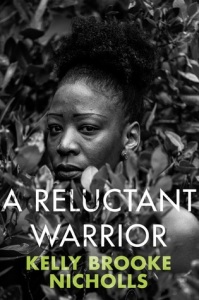
AReluctantWarriorAbout the Book

When Luzma’s brother, Jair, unwittingly uncovers the plan by Colombia’s most notorious drug cartel to smuggle an unprecedented cocaine shipment into the US, it puts their family in grave danger. Jair’s kidnapping by the cartel forces Luzma to go face to face with vicious paramilitary leader, El Cubano, and General Ordonez, ruthless head of the military – men who will stop at nothing to protect their empires. But for Luzma, nothing is more important than saving her family – not even her own life.

Format: Paperback Publisher: The Author People Pages: 232
Publication: 28th June 2017 Genre: Thriller    

Purchase Links*
Amazon.co.uk ǀ Barnes & Noble
*links provided for convenience, not as part of any affiliate programme

Find A Reluctant Warrior on Goodreads


My Review

The opening of the book places you right at the centre of the action with Luz-Marina (Luzma) and her family forced to flee for their life from their village to escape the paramilitaries targeting those they suspect of supporting the guerillas. In fact, I think a little more background to the political situation in Colombia at the start of the book might have helped those unfamiliar with it, such as the differences between the guerrillas, the paramilitaries and the army.

After a close escape, Luzma, her brother, Jair, and her grandparents take refuge in the home of her aunt Jolene in the city of Buenaventura. There is a real sense of community spirit as, despite Jolene and her family like many other households in Colombia, living in squalor and poverty, they still make Luzma and her family welcome in their home.

‘It stood on stilts over muddy water full of garbage. There were some holes in the walls where the builders had run out of wood…A cross, candles and Orisha beads sat in a little altar in the tiny living room. The kitchen was at the back and the toilet was on an uncovered balcony above the smelly water, with a rudimentary curtain around it.’

Luzma soon becomes all too aware of the corruption endemic in Colombian society and that Buenaventura is the location for some of its most dangerous criminal elements, in particular the feared leader known as El Cubano. The corruption extends into all levels of government and even the army, many of whom are in collusion with the paramilitaries. Luzma learns about the fate of many young men in the city: ‘They kill them and dress them up in guerrilla fatigues and claim them as a combat kill. There are systems in the army that reward them for the number of enemy combatants they kill.’ The local army commander, General Ordonez, has gone one step further on the path of corruption, colluding with El Cubano in his drug trafficking operation which is making use of a very unusual piece of second-hand kit.

When Jair is kidnapped by El Cubano’s gang to prevent him passing on secrets, Luzma determines to rescue him, even at the expense of her own life. The reader learns of past experiences that explain Luzma’s determination to rescue her brother come what may. Having a strong sense of justice, Luzma also sets out to make sure the criminals are brought to justice. Despite coming into possession of potential leverage and the help of like-minded people, the odds against Luzma succeeding seem overwhelming. A climate of fear exists in Buenaventura, with informers in every neighbourhood and watchers on every corner: ‘Everything looked normal. But one could never be sure in Buenaventura.’ Those who attempt to stand up to corruption or the drug cartels are shown no mercy.

However, there are rare moments of joy for Luzma. I particularly liked the scene where she and Rafa, the young US humanitarian worker she meets, go dancing. The author really captures the atmosphere of the dancers and the rhythms of the music.

Where I did think the author used some artistic licence was in the involvement of Luzma in events at the end of the book. I’m not sure that civilians would be allowed to play the part that Luzma does. However, this is fiction after all and it does bring a nice closure to the narrative so I forgive the author this one indulgence!

In a compelling afterward, the author sets out some shocking statistics about the victims of the conflict in Colombia. After reading this, you realise that, if anything, the author has softened the picture of the suffering of the Colombian people.

For anyone who may be put off by the subject matter, I would say don’t be, because apart from anything else A Reluctant Warrior is a really entertaining read, full of suspense with a fascinating setting and plenty of tense moments.

I received a review copy courtesy of the author and Xpresso Book Tours in return for an honest review.

Follow my blog with Bloglovin

In three words: Compelling, authentic, chilling


KellyBrookeNichollsAbout the Author

Kelly Brooke Nicholls’ fascination with other cultures was instilled in her early years growing up on a boat in the South Pacific islands. She’s been passionate about human rights from an early age and has over 15 years’ senior leadership experience working for NGOs including an extended period living and working in Colombia. Although the story and characters in A Reluctant Warrior are fictitious, they are based on events she witnessed firsthand and her interviews with thousands of victims of paramilitaries, guerrillas and drug cartels. She wrote this book to celebrate and support the brave people in Colombia who risk their lives to protect and make a difference to others. Kelly lives on the Northern Beaches of Sydney with her Colombian husband and two sons.

Connect with Kelly

Website ǀ Facebook ǀ Twitter ǀ Goodreads

BookConnectorbuttonxbt