

Throwback Thursday is a weekly meme hosted by Renee at It’s Book Talk. Throwback Thursday is designed as an opportunity to share old favourites as well as books that we’ve finally got around to reading that were published over a year ago. If you decide to take part, please link back to It’s Book Talk.
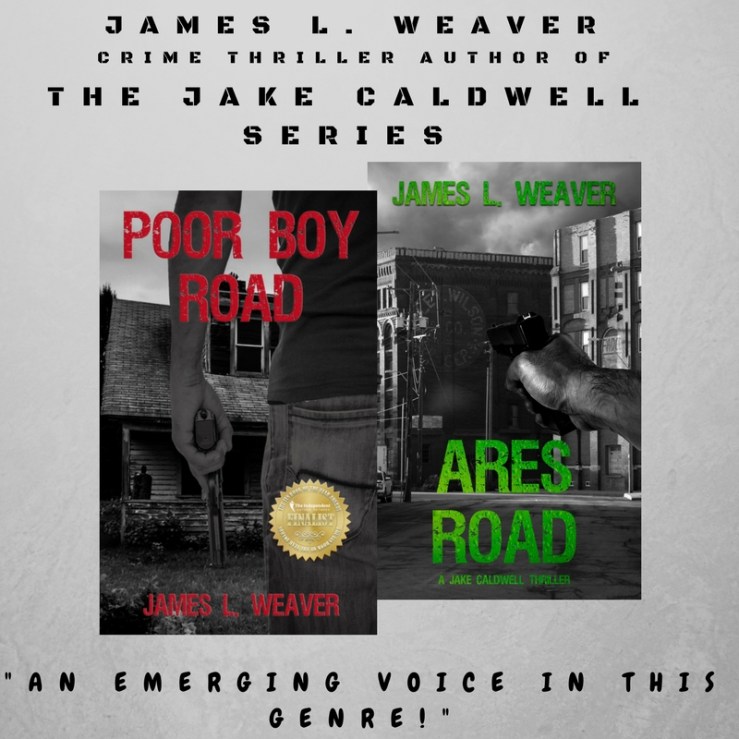
I’ve decided to delve back into the earliest days of my blog (not that it’s that old) and share one of my first reviews. It’s for the first in a series of terrifically entertaining action thrillers by James L. Weaver, published in March 2016. You can read my review of the sequel Ares Road here and if you happen to get hooked, you’ll pleased to learn a third book, Blackbird Road, is due out in 2018.
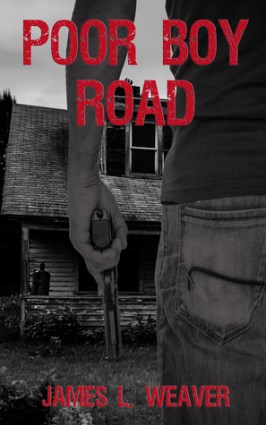
Poor Boy Road (Jake Caldwell #1) by James L. Weaver
 About the Book
As a mob enforcer, Jake Caldwell is in the dark business of breaking kneecaps and snapping bones. But each job sends him one step closer to turning into the man he swore he’d never become – his violent and abusive father. Leaving the mob is easier said than done. When his boss offers a bloody way out, Jake has no choice but to take it, even if it means confronting ghosts of old. Arriving in his hometown, Jake has two things on his mind: kill ruthless drug lord Shane Langston and bury his dying father. Racing through the countryside searching for Langston, the web of murder, meth and kidnapping widens, all pointing toward a past Jake can’t escape and a place he never wanted to return – Poor Boy Road.
Purchase Links*
Amazon.co.uk ǀ
*links provided for convenience, not as part of any affiliate programme
Find Poor Boy Road on Goodreads
My Review
Poor Boy Road is the first in a series featuring mob enforcer, Jake Caldwell. In fact, Jake very much wants to be an ex-mob enforcer but the price for this is killing his mob boss’s rival drug lord, Shane Langston. This will mean returning to his hometown which holds nothing but bad memories – of his troubled childhood at the hands of his violent father (now close to death), the trauma of his brother’s death and his abandonment of the woman he loved.
Although the book follows a fairly well-trodden path for an action/thriller, that doesn’t make it any less entertaining. Despite his dubious past exploits, Jake Caldwell makes an really engaging protagonist who one feels still retains his moral compass. It’s to the author’s credit that we care about Jake, who comes across as something of a ‘lost soul’ seeking a path to redemption despite the ‘Devil’s bargain’ he’s had to make with his mob boss, Keats.
‘Sometimes he stared in the mirror at hollow eyes, seeing the face of a man who hid in the shadows, a man he swore he’d never become.’
In fact, many of the characters in the book are looking for a way out: from poverty, crime, drug and alcohol addiction, family breakdown or domestic violence. The author creates a convincing picture of life in small-town America where your life chances can be measured by which side of Poor Boy Road you reside.
‘Every town, every city had their economic dividing line between the haves and the have nots. Poor Boy Road was their line.’
The book is full of twists and turns with plenty of action as Jake teams up with his old friend, Bear, now Sheriff of Benton County, to frustrate the drug gangs that menace the community and achieve the goal that will give him the chance to make a new start in life. Along the way Jake has to confront unpleasant memories, particularly his troubled relationship with his father, in the hope that he can stop trying to ‘outrun the ghosts’.
I really enjoyed Poor Boy Road and I can’t wait to read the next in the series, Ares Road.
I received a copy of this book courtesy of Lakewater Press in return for an honest review.
About the Author
James L. Weaver is the Kansas City author of the Jake Caldwell series featuring IAN Thriller of the Year finalist Poor Boy Road and soon to be released Ares Road from Lakewater Press. He makes his home in Olathe, Kansas with his wife of 19 years and two children. His previous publishing credits include a six part story called The Nuts and his 5-star rated debut novel Jack & Diane. Author note: a handful of the raters are actually not related to him.
Connect with James
Website ǀ Facebook ǀ Twitter ǀ Goodreads

 About the Book
 About the Author

