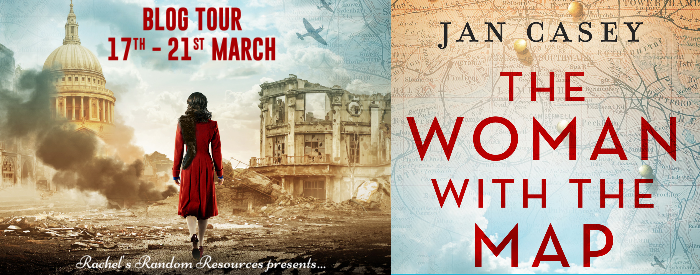
 Welcome to today’s stop on the blog tour for The Woman with the Map by Jan Casey. It was published as an ebook on 17th March and will be available in paperback on 12th May. My thanks to Rachel at Rachel’s Random Resources for inviting me to take part in the tour and to Aria for my digital review copy via NetGalley. Do check out the posts by my tour buddies for today, the team at Chick Lit Central, The Page Ladies, Ceri at Ceri’s Little Blog and Helen at Helen Rebecca Reads.
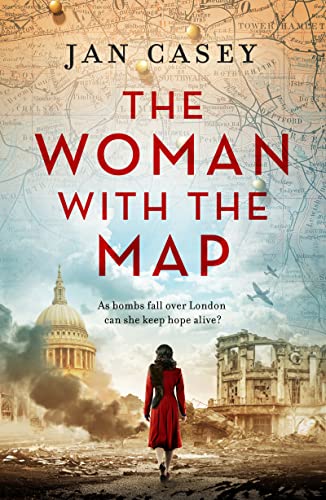 About the Book
February 1941. The world is at war and Joyce Cooper is doing her bit for the effort. A proud member of the ARP, it is her job to assist the people of Notting Hill when the bombs begin to fall. But as the Blitz takes hold of London, Joyce is called upon to plot the devastation that follows in its wake. Each night she must stand before her map and mark the trail of turmoil inflicted upon the homes and businesses she knows so well.
February 1974. Decades later, from her basement flat Joyce Cooper watches the world go by above her head. This is her haven; the home she has created for herself having had so much taken from her in the war. But now the council is tearing down her block of flats and she’s being forced to leave. Could this chance to start over allow Joyce to let go of the past and step back into her life?
Format: ebook (431 pages) Publisher: Aria
Publication date: 17th March 2022 Genre: Historical Fiction
Find The Woman with the Map on Goodreads
Purchase links
Bookshop.org
Disclosure: If you buy a book via the above link, I may earn a commission from Bookshop.org, whose fees support independent bookshops
Hive | Amazon UK
Links provided for convenience only, not as part of an affiliate programme
My Review
Oh my goodness, did this book put me through the emotional wringer. I’ll freely admit to shedding tears at some points. Alternating between 1974 and the period of the Second World War, we gradually come to see why the devastating losses Joyce experienced during the war have made her the way she is, reluctant to get close to anyone for fear they may disappear from her life and preferring to live a solitary, self-contained existence following her established routines. Her little basement flat has become her sanctuary, the place that gives her a sense of stability. Gradually we come to understand just why it is such a wrench for her to leave it.
The details of Joyce’s wartime work, plotting the location of bombs dropped on London during the Blitz, was fascinating. I was struck by the contrast between the chaos in the streets above and the methodical operation of the Report and Control Centre with its forms, log books and detailed procedures that define the colour of pins to be used to denote the various levels of destruction and casualties, or the precise diameter of the circle to be drawn to identify V1 rockets.
It was impossible to read the descriptions of the horrific damage and loss of life inflicted on London (and other cities) by German bombing raids without thinking of the atrocities being committed in Ukraine at the moment. As the war continues, Joyce’s experiences reflect those of many Londoners during the Blitz – never knowing whether this moment might be your last, homes damaged beyond repair, people desperately scrabbling in the rubble of bombed-out buildings, finding yourself left with just the clothes you stand up in and reliant upon the kindness of strangers, loved ones injured or literally blown to oblivion. And it never stops, for year after year. ‘Everyone was hungry; everyone was cold. They all had spots or skin the colour of the pall of smoke that hung over the city and stomach upsets and earaches and missing fingers and swollen joints…’ Although there are snatched moments of happiness they prove transitory. And, just when you think it can’t get any worse for Joyce, it does. (The chapter headings become positively chilling.)
I fell in love with Joyce and if she were my neighbour I’d want to give her a big hug and join her in a cup of tea and a vanilla slice. Taking the first tentative steps to remove the protective barrier she has built around her takes courage and Joyce proves once again, as she did during the war, that she has it in spades.
The Woman with the Map is one of the most moving books I’ve read for a long time. The parallels with events in Ukraine make it especially poignant and chillingly prophetic. Attending the celebrations at the end of the war, Joyce listens to Winston Churchill proclaiming that in years to come whenever people had their freedom threatened they would look back at the ‘stubborn determination and stoic endurance’ of the British people and say, like them, that they would rather die than be conquered’. Slava Ukraini!
In three words: Moving, authentic, powerful
Try something similar: Where Stands a Winged Sentry by Margaret Kennedy
Follow this blog via Bloglovin
 About the Author
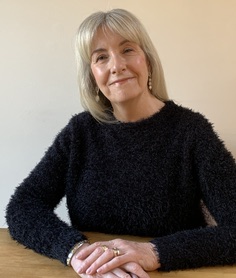
Jan Casey’s novels explore the themes of how ordinary people are affected by extraordinary events during any period in history, including the present. Jan is fascinated with the courage, adaptability and resilience that people rise to in times of adversity and for which they do not expect pay, praise or commendation. Jan is also interested in writing about the similarities, as opposed to the differences, amongst people and the ways in which experiences and emotions bind humans together.
Jan was born in London but spent her childhood in Southern California. She was a teacher of English and Drama for many years and is now a Learning Supervisor at a college of further education. When she is not working or writing, Jan enjoys yoga, swimming, cooking, walking, reading and spending time with her grandchildren. Before becoming a published author, Jan had short stories and flash fictions published.
Connect with Jan
Twitter




 What Cathy Read Next...