
 About the Book
Mehar, a young bride in rural 1929 Punjab, is trying to discover the identity of her new husband. She and her sisters-in-law, married to three brothers in a single ceremony, spend their days hard at work in the family’s ‘china room’, sequestered from contact with the men. When Mehar develops a theory as to which of them is hers, a passion is ignited that will put more than one life at risk.
Spiralling around Mehar’s story is that of a young man who in 1999 travels from England to the now-deserted farm, its ‘china room’ locked and barred. In enforced flight from the traumas of his adolescence – his experiences of addiction, racism, and estrangement from the culture of his birth – he spends a summer in painful contemplation and recovery, finally gathering the strength to return home.
Format: Hardcover (245 pages) Publisher: Vintage
Publication date: 6th May 2021 Genre: Historical Fiction
Find China Room on Goodreads
Purchase links
Bookshop.org
Disclosure: If you buy a book via the above link, I may earn a commission from Bookshop.org, whose fees support independent bookshops
Hive | Amazon UK
Links provided for convenience only, not as part of an affiliate programme
My Review
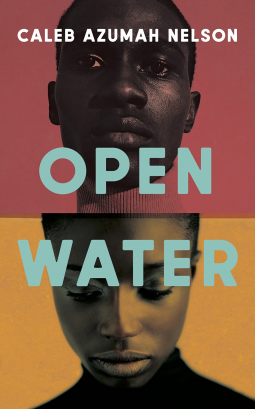
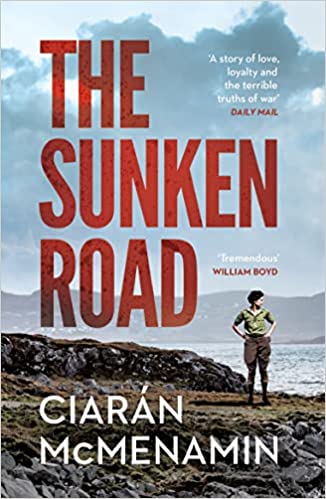
China Room is one of the books on the longlist for the Walter Scott Prize for Historical Fiction 2022 which was announced on 7th February. China Room is the fourth book on the list I’ve read and it was one that took some time to grow on me.
The book moves between the story of Mehar in 1929 and that of an unnamed narrator looking back from the present day (2019) to the time he spent in the Punjab as a young man. Although we never learn his name we know he is Mehar’s great-grandson. A photograph at the end of the book suggests that many of the childhood experiences he relates may reflect the author’s own.
Initially, I thought the later storyline superfluous and not as interesting as Mehar’s story which has something of the quality of a folktale about it, at least to begin with. However, the later timeline gradually gained more of my interest once I began to see the subtle parallels the author creates between the two stories. Although focussing on the members of one family separated by both time and geography, common themes emerge such as racial and gender discrimination.
Mehar’s experience is one of not being seen. For much of the time she is confined to the ‘china room’ of the title, endures conjugal visits from her husband in total darkness and is expected to be veiled at all times when outside. This contrasts with the experience of her great-grandson who recalls that as a child growing up in Britain, ‘I was always being stared at, my presence noted and remarked upon for its rarity in this town’. On the other hand, like Mehar, who is forced to keep her eyes averted when outside the ‘china room’, he confesses ‘I can’t remember ever looking up as a child without immediately feeling as if I had no right and should look away’. Mehar and her sisters-in-law catch only glimpses of the world outside through the narrow gaps in the window of the ‘china room’, their early attention being on trying to work out which of the three brothers is their husband. In a neat touch, at one point Suraj, one of the brothers, wonders, ‘Are the women the ones who can see everything, while the men stare at black windows?’
There is some glorious writing especially the descriptions of the landscape around the farm. ‘The wheat is cloaked in sleeves of red and apricot and a nightjar perches watchfully on the well, jerking its head this way and that.’
The end of the book arrives rather suddenly and, although it ties up some loose ends, it felt a little rushed. I would have liked to learn more about Mehar’s later life and the generations between her and her great-grandson.
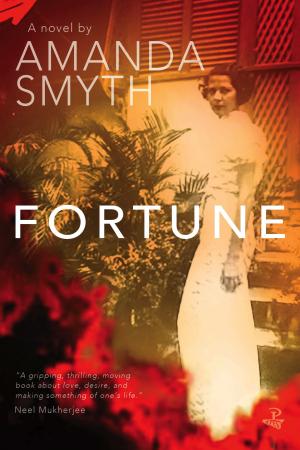
China Room is a quiet, unassuming novel that explores its themes with elegance and precision. It’s not my favourite of the longlisted books I’ve read so far (that would be The Fortune Men) but I can understand why it has gained a place on the list.
In three words: Subtle, eloquent, thoughtful
Try something similar: Heat and Dust by Ruth Prawer Jhabvala
Follow this blog via Bloglovin
 About the Author
Sunjeev Sahota is the author of Ours Are the Streets and The Year of the Runaways, which was shortlisted for the 2015 Man Booker Prize, the International Dylan Thomas Prize and the Sunday Times Young Writer of the Year Award, and won the Encore Prize, the European Union Prize for Literature, and the South Bank Sky Arts Award. He was chosen as one of Granta’s Best Young British Novelists in 2013. He lives in Sheffield. (Photo: Goodreads author page)
Connect with Sunjeev
Goodreads






 What Cathy Read Next...