
About the Book

As spring evenings lengthen over Kilnavarn House, two sisters, looking after their infirm mother, navigate the fragile territory between past and present.
Memories of a troubled upbringing resurface and the house holds onto the women, as it always has, refusing to let them go until long suppressed truths are spoken.
Format: ebook (267 pages) Publisher: époque press
Publication date: 19th March 2026 Genre: Contemporary Fiction
Find Sweep the Cobwebs Off the Sky on Goodreads
Purchase Sweep the Cobwebs Off the Sky from époque press
My Review
Frankie has been obliged to return to her childhood home, Kilnarvon, to care for her ailing mother, Elma, who is still grieving the loss of Frankie’s father Paddy. Although not completely bedridden, Elma is frail, incontinent and has occasional lapses of memory. But she still possesses a sharp tongue, short temper and a stubborn independence often resisting Frankie’s ministrations. ‘In old age my mother has polished her obstinacy so that it radiates, its emotional neutrons, beta particles and gamma rays sometimes striking others like a jolting current.’
Frankie veers between sympathy for her mother and frustration at her ingratitude. She also feels the awkwardness that comes with having to carry out the most intimate tasks for her mother. To add to her sense of isolation, the country is presently in lockdown because of the Covid pandemic.
Most of all she cannot forgive Elma for her cruelty towards Frankie’s adopted younger sister Tess. Throughout Tess’s childhood she was punished for any infraction. Frankie not only feels anger at her late father’s passivity, that he did nothing to stop her mother’s behaviour, but also bears a sense of guilt that, although only a child, she did nothing to intervene. ‘Knowing so much, unable to act, to give voice.’
Frankie and Tess themselves have had a fraught relationship. Over the years they have been playmates and confidantes but at other times there have been fierce arguments and lengthy periods of silence. Frankie resents the fact that the burden of caring for their mother has fallen on her alone and that Tess constantly comes up with reasons why she has not yet arrived at Kilnarvon.
While her mother sleeps or sits in front of the TV endlessly watching quiz shows, Frankie ponders on her life, including her forty year marriage to Christoph. She reflects on the excitement of their travels together in the earlier years of their marriage and the transition to the more settled but still fulfilling companionship of the present, summed up beautifully by her observation, ‘We seem to be necessary to one another.’ She misses Christoph intensely but is torn between her desire to return home and her sense of responsibility towards her mother.
WhenTess finally arrives, a process of reconciliation can begin but not before secrets of the past are brought into the light.
Like many Irish novels the book has an element of the mystical, the notion that the boundary between past and present is insubstantial. There’s a sense that a restless spirit inhabits Kilnarvon, manifesting itself in scratching noises, swinging lightshades, the odour of spices. It’s Frankie who’s particularly sensitive to this, as if the house’s eccentric previous owner is still making his presence felt.
Sweep the Cobwebs Off the Sky is an acutely-observed exploration of family relationships. You can read another review of the book by Jackie at Never Imitate.
I received a review copy courtesy of époque press.
In three words: Intimate, insightful, moving
About the Author
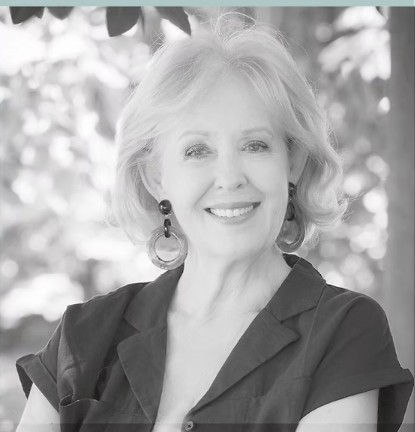
Mary O’Donnell has been publishing novels, short stories and poetry since 1990 and her work is regarded as key in expanding the horizons of Ireland’s traditionally male-dominated literary world. The Light Makers, Mary’s debut best-selling novel, received the Sunday Tribune’s Best New Irish Novel 1992 Award and her other published novels include The Elysium Testament and Where They Lie. Her most recent and highly praised collection of short stories, Walking Ghosts was published in 2025.
Mary has taught Creative Writing at the universities of Galway, Maynooth, University College Dublin and University College Cork, as well as for the University of São Paulo. She has also held several prominent international writing residencies including at the Princess Grace Irish Library Monaco, the Irish College in Paris, and the Irish College in Leuven and she is a member of Ireland’s affiliation of artists, Aosdána. (Photo/bio: Publisher author page)
Connect with Mary
Instagram | X | Bluesky




 What Cathy Read Next...