The Traitor by V. S. Alexander #BookReview

The Traitor by V.S. AlexanderAbout the Book

“Someone had to make a start’”, Sophie Scholl, leader of the White Rose, 21 February 1943 at her trial in Munich.

Munich, 1942. As war rages across Europe, a series of anonymous leaflets, criticizing the brutal Nazi regime, appear on the streets of Germany. Their message, written in secret, is a daring act of defiance.

Natalya Petrovich, a student, knows more than she should. As a member of the secret resistance group, the White Rose, Natalya is risking everything. But even among those she trusts most, there is no guarantee of safety. The Gestapo are everywhere and Natalya knows that falling into the hands of the secret police means torture – and almost certain death.

A page-turning and heart-breaking historical novel about the daring White Rose group who stood up to the Nazis … and paid the ultimate price.

Format: ebook (400 pages)                 Publisher: One More Chapter
Publication date: 12th March 2020 Genre: Historical Fiction, Romance

Find The Traitor on Goodreads

Purchase links*
Amazon UK | Hive (supporting UK bookshops)
*links provided for convenience not as part of an affiliate programme


My Review

The Traitor is set during a dark period of Germany’s history. It shows, through the characters of Natalya and her friends, that not all Germans were Nazis and that some, like her, had the courage to resist despite the risk to them and their families. Those risks become all too evident as the book progresses as well as the desperately difficult moral choices they face.

The book’s title raises the question who exactly is the “traitor”? Is it Natalya and her companions, as the German State would have it, for challenging the word of the Fuhrer? Is it those who inform on others, even if only to save themselves? Is it those in authority who participate in show trials, knowingly compromising their integrity? Is it those who profess allegiance to the Reich whilst in their hearts believing something else?

Personally I would have liked a little more information about the White Rose group, knowing nothing about it before starting the book. For example, how many members it had and how wide was its reach. Having said that, there are more details in the informative Author’s Note, as well as suggestions for further reading and an example of a White Rose leaflet.

I confess I found it hard to understand Natalya’s attraction to the character with whom she gets involved and who becomes a recurring – and influential – presence in her life. He seemed to me to have few redeeming qualities even at the beginning. The opposite applies to Natalya who throughout demonstrates remarkable courage and resilience, even during the darkest of times.

The Traitor vividly conveys the oppressive atmosphere of the time, the constant fear of informers, the brutal treatment meted out to those who dared to defy the Reich and the courage of those who aided the resistance groups.

My thanks to One More Chapter for my review copy via NetGalley.

In three words: Dramatic, emotional, chilling

Try something similar: People Like Us by Louise Fein

Follow this blog via Bloglovin


About the Author

V. S. Alexander (the pen name of Michael Meeske) is the author of The Traitor, The Magdalen Girls, Her Hidden Life, and The Irishman’s Daughter. He is an ardent student of history with a strong interest in music and the visual arts. Some of V.S.’s writing influences include Shirley Jackson, Oscar Wilde, Daphne du Maurier, or any work by the exquisite Bronte sisters.

Connect with V. S. Alexander
Website | Twitter | Facebook


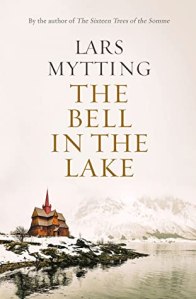
The Bell in the Lake by Lars Mytting (trans. by Deborah Dawkin) #BookReview

The Bell in the LakeAbout the Book

Norway, 1880. Young, inquisitive Astrid is unlike the other girls in the secluded village at the end of the valley. She dreams of a life that consists of more than marrying, having children, and eventually dying from hard work in the fields. And then the young Pastor Kai Schweigaard comes into her life.

Kai Schweigaard has taken over the small parish of Butangen, with its 700-year-old stave church. The old church is one of the few remaining examples of early Christianisation, with effigies of pagan deities carved into the wooden walls. And the bells – two sister bells forged in the 16th century, in memory of the conjoined twins Halfrid and Gunhild Hekne – are said to have supernatural powers. Legend has it that they ring of their own accord when danger is imminent.

But the Pastor wants to tear it down, to replace it with a more modern, larger church. He has already contacted the Kunstakademie in Dresden, which is sending its talented architecture student Gerhard Schönauer to oversee the removal of the church and its reconstruction in the German city. For Astrid this is a provocation too far.

But Astrid falls in love with Gerhard. He is so different from the young men in Butangen: modern, cosmopolitan, elegant, he even smells different. And she must make a choice: for her homeland and the pastor, or for an uncertain future in Germany. Then the bells begin to ring . . .

Format: ebook (400 pages) Publisher: Quercus
Publication date: 19th March 2020  Genre: Historical Fiction

Find The Bell in the Lake on Goodreads


Purchase links*
Amazon UK| Hive (supporting UK bookshops)
*links provided for convenience not as part of an affiliate programme


My Review

I loved the author’s first novel, The Sixteen Trees of the Somme, so I was excited to learn about his new book, The Bell in the Lake, especially since it is the first in a planned trilogy of historical novels. The book is translated from the Norwegian by Deborah Dawkin.

1880 is a time of change in the world. However, very little has changed in Butangen, or ever seems likely to. “The village was twenty years behind its neighbouring villages, which were thirty years behind Norway’s towns and cities, which were fifty years behind the rest of Europe.” That tension between old and new, change and tradition forms the heart of the novel.

For Astrid Hekne, with her ‘restless mind’, real life, as she sees it, is happening elsewhere. She finds it hard to accept the life path she seems expected to follow. “Tradition favoured girls with course hands who toiled silently as the grindstone turned, who gave birth without fuss…” In a way, Astrid represents the meeting point between the old and the new. Her keen intelligence tells her there is so much more to life, even if she’s not quite sure what it is. “The only thing she knew was that she was searching for something, and that whatever it was, it was not in the village.”

Initially, the new Pastor, Kai Schweigaard, seems to offer the chance of escape for which Astrid is searching. She trades information about the village with him in return for access to newspapers which she reads greedily, grabbing “the outside world with both hands.” The attraction appears to be mutual. Rarely has the folding of a tablecloth been the source of such sexual tension. However, when Schweigaard’s intentions for the old church and, more importantly, for the Sister Bells, become clear, Astrid’s feelings change.

The arrival of Gerhard Schönauer to oversee the demolition of the church creates waves in a number of ways. For one, he is the first human being from the outside world Astrid has ever encountered. Furthermore, he recognizes the old church for the work of craftsmanship it is and its significance for the village, whereas Kai Schweigaard sees it only as a relic of a bygone age. A clash is inevitable and when it comes it has dramatic consequences.

Given the book is translated from another language, I found it interesting that a feature of the book is language and meaning – and its limitations. For example, Kai Schweigaard relies on Astrid Hekne to interpret for him the ‘peculiarities’ of the local people, especially when they are trying to outwit him. And Gerhard Schönauer’s native language is German whereas Astrid’s is Norwegian but using a dialect unique to the area in which certain words simply aren’t in the vocabulary. “Love. This word, which did not exist in her dialect… She could show it, through loyalty and devotion, and through actions, but to say it was impossible.” There are intimate scenes as Gerhard and Astrid teach each other words from their native languages – the word for lip, for love, for kiss.

I loved Astrid as a character for her independent spirit, resourcefulness and questioning mind. Faced with adversity, her response is to, “Collect herself with the same strength that the women before her had collected themselves, through avalanches and floods, tuberculosis and dysentery, frost-ruined harvests and barn fires.”

At times, the novel has a fairy tale or fable like quality, especially in the opening section recounting the story of how the Sister Bells came to be cast. Overall, it is an intriguing mix of myth and romance that explores the tension between the modern world and traditional ways and poses the question whether ‘moving with the times’ always brings about improvement and enlightenment.

Given events towards the end of the book, it will be interesting to see how the story unfolds in the next instalment in the trilogy. In the meantime, if (like me) the book has made you curious to find out more about Norwegian stave churches, you can find information and some wonderful pictures here.

I received an advance review copy courtesy of Quercus via NetGalley.

In three words: Atmospheric, dramatic, mystical

Try something similar: Things Bright and Beautiful by Anbara Salam

Follow this blog via Bloglovin


About the Author

Lars Mytting, a novelist and journalist, was born in Fåvang, Norway, in 1968. His novel The Sixteen Trees of the Somme was awarded the Norwegian National Booksellers’ Award and has been bought for film. Norwegian Wood: Chopping, Stacking and Drying Wood the Scandinavian Way has become an international bestseller, and was the Bookseller Industry Awards Non-Fiction Book of the Year in 2016. The Bell in the Lake, the first in a trilogy, was a number one bestseller in Norway and nominated for the Norwegian National Bookseller’s Award 2018.

Connect with Lars
Website | Goodreads

About the Translator

Deborah Dawkins originally trained in theatre at Drama Centre, London before turning to translation. Her translations include The Blue Room by Hanne Orstavik and Buzz Aldrin: What Happened to You in All the Confusion by Johan Harstad, shortlisted for the Best Translated Book Awards in 2012. She is the co-translator of eight plays by Ibsen for Penguin Classics, and is presently working on a PhD about the life and work of the Ibsen translator Michael Meyer.