#BookReview #Ad The Truth Must Dazzle Gradually by Helen Cullen

The Truth Must Dazzle GraduallyAbout the Book

On an island off the west coast of Ireland, the Moone family gathers.

Maeve is an actor, struggling with her most challenging role yet – as a mother to four children. Murtagh, her devoted husband, is a potter whose craft brought them from the city to this rural life.

In the wake of one fateful night, the Moone siblings must learn the story of who their parents truly are, and what has happened since their first meeting, years before, outside Trinity College in Dublin.

We watch as one love story gives rise to another, until we arrive at a future that none of the Moones could have predicted. Except perhaps Maeve herself.

Format: ebook (325 pages)               Publisher: Penguin
Publication date: 20th August 2020 Genre: Contemporary Fiction

Find The Truth Must Dazzle Gradually on Goodreads

Purchase links 
Bookshop.org 
Disclosure: If you buy a book via the above link, I may earn a commission from Bookshop.org, whose fees support independent bookshops

Hive | Amazon UK 
Links provided for convenience only, not as part of an affiliate programme


My Review

When I read Helen Cullen’s debut novel The Lost Letters of William Woolf back in 2018 I commented that the real achievement of the book was the way she explored the dynamics of the relationship between William and his wife, Clare. It was a portrait of a marriage that had gone slightly astray because they had lost the ability to communicate openly and honestly about their feelings, hopes and ambitions.  

The author repeats that feat – in fact, with even greater skill –  in The Truth Must Dazzle Gradually. The book depicts the relationship between Maeve and Murtagh and, in particular, Maeve’s struggles with being the sort of mother to her four children she would like to be. In fact, to be the sort of person she would like to be. 

Following the tragic events of the opening chapter, the reader is taken back in time to witness Maeve and Murtagh’s first meeting and the blossoming of their relationship. It’s not hard to understand what attracts Murtagh to the beautiful, spirited but mercurial Maeve, a budding actor. In reality though Maeve’s life is something of a performance. As she observes, ‘Here people see the theatre student, the vinyl collector, the poet, Murtagh’s girlfriend, the American, the actress; so many different things, and none of them are the sick girl, or the other far worse things we know some folks called me’. 

When Murtagh is given the opportunity to pursue his career as a potter on Inis Óg, a small island off the coast of Galway in Ireland, it means Maeve giving up her own aspirations. It’s just one of the things that creates the first small fissures in Maeve’s mental state. Those fissures will gradually expand until the whole edifice comes crashing down. As the book progresses, we witness heartbreaking moments such as Maeve recording in her journal her ‘good’ days and ‘bad’ days and finding the second have become more numerous than the first. She worries about the impact the days when despair overwhelms her is having on her children, and on Murtagh in particular. ‘Murtagh is so loyal, he would never leave me. He would endure the challenge of living with me and my moods and my difficulties until the end of time if I let him.’  

It leads her to take a decision born out of love but which won’t appear that way to her family. Just the opposite in fact. It’s only years later that some kind of understanding dawns, bringing together a family which has become fractured, resentful and distant from one another. I absolutely fell in love with Murtagh who is the most wonderful character. I felt I shared with him every moment of joy, every moment of grief and silently cheered when he reflected, ‘There was room in his life for one more dream, maybe.’

If this is making it sound like a story of interminable sadness, I can reassure you it is not. There are moments of humour too and the book ends on the most wonderfully uplifting note. I’m not ashamed to admit I shed a few tears at some of the sadder moments but also got slightly misty-eyed at the end. I thought The Truth Must Dazzle Gradually was wonderful and I’m so glad I finally got around to reading it.

I received a review copy courtesy of Penguin via NetGalley.

In three words: Powerful, insightful, moving


Helen CullenAbout the Author

Helen Cullen is an Irish writer living in London. Helen worked at RTE (Ireland’s national broadcaster) for seven years before moving to London in 2010. Her debut novel, The Lost Letters of William Woolf, was published by Penguin in July 2018 in the UK, Ireland, Australia and South Africa, and published in America by Harper Collins in June 2019. The novel is also available in translation in numerous foreign markets including Italy, Germany, Russia, Greece and Israel where it hit the bestseller charts. The Lost Letters of William Woolf has also been optioned for television by Mainstreet Pictures. The novel also garnered Helen a Best Newcomer nomination in the An Post Irish Book Awards 2018. Her second novel, The Truth Must Dazzle Gradually, was published in Ireland and the UK and as The Dazzling Truth in the USA and Canada in August 2020.

Helen holds an M.A. Theatre Studies from UCD, an M.A. English Literature at Brunel University and commenced a PhD in Creative and Critical Writing at the University of East Anglia in October 2020. She is now writing full-time and also contributes to the Irish Times newspaper and Sunday Times Magazine. (Photo/bio: Author website)

Connect with Helen
Website | Twitter | Facebook | Instagram

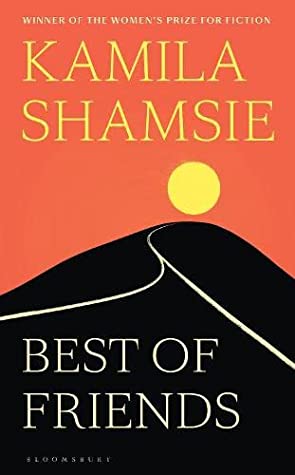
#BookReview Best of Friends by Kamila Shamsie

Best of FriendsAbout the Book

Fourteen-year-old Maryam and Zahra have always been the best of friends, despite their different backgrounds. Maryam takes for granted that she will stay in Karachi and inherit the family business; while Zahra keeps her desires secret, and dreams of escaping abroad.

This year, 1988, anything seems possible for the girls; and for Pakistan, emerging from the darkness of dictatorship into a bright future under another young woman, Benazir Bhutto. But a snap decision at a party celebrating the return of democracy brings the girls’ childhoods abruptly to an end. Its consequences will shape their futures in ways they cannot imagine.

Three decades later, in London, Zahra and Maryam are still best friends despite living very different lives. But when unwelcome ghosts from their shared past re-enter their world, both women find themselves driven to act in ways that will stretch and twist their bond beyond all recognition.

Format: Hardback (336 pages)               Publisher: Bloomsbury
Publication date: 27th September 2022 Genre: Literary Fiction

Find Best of Friends on Goodreads

Purchase links
Bookshop.org
Disclosure: If you buy a book via the above link, I may earn a commission from Bookshop.org, whose fees support independent bookshops

Hive | Amazon UK
Links provided for convenience only, not as part of an affiliate programme


My Review

This was a book of two halves for me. I really enjoyed the first section set in Karachi in 1988 in which we meet Zahra and Maryam as teenagers.

Although close friends, there are already signs of differences between them: social, financial and in terms of outlook on life.  As part of a wealthy and influential family, Maryam’s future path seems clear, whereas Zahra’s future will depend on her gaining a scholarship through her own efforts.  And where Maryam tends to see things in absolutes, Zahra possesses a more thoughtful and enquiring outlook. ‘There were things Zahra wanted from the world that Maryam didn’t understand’. What they do share is a growing awareness of their own physicality and sexual allure. However they live in a society in which, as Maryam observes, ‘Men strode, owning the world. Women walked with smaller steps, watched and watchful’.  The event that occurs after a party may seem relatively trivial to us but it has serious repercussions for Maryam and Zahra, a shameful breach of social conventions. It changes the path Maryam has confidently expected her life to take and also sows a little seed of resentment about Zahra’s role in how events played out that evening. For Zahra, the feeling of terror she experienced is an unwelcome reminder of the fears she has for her father’s safety from the dictatorial government of General Zia.

The politics of Pakistan play an interesting role in this part of the book. The death of General Zia in a plane crash relieves Zahra’s fears for her family but also gives her a sense of empowerment and of new possibilties as a result of the election of Benazir Bhutto as Prime Minister. ‘She’d felt different since Benazir’s inauguration. A woman was in power.’

Teenage Maryam asks Zahra, ‘What do you think we’ll be doing at forty?’ The second part of the book, set in London in 2019, answers that question. Two newspaper interviews with each woman describe events in their life in the intervening years. Maryam, a millionaire at 26, is now the head of a venture capital firm with a financial interest in, amongst other things, a video and photo sharing application making use of ‘face tagging’ technology. Zahra, formerly a successful barrister, is now head of the Centre for Civil Liberties. Maryam is optimistic about the new (we presume Conservative) government. Zahra opposes government policies, including around the use of facial recognition technology. For me, the potential for conflict between them felt a little too contrived. It seemed strange they should have stayed friends given their views and values differ so fundamentally.  Perhaps the most resilient link between them is Maryam’s daughter, Zola, who is Zahra’s goddaughter.

When the event that occurred in Karachi all those years ago raises its head once more it introduces an element of drama. Both women seem to view the event as a pivotal, defining moment in their lives. ‘All that shame and fear we carry around from childhood.’ This felt an over-exaggeration to me given both women have achieved success in their lives subsequently. Their responses to this perceived new ‘threat’ are markedly different. Maryam’s response is to use her power and influence to rid herself of the problem using ‘older forms of justice’. Zahra’s response is rather bizarre, akin to an act of emotional self-harm. Confronting the issue and the way they have each responded to it, brings out deep-seated and long hidden resentments that seem likely to destroy the friendship for ever. ‘It was so easy, too easy, for each of them to draw blood; they knew all the exposed places, the armour chinks and the softness of the belly beneath.’

Early in the book when Zahra detects that Maryam has told her a lie, she observes, ‘A drift had begun, which would only grow as the years went on. Deep down they both knew that no one had the kind of friendship when they were forty that the two of them had at fourteen’. Essentially the second part of the book is the playing out of that drift, a rather slow playing out it has to be said.

Even if I wasn’t enamoured with the second part of the book, I acknowledge there is some great writing. For example, I loved the early scenes in Karachi which gave a great sense of what life there was like in the 1980s. And a scene towards the end of the book in which Zahra visits a detention centre for people refused leave to remain stands out because of the way it reveals the harsh realities of the UK immigration system and the malign power of political influence.

I received a proof copy courtesy of Bloomsbury via Readers First.

In three words: Insightful, assured, intimate


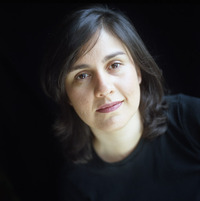
Kamila ShamsieAbout the Author

Kamila Shamsie was born and grew up in Karachi, Pakistan. Her most recent novel Home Fire won the Women’s Prize in 2018. It was also longlisted for the Man Booker Prize 2017, shortlisted for the Costa Best Novel Award and DSC Prize, and won the London Hellenic Prize.

She is the author of six previous novels: In the City by the Sea (shortlisted for the John Llewelyn Rhys Prize); Salt and Saffron; Kartography (also shortlisted for the John Llewelyn Rhys Prize) Broken Verses; Burnt Shadows, shortlisted for the Orange Prize for Fiction and winner of the Premio Boccaccio (Italy) and the Anisfield-Wolf Award (US); and A God in Every Stone, shortlisted for the Women’s Baileys Prize, the Walter Scott Prize and the DSC Prize. Three of her novels have received awards from Pakistan’s Academy of Letters and her work has been translated into over 25 languages.

Kamila Shamsie is a Fellow of the Royal Society of Literature and was named a Granta Best of Young British Novelist in 2013. She is a professor of creative writing at the University of Manchester and lives in London. (Photo: Twitter profile)

Connect with Kamila
Twitter