
 About the Book
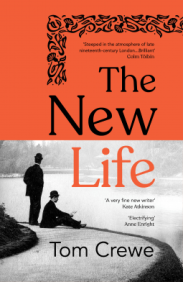
Two Victorian marriages, two dangerous love affairs, one extraordinary partnership . . .
After a lifetime spent navigating his desires, John Addington, a married man, has met Frank, a working-class printer. Meanwhile Henry Ellis’s wife Edith has fallen in love with a woman – who wants Edith all to herself.
When in 1894 John and Henry decide to write a revolutionary book together, intended to challenge convention and the law, they are both caught in relationships stalked by guilt and shame.
Yet they share a vision of a better world, one that will expand possibilities for men and women everywhere. Their daring book threatens to throw John and Henry, and all those around them, into danger.
How far should they go to win personal freedoms? And how high a price are they willing to pay for a new way of living?’
Format: eARC (384 pages) Publisher: Chatto & Windus
Publication date: 12th January 2023 Genre: Historical Fiction
Find The New Life on Goodreads
Purchase links
Bookshop.org
Disclosure: If you buy a book via the above link, I may earn a commission from Bookshop.org, whose fees support independent bookshops
Hive | Amazon UK
Links provided for convenience only, not as part of an affiliate programme
My Review
The ‘New Life’ which John Addington and Henry Ellis are in search of is one of social, personal and sexual freedom where, in particular, homosexuality (referred to as ‘sexual inversion’) is no longer illegal but accepted as a natural variant of human sexuality. They begin writing a book together intended to demonstrate their case through a combination of scientific evidence and personal case studies. This collaboration takes place mostly via correspondence with the two men hardly ever meeting.
Their motivations for writing the book are different. For Henry, it’s more an intellectual pursuit in line with his beliefs in the need for a more open society in which less conventional relationships – like his marriage to Edith, which is unconsummated – can flourish. For John it’s deeply personal as his life has been one of hiding his homosexual desires behind the facade of a conventional marriage. He feels he has got to the point where he can do that no longer.
What the two men have in common is the existence of a third party in their marriages. John has taken as his lover a young working class man called Frank, eventually installing him in the family home under the guise of him being his secretary. It doesn’t fool anyone, not least John’s wife, Catherine. Henry’s wife, Edith, has a close friend named Angelica with whom she spends much time since Edith and Henry live apart.
Given homosexuality is a criminal offence, both men are taking a great risk in publishing their book. This becomes even greater when, shortly before publication, Oscar Wilde is arrested, tried and convicted of gross indecency with men and sentenced to imprisonment with hard labour. John and Henry are presented with a dilemma. Should they go ahead and publish because they believe in the principles they are espousing or should considerations of safety for themselves and their families prevail? John is determined to press ahead with publication regardless of the consequences, even if it means the end of his marriage and public disclosure of his homosexuality with everything that might follow from that.
I found Henry quite a tragic figure. Painfully shy, he is touchingly devoted to his wife and believes fervently in the principles of personal freedom. John, on the other hand, although clearly deeply unhappy, seemed to me to be thoroughly self-absorbed. I could understand his desire to be true to himself but he just seemed so oblivious to the impact of his crusade on other people, including Frank, the man he professes to love, who also risks imprisonment if the nature of their relationship is revealed.
More than anything my sympathies were with John’s wife, Catherine. Having silently tolerated her husband’s homosexuality whilst bringing up their three daughters, she has to put up with him bringing his lover into their household and now faces the prospect of the family’s public disgrace. I definitely couldn’t blame her for coming to the conclusion that enough is enough. ‘I am too tired. I have spent so long in fear for you. Fearing with you, or so it once seemed. I have dreaded your disgrace, your being made to suffer – I have ached with the dread of it. It has made me old. But you are not frightened now. You wish to take greater and greater risks. That is your business. You may do it on your own.’
I think the author is particularly good at depicting the erotic charge between John and Frank, and the release John feels at finally being able to express freely his sexual desires. Much of the writing is in keeping with the style of the period in which the book is set but there are occasional flashes of more unrestrained descriptive prose. ‘They walked, fitting in the cracks and gaps that opened between the men and women on the streets. Beneath buildings black as slate, unblemished stone showing like rubbings of chalk. With the traffic, that surged and stalled, slipped and rushed; that strained and rolled and chanted and drummed, that clapped and dashed its rhythms on the road.’
The New Life is an intricate, detailed and thought-provoking exploration of the search for sexual freedom and equality in Victorian Britain. It’s quite an intense read, a little slow to get going and does contain some sexually explicit scenes (not least the bravura opening chapter) but is clearly the work of a talented author.
My thanks to Chatto & Windus for my review copy via NetGalley.
In three words: Thought-provoking, intense, assured
 About the Author
Tom Crewe was born in Middlesbrough in 1989. He has a PhD in nineteenth century British history from the University of Cambridge. Since 2015, he has been an editor at the London Review of Books, to which he contributes essays on politics, art, history and fiction.
Connect with Tom
Website | Twitter

 About the Book
 About the Author

