
 Welcome to today’s stop on the blog tour for Warriors for the Working Day by Peter Elstob, another in the Imperial War Museum’s Wartime Classics series. My thanks to Anne at Random Things Tours for inviting me to participate and to Angela Martin and the Imperial War Museum for my review copy.
The Wartime Classics series was launched in September 2019 to great acclaim. The novels were all written either during or just after the Second World War and are currently out of print. As part of the Imperial War Museum’s commitment to telling the stories of those who experienced conflict first hand, each novel is written directly from the author’s own experience and takes the reader right into the heart of the battle.
Each book has an introduction by Alan Jeffreys (Senior Curator, Second World War, Imperial War Museums) that sets it in context and gives the wider historical background. He says, ‘researching the Wartime Classics has been one of the most enjoyable projects I’ve worked on in my years at IWM. It’s been very exciting rediscovering these fantastic novels and helping to bring them to the wider readership they so deserve’. You can find a complete list of the books published so far in the Wartime Classics series here.
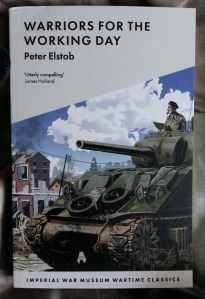 About the Book
May 1944, the Royal Armoured Corps prepares for the invasion of north-west Europe. Young and conscientious, Michael Brook is quickly promoted to tank commander. He must overcome not only his own fear, but the dissent and doubts of his ever-changing crew, as the war takes them over the Rhine and into Germany. The men encounter both jubilant civilians and stiff enemy resistance as the conflict exacts a heavy toll.
Based on Peter Elstob’s own wartime experience, Warriors for the Working Day brilliantly evokes the particular ferocity, heat, and terror of tank warfare. This new edition of a 1960 classic features a contextual introduction from then Imperial War Museum which sheds new light on the true events that so inspired its author.
Format: Paperback (320 pages) Publisher: Imperial War Museum
Publication date: 26th March 2020 Genre: Historical Fiction
Find Warriors for the Working Day on Goodreads
Purchase links*
Publisher | Hive (supporting UK bookshops)
*links provided for convenience not as part of an affiliate programme
My Review
By focusing predominantly on the experiences of the five men who form the tank crew – those very much at “the sharp end” of the fighting – the author creates a vivid picture of the reality of living for much of the time in what the Germans referred to as ‘Tommy cookers’ (so-called because of the Sherman tank’s propensity to burst into flames when hit). As the men of One Troop discover, a tank with its hatches closed is like “a blind monster at the mercy of a fast sharp-eyed enemy”, and an enemy with superior fire power to boot. It was even worse for the tank commander in the turret. Despite the fact their head was a prime target for an enemy sniper, it was impossible in practice to command a tank with the turret closed.
The reader really gets to know the individual characters, in particular Brook, and become invested in their feelings and their welfare. Their letters home, downplaying the danger they face and full of hopes and plans for the future, are incredibly poignant especially since the reader is aware they probably won’t all make it. As those higher up the chain of command congratulate themselves on successes hard won by those on the front line, the contrast with the experiences of the tank crews becomes even more stark.
As the book eloquently shows, battle fatigue – mental as much as physical – becomes a major issue, even if the men themselves may not realise it. “Most of them were unaware that anything much was wrong with them, for they were uncomplicated men not given to introspection. They knew they were frightened, but they knew that everyone else was frightened too, and had come to realise that wars are fought by a few frightened men facing each other – the sharp end of the sword…”
Each man at one point or another wonders about his capacity to carry on and whether he has reached breaking point. With echoes of Catch-22, one muses, “He could go to the M.O. and say he had had enough, but as long as you could go and say that you’d had enough you were still able to direct your mind and your body and you hadn’t had enough.”
The men are bound together by an inspiring sense of camaraderie that means even when ordered to advance into dangerous territory and offered the chance to reduce their personal risk, the feeling is “Look, if you’re a tank crew, you’re a tank crew. Either we all bale out or we all stay in“.
As well as being a compelling human story, I learned a lot from Warriors for the Working Day. For example, the different roles in a tank crew – commander, driver, co-driver, gunner and wireless operator – and the recipe for the rather disgusting sounding “burgoo”. (Army biscuits dissolved in tinned milk, slowly heated in a mess tin with treacle or brown sugar, if you’re wondering.)
The book’s title comes from Shakespeare’s play Henry V. (The mention of that play always conjures up in my mind an image of Kenneth Branagh in his terrific 1989 film version or Laurence Olivier in the splendid earlier version made in 1944. Incidentally, the latter was intended as a wartime morale booster and was partly funded by the British government.) Leading his bedraggled army through France, Henry says: “We are but warriors for the working day… But, by the mass, our hearts are in the trim.”
Brook and his crew members certainly demonstrate their “hearts are in the trim” as they endure the close confinement of the tank’s interior and the constant need to stay alert, aware that any moment could be their last. As one of the final missions described in the book ends in disarray and confusion, it illustrates – if further illustration was needed – the futility of war and the sheer waste of young lives it represents.
The following quotation from historian James Holland sums up my feelings about the book exactly. “Few other novels of the war describe the grinding claustrophobia, violence and lethal danger of being in a tank crew with the stark vividness of Peter Elstob… a forgotten classic that deserves to be read and read.”
In three words: Powerful, immersive, dramatic
Try something similar: Patrol by Fred Majdalany
Follow this blog via Bloglovin
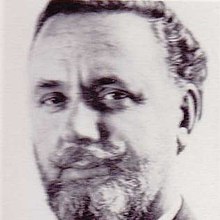 About the Author
Peter Elstob (1915 – 2002) was born in London but attended school in the United States. He studied briefly in Michegan before a short stint in the RAF and as a volunteer in the Spanish Civil War. On the outbreak of the Second World War he volunteered for the army and joined the 3rd Battalion, Royal Tank Regiment.
After the war, Elstob pursued several ventures, wrote many books and was by all accounts a colourful character. He died in 2002.

 About the Book
 About the Author


 What Cathy Read Next...