 About the Book
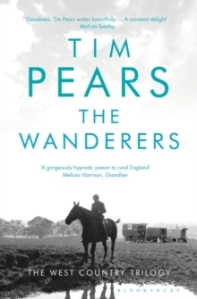
Two teenagers, bound by love yet divided by fate, forge separate paths in England before World War I.
1912. Leo Sercombe is on a journey. Aged thirteen and banished from the secluded farm of his childhood, he travels through Devon grazing on berries and sleeping in the woods. Behind him lies the past and before him the West Country, spread out like a tapestry. But a wanderer is never alone for long, try as he might – and soon Leo is taken in by gypsies, with their wagons, horses, and vivid attire. Yet he knows he cannot linger and must forge on toward the western horizon.
Leo’s love, Lottie, is at home. Life on the estate continues as usual, yet nothing is as it was. Her father is distracted by the promise of new love and Lottie is increasingly absorbed in the natural world: the profusion of wild flowers in the meadow, the habits of predators, and the mysteries of anatomy. And of course, Leo is absent. How will the two young people ever find each other again?
Format: Audio book (8h 38m) Publisher: Bloomsbury/Isis Audio
Publication date: 2nd November 2018 Genre: Historical fiction
Find The Wanderers (The West Country Trilogy #2) on Goodreads
Purchase links*
Amazon UK| Hive (supporting UK bookshops)
*links provided for convenience not as part of an affiliate programme
My Review
The Wanderers is the second novel in Tim Pears’s West Country trilogy. Like the first book, The Horseman, it was longlisted for The Walter Scott Prize for Historical Fiction. (The author recently made it three out of three when the final book in the trilogy, The Redeemed, made the shortlist for the 2020 prize.) I listened to the audiobook version, superbly narrated by Jonathan Keeble, who really captured the rhythm of the writing and created distinct voices for the various characters.
The end of The Horseman saw young Leo leaving his home to head westward, filled with guilt that an innocent act should have resulted in dramatic consequences for his family. Penniless and without the means to sustain himself, he is rescued by a band of gypsies. There follows a wonderful section of the book in which Leo is introduced to gypsy culture and travels with the Orchard ‘tribe’. Once again, his bond with horses and his riding ability form a key part of the storyline. Learning that the gypsies do not intend to travel further westward, he parts company with them in a thrillingly opportunistic way. Once more Leo finds himself travelling alone, reliant on his own enterprise or the kindness of strangers to feed him and provide him with shelter.
Throughout the book, the author populates Leo’s journey with a wonderful cast of characters, such as the patriarch of the Orchard family and an old shepherd. Often he meets people living on the margins of society. For example, an ailing hermit, a veteran of the Boer War who senses the country is moving towards war once again.
During his travels Leo is educated in country ways such as the care of sheep, and how to forage and live off the land. These are described in realistic detail – in some cases, perhaps rather too realistic for those on the squeamish side! As in The Horseman, there are wonderful descriptions of the landscape through which Leo passes. The author vividly depicts a way of life that progresses at a very different pace to our own, one much more aligned with the seasons. Of course, the reader knows it’s a way of life that will shortly be changed forever by the coming of war.
Meanwhile, back on the estate, Lottie feels increasingly invisible as her father’s attention is diverted elsewhere. She fears being sent away from the estate and the countryside she loves so much and being unable to pursue her interest in nature and biology, not considered suitable subjects for a young lady in her position. She clings to the hope that Leo, the only person who seems to understand her passion for the natural world, will keep his promise to return.
The book ends at a turning point for Leo, and for the country. I’m looking forward to finding out what happens in The Redeemed, the final book in the trilogy, which will pick up Leo’s and Lottie’s story in 1916.
In three words: Lyrical, immersive, evocative
Try something similar: The Offing by Benjamin Myers
Follow this blog via Bloglovin
 About the Author
Tim Pears is the author of eight novels: In the Place of Fallen Leaves (winner of the Hawthornden Prize and the Ruth Hadden Memorial Award, In a Land of Plenty (made into a ten-part BBC series), A Revolution of the Sun, Wake Up, Blenheim Orchard, Landed (shortlisted for the IMPAC Dublin Literary Award 2012 and the 2011 Royal Society of Literature Ondaatje Prize, winner of the MJA Open Book Awards 2011) Disputed Land and In the Light of Morning.
He has been Writer in Residence at Cheltenham Festival of Literature and Royal Literary Fund Fellow at Oxford Brookes University, and has taught creative writing at Ruskin College and elsewhere. He lives in Oxford with his wife and children. (Photo credit: Goodreads author page)
Connect with Tim
Website | Goodreads

 About the Book
 About the Author