Book Blitz: The Study of Silence by Malia Zaidi

The Study of Silence Tour Banner

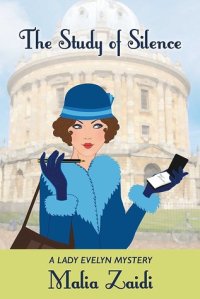
I’m delighted to be joining the book blitz for The Study of Silence by Malia Zaidi, the third outing in The Lady Evelyn Mystery series.  Doesn’t it have a cute cover?   I have a fabulous guest post for you in which Malia reflects on what she refers to as, ‘The Struggle of Endless Possibilities’.

Follow my blog with Bloglovin


The Study of SilenceAbout the Book

Lady Evelyn Carlisle has returned home to England, where she is completing her degree at St. Hugh’s, a women’s college in Oxford. Her days are spent poring over ancient texts and rushing to tutorials. All is well until a fateful morning, when her peaceful student life is turned on its head. Stumbling upon the gruesome killing of someone she thought she knew, Evelyn is plunged into a murder investigation once more, much to the chagrin of her friends and family, as well as the intriguing Detective Lucas Stanton.

The dreaming spires of Oxford begin to appear decidedly less romantic as she gathers clues, and learns far more than she ever wished to know about the darkness lurking beyond the polished veneer. Can she solve the crime before the killer strikes once more, this time to Evelyn’s own detriment?

Format: ebook, paperback (448 pp.)          Publisher: BookBaby
Published: 27th February 2018                   Genre: Mystery

Purchase Links*
Amazon.co.uk  ǀ  Amazon.com  ǀ Barnes and Noble
*links provided for convenience, not as part of any affiliate programme

Find The Study of Silence on Goodreads


Guest Post: ‘The Struggle of Endless Possibilities’ by Malia Zaidi

‘A part of what I love about reading and writing is that it can take you anywhere. New worlds can be created, characters can be granted inhuman powers, adventure, true love. There are no limits when it comes to fiction, but for a writer just this endless opportunity can sometimes prove a bit of a burden.

My books, The Lady Evelyn Mysteries, are part historical fiction, part mystery, and so they are grounded in facts in terms of setting and period details. However, when it comes to what the characters do and where the story goes options are far more unlimited. How to choose a path? For some writers, I know it helps to map out and plan every chapter, to know precisely where the story will go, for others, outlines feel constricting, and are ever changing to the point of being entirely useless.

My own process falls somewhere in between. I start with a rough outline, but all the details are left for me to fill as I write. Sometimes it can be difficult to decide on a path to take and tempting to veer away from it at times when a different possibility enters the equation. The endless options can make writing daunting at times, but I find, once I get started, I get a better feeling of what is right for the story and what isn’t.

For my genre, there is just enough certainty, just enough grounding in a world that already exists or existed, that I cannot hurl myself too far from the right track. For other genres like fantasy or science fiction, I imagine choosing a direction is far more challenging. A world that you create from nothing can be anything, and therefore the story runs the risk of being overfull. My advice is simply to go with your gut and keep writing. It can be a daunting task sometimes, especially when your imagination is given completely free reign, but I believe if a story is going to be told, the author will have a sense for what is right for it.’                                                                       ©Malia Zaidi


Version 2About the Author

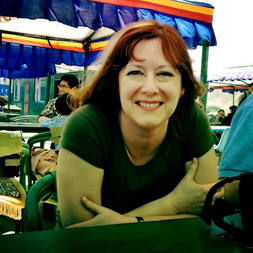
Malia Zaidi is a writer and painter, who grew up in Germany and lives in the US. An avid reader and traveller, she decided to combine these passions, and turn her long-time ambition of writing into a reality. The Study of Silence is the third book in The Lady Evelyn Mysteries.

Connect with Malia

Website  ǀ  Blog  ǀ  Facebook  ǀ  Twitter  ǀ  Instagram  ǀ  Goodreads


Blog Tour: District VIII by Adam LeBor

District VIII Tour Banner

I’m delighted to host today’s stop on the blog tour for District VIII, by Adam LeBor and to bring you a fascinating article by Adam about the inspiration for the book, the first volume in his ‘Budapest noir’ crime series.

Follow my blog with Bloglovin


DISTRICT VIIIAbout the Book

Life’s tough for a Gypsy cop in Budapest. The cops don’t trust you because you’re a Gypsy. Your fellow Gypsies, even your own family, shun you because you’re a cop.

The dead, however, don’t care.

Balthazar Kovacs of the Budapest murder squad is in the middle of his first cup of coffee when a mysterious text message arrives. There were three words: ’26, Republic Square’, and a photograph. The photo shows a man in his early thirties, lying on his back with his eyes open, half-covered by bricks and dust. The address, the former Communist Party headquarters, was once the most feared building in the country. But when Kovacs arrives at Republic Square, the body has gone and his only lead is the word of a Gypsy kid who saw the corpse bundled into an unmarked van…

Kovacs’ investigation will take him deep into Budapest’s shadows, an underworld visitors never get to see: the gritty back-alleys of District VIII; the people smuggling networks around Keleti Station; the endemic corruption of a country still haunted by the ghosts of history. And when the leads point to the involvement of his brother Gaspar, the city’s most powerful pimp, Kovacs will be forced to choose between the law and family loyalty.

Format: eBook (305pp.), Hardcover (400pp.)   Publisher: Head of Zeus
Published: 2nd November 2017                           Genre: Thriller, Crime

Pre-order/Purchase Links*
Amazon.co.uk ǀ Amazon.com
*links provided for convenience, not as part of any affiliate programme

Find District VIII on Goodreads


Guest Post: ‘The roots of District VIII’ by Adam LeBor

I started writing District VIII, the first volume of my Budapest noir crime series featuring Balthazar Kovacs, a Gypsy detective, a couple of years ago. But the book’s roots go much deeper. I have reported on Hungary and its neighbours since 1990 when Communism collapsed across central and Eastern Europe. I have always been fascinated by the Roma and the near parallel society in which many live, alongside wider society but not fully part of it. Centuries of prejudice and exclusion have forged fierce bonds of blood and family that united them against a frequently hostile outside world.

Hungary and its neighbours are now part of the European Union and theoretically committed to providing equal rights and opportunities for all their citizens. But from the Baltics to the Balkans, many Roma families live in extreme poverty, in settlements on the outskirts of towns and villages with no proper water or electricity or sewage systems. Roma children are often wrongly classified as being mentally handicapped and so are deprived of a proper education. I reported on a wall in a town in the Czech Republic that served no purpose other than to divide Roma people from their neighbours. I travelled to a remote area in eastern Slovakia and interviewed young Roma women who told their heart-rending stories of being sterilised against their will. I reported on the horrific series of murders in Hungary in 2008 and 2009, while six Roma people, including a five year old child, were killed in a series of highly organised and planned racist attacks. I learnt Roma history and how, during the Second World War, the Roma too suffered a Holocaust which they call the ‘Poraymus’ or ‘Devouring’. In the camps parents refused to be separated from their children. They fought so hard to stay together that the Nazis allowed them their own section at Auschwitz, called the ‘Zigeuner Lager’, or Gypsy camp. The Gypsy camp existed for seventeen months until 1944 when its residents were gassed.

Nowadays there is good news as well. A new generation of young Roma people is passing through the education system, finding its voice as activists and politicians or simply as professionals – including the police. The Balthazar Kovacs series was also inspired in part by a reception I attended some years ago at the British embassy in Budapest, in honour of the Hungarian Roma Police Union. There I met several Roma police officers who told me their personal stories. It’s not easy being a Gypsy police officer. Friends and relatives – especially those who live on the margins of legality – are suspicious of the authorities. Other police officers can be wary of their Roma colleagues.

District VIII opens in the summer of 2015 when Hungary was the epicentre of the refugee crisis. District VIII is the area of Budapest with the city’s largest Gypsy quarter. A Syrian refugee is murdered at Keleti station and his body disappears. As Balthazar investigates, and discovers that his brother Gaspar is somehow connected to the killing, he is soon pulled between two worlds: his duty as a police officer and his loyalty to his family. Those bonds of family and of blood, Balthazar realises, may have to be broken. Unless he can find a way out.


2017.05.25. Adam LeBor portraitAbout the Author

Adam LeBor is a veteran foreign correspondent who has covered Hungary and Eastern Europe since 1990. He is the author of thirteen books, including Hitler’s Secret Bankers, which was shortlisted for the Orwell Prize and City of Oranges. He writes for the Economist, Financial Times and Monocle. He divides his time between Budapest and London.

Connect with Adam

Website ǀ Facebook ǀ Twitter ǀ Goodreads


District VIII Tour Banner