The Classics Club Spin #19

The Classics ClubHow time flies because it’s time for another Classics Club spin.  And not just any old spin but ‘an extra special, super-dooper CHUNKSTER edition’!  This time, the wonderful people who run The Classics Club are encouraging us to fill our spin list with 20 of the HUGE books we may have put off reading up until now.

For those unfamiliar with how the spin works, here are the step-by-step instructions:

  • At your blog, before next Tuesday 27th November 2018, create a post that lists twenty books of your choice that remain “to be read” on your Classics Club list. This is your Spin List.
  • You have to read one of these twenty books by the end of the spin period.
  • On Tuesday 27th November, we’ll post a number from 1 through 20. The challenge is to read whatever book falls under that number on your Spin List, by 31st January 2019.

When I looked at the unread books left on my Classics Club list, I was disappointed to find (OK, that’s a lie) that I don’t have that many huge books to choose from and very few that would qualify as ‘chunksters’.  However, I’ve selected the twenty biggest books…many of which will probably viewed as positively svelte by some.   Knowing my luck, though, I’ll end up with the biggest one anyway.  (The page numbers are in some cases from Goodreads so may not be accurate.  Gulp, you mean the books might actually have more pages than shown…?)

My Classics Club Spin #19 List

  1. The Edible Woman by Margaret Atwood (281 pages)
  2. Villette by Charlotte Bronte (575 pages)
  3. Wuthering Heights by Emily Bronte (374 pages)
  4. Sick Heart River by John Buchan (318 pages)
  5. Kindred by Octavia E Butler (295 pages)
  6. Romola by George Eliot (708 pages)
  7. Fear of Flying by Erica Jong (461 pages)
  8. The Left Hand of Darkness by Ursula K Le Guin (304 pages)
  9. Invitation to the Waltz by Rosamond Lehmann (255 pages)
  10. The Town House by Norah Lofts (301 pages)
  11. The Heart is a Lonely Hunter by Carson McCullers (359 pages)
  12. A Garden of Earthly Delights by Joyce Carol Oates (406 pages)
  13. Gaudy Night by Dorothy L Sayers (483 pages)
  14. Katherine by Anya Seton (516 pages)
  15. The Last Man by Mary Shelley (291 pages)
  16. A Tree Grows in Brooklyn by Betty Smith (528 pages)
  17. I Capture the Castle by Dodie Smith (343 pages)
  18. The Flowers of Adonis by Rosemary Sutcliff (425 pages)
  19. The Enchanted April by Elizabeth von Armin (361 pages)
  20. Miss Pettigrew Lives for a Day by Winifred Watson (234 pages)

Will you be taking part in the Classics Club Spin #19?  If so, what’s the biggest book on your spin list and are you excited or daunted by the prospect of reading it?

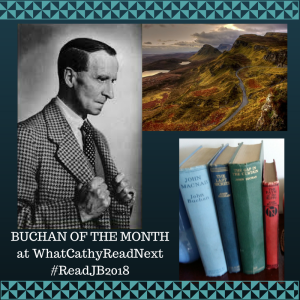
Buchan of the Month/Book Review: Witch Wood by John Buchan

Buchan of the Month

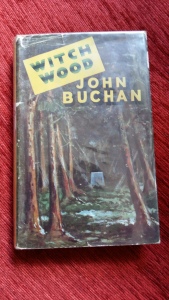
WitchWoodAbout the Book

Set against the religious struggles and civil wars of seventeenth century Scotland, John Buchan’s Witch Wood is a gripping atmospheric tale in the spirit of Robert Louis Stevenson.  As a moderate Presbyterian minister, young David Sempill disputes with the extremists of his faith, as all around, the defeated remnants of Montrose’s men are being harried and slaughtered.

There are still older conflicts to be faced however, symbolised by the presence of the Melanudrigall Wood, a last remnant of the ancient Caledonian forest. Here there is black magic to be uncovered, but also the more positive pre-Christian intimations of nature worship.  In such setting, and faced with the onset of the plague, David Sempill’s struggle and eventual disappearance take on a strange and timeless aspect.

Format: Hardcover Publisher: Hodder & Stoughton
Published: July 1941 [1927]  Genre: Historical Fiction

Purchase Links*
Amazon.co.uk  ǀ  Amazon.com  ǀ Hive.co.uk (supporting UK bookshops)
*links provided for convenience, not as part of any affiliate programme

Find Witch Wood  on Goodreads


My Review

Witch Wood is the tenth book in my Buchan of the Month reading project.  (I did read it in October – honestly! – but have only now got round to writing my review.) You can find out more about the project plus my reading list for 2018 here.  You can also read a spoiler-free introduction to the book here.   Witch Wood is also one of the books on my Classics Club list.

Witch Wood was reputedly John Buchan‘s own favourite of his many novels and is dedicated to his brother, Walter Buchan.  Shortly before writing the novel, Buchan had been carrying out research for his biography of Montrose, who does make a brief appearance in Witch Wood.  The backdrop to the events in the book is the religious and civil strife in Scotland between 1644 and 1646 when Scottish Royalists under Montrose fought the Covenanters who were allied with the English Parliament.

The central story of David Sempill and his fight against the superstitious practices that he finds still hold sway among some of the inhabitants of Woodilee is the most engaging and accessible element of the book.  In his honest attempts to root out evil and save the souls of his parishioners, David encounters opposition from religious extremists who seem to set more store by the Old Testament than the teachings of the New Testament.  Their response is to search out evidence of witchcraft and demonic possession, showing no mercy.  David’s calling is of a different nature: ‘The work for which he longed was to save and comfort human souls.’

I’ll admit to getting a little bogged down in the debates about religious doctrine and the role of Church and State in Scotland in this period of history.  Despite reading the relevant sections from Buchan’s scholarly The Kirk in Scotland, I’m still not sure I really understand the distinction between episcopacy and prelacy (if indeed there is one).  Another factor which may prove problematic for some readers is that Buchan presents much of the dialogue, especially of characters like David’s housekeeper, Isobel Veitch, in broad Scots, rendering it rather impenetrable at times.

Throughout the novel there is a great sense of the brooding presence of the ancient forest which abuts Woodilee.  Even David is not immune to it. ‘It must be an eerie life under the shadow of that ancient formless thing.’  An ideal spot for devilish practices, as it turns out. ‘The Black Wood could tell some tales if the trees could talk.’  Conversely, the forest becomes the scene of a much more life-changing and life-affirming encounter for David.

Witch Wood combines history and romance in the manner of Robert Louis Stevenson’s  Catriona or Sir Walter Scott’s Ivanhoe, with plenty of references to actual events and figures of the time as well as a touching and engaging love story.   And it wouldn’t be a Buchan novel if it didn’t  feature the themes of courage and self-sacrifice.

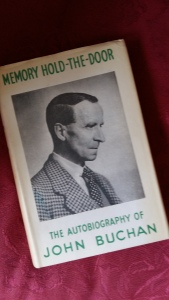
MemoryHoldTheDoorNext month’s Buchan of the Month is Memory-Hold-the-Door, Buchan’s autobiography

Look out for my introduction to the book in the next few days and my review towards the end of the month.

Follow my blog with Bloglovin

In three words: Adventure, romance, superstition

Try something similar…The Magick of Master Lilly by Tobsha Learner (read my review here)


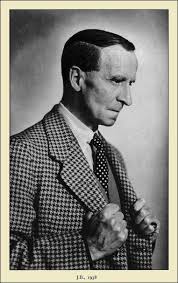
John BuchanAbout the Author

John Buchan (1875 – 1940) was an author, poet, lawyer, publisher, journalist, war correspondent, Member of Parliament, University Chancellor, keen angler and family man.  He was ennobled and, as Lord Tweedsmuir, became Governor-General of Canada.  In this role, he signed Canada’s entry into the Second World War.   Nowadays he is probably best known – maybe only known – as the author of The Thirty-Nine Steps.  However, in his lifetime he published over 100 books: fiction, poetry, short stories, biographies, memoirs and history.

You can find out more about John Buchan, his life and literary output by visiting The John Buchan Society website.