
#WWWWednesday – 5th October 2022

WWWWednesdays

Hosted by Taking on a World of Words, this meme is all about the three Ws:

  • What are you currently reading?
  • What did you recently finish reading?
  • What do you think you’ll read next?

Why not join in too?  Leave a comment with your link at Taking on a World of Words and then go blog hopping!


Currently reading
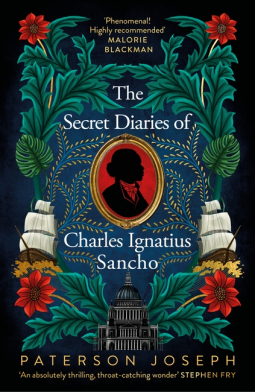
The Secret Diaries of Charles Ignatius SanchoThe Secret Diaries of Charles Ignatius Sancho by Paterson Joseph (eARC, Dialogue Books via NetGalley)

I had little right to live, born on a slave ship where my parents both died. But I survived, and indeed, you might say I did more…

It’s 1746 and Georgian London is not a safe place for a young Black man, especially one who has escaped slavery. After the twinkling lights in the Fleet Street coffee shops are blown out and the great houses have closed their doors for the night, Sancho must dodge slave catchers and worse. The man he hoped would help – a kindly duke who taught him to write – is dying. Sancho is desperate and utterly alone.

So how does Charles Ignatius Sancho meet the King, write and play highly acclaimed music, become the first Black person to vote in Britain and lead the fight to end slavery?

It’s time for him to tell his story, one that begins on a tempestuous Atlantic Ocean, and ends at the very centre of London life. And through it all, he must ask: born amongst death, how much can you achieve in one short life?
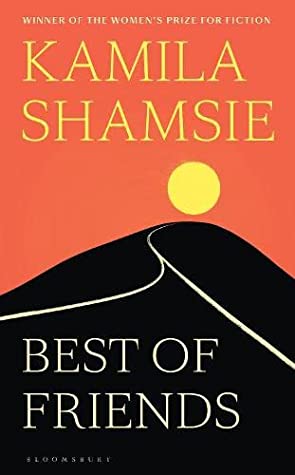
Best of FriendsBest of Friends by Kamila Shamsie (ARC, Bloomsbury via Readers First)

Fourteen-year-old Maryam and Zahra have always been the best of friends, despite their different backgrounds. Maryam takes for granted that she will stay in Karachi and inherit the family business; while Zahra keeps her desires secret, and dreams of escaping abroad.

This year, 1988, anything seems possible for the girls; and for Pakistan, emerging from the darkness of dictatorship into a bright future under another young woman, Benazir Bhutto. But a snap decision at a party celebrating the return of democracy brings the girls’ childhoods abruptly to an end. Its consequences will shape their futures in ways they cannot imagine.

Three decades later, in London, Zahra and Maryam are still best friends despite living very different lives. But when unwelcome ghosts from their shared past re-enter their world, both women find themselves driven to act in ways that will stretch and twist their bond beyond all recognition.


Recently finished

Under a Veiled Moon by Karen Odden (Crooked Lane Books)

The House of Birds by Morgan McCarthy (Headline)

Oliver has spent years trying to convince himself that he’s suited to a life of money making in the city, and that he doesn’t miss a childhood spent in pursuit of mystery, when he cycled around the cobbled lanes of Oxford, exploring its most intriguing corners.

When his girlfriend Kate inherits a derelict house – and a fierce family feud – she’s determined to strip it, sell it and move on. For Oliver though, the house has an allure, and amongst the shelves of discarded, leather bound and gilded volumes, he discovers one that conceals a hidden diary from the 1920s.

So begins a quest: to discover the identity of the author, Sophia Louis. It is a portrait of war and marriage, isolation and longing and a story that will shape the future of the abandoned house – and of Oliver – forever. (Review to follow)


What Cathy (will) Read Next
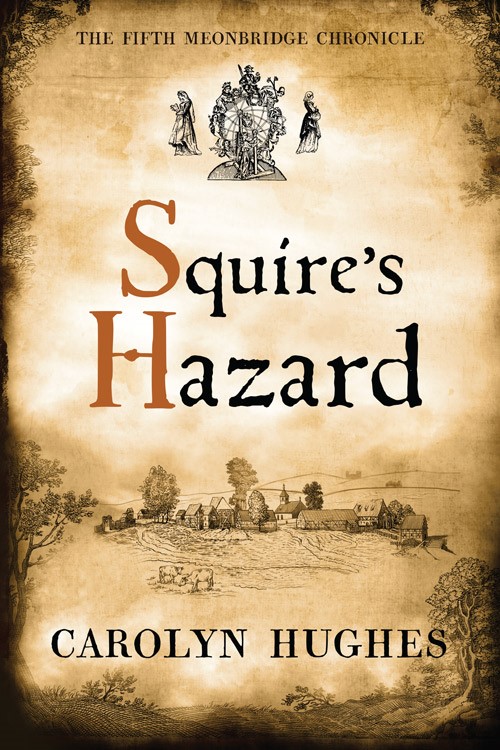
Squire's HazardSquire’s Hazard by Carolyn Hughes (eARC, Riverdown Books)

How do you overcome the loathing, lust and bitterness threatening you and your family’s honour?

It’s 1363, and in Steyning Castle, Sussex, Dickon de Bohun is enjoying life as a squire in the household of Earl Raoul de Fougère. Or he would be, if it weren’t for Edwin de Courtenay, who’s making his life a misery with his bullying, threatening to expose the truth about Dickon’s birth.

At home in Meonbridge for Christmas, Dickon notices how grown-up his childhood playmate, Libby Fletcher, has become since he last saw her and feels the stirrings of desire. Libby, seeing how different he is too, falls instantly in love. But as a servant to Dickon’s grandmother, Lady Margaret de Bohun, she could surely never be his wife.

Margery Tyler, Libby’s aunt, meeting her niece by chance, learns of her passion for young Dickon. Their conversation rekindles Margery’s long-held rancour against the de Bohuns, whom she blames for all the ills that befell her family, including her own servitude. For years she’s hidden her hunger for revenge, but she can no longer keep her hostility in check.

As the future Lord of Meonbridge, Dickon knows he must rise above de Courtenay’s loathing and intimidation, and get the better of him. And, surely, he must master his lust for Libby, so his own mother’s shocking history is not repeated? Of Margery’s bitterness, however, he has yet to learn…

Beset by the hazards triggered by such powerful and dangerous emotions, can Dickon summon up the courage and resolve to overcome them?

Secrets, hatred and betrayal, but also love and courage – Squire’s Hazard, the fifth MEONBRIDGE CHRONICLE

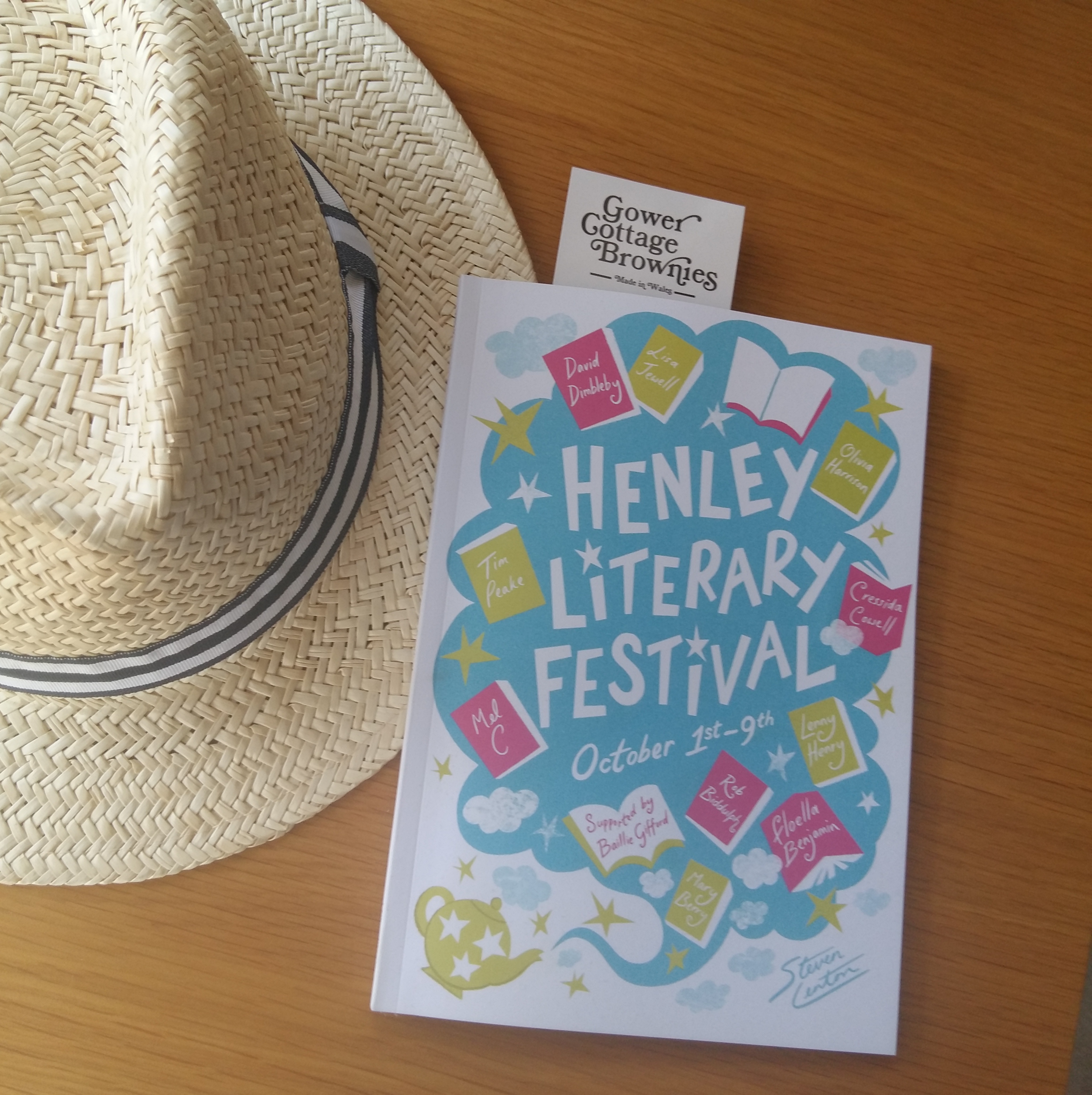
#EventReview Robert Harris at Henley Literary Festival 2022

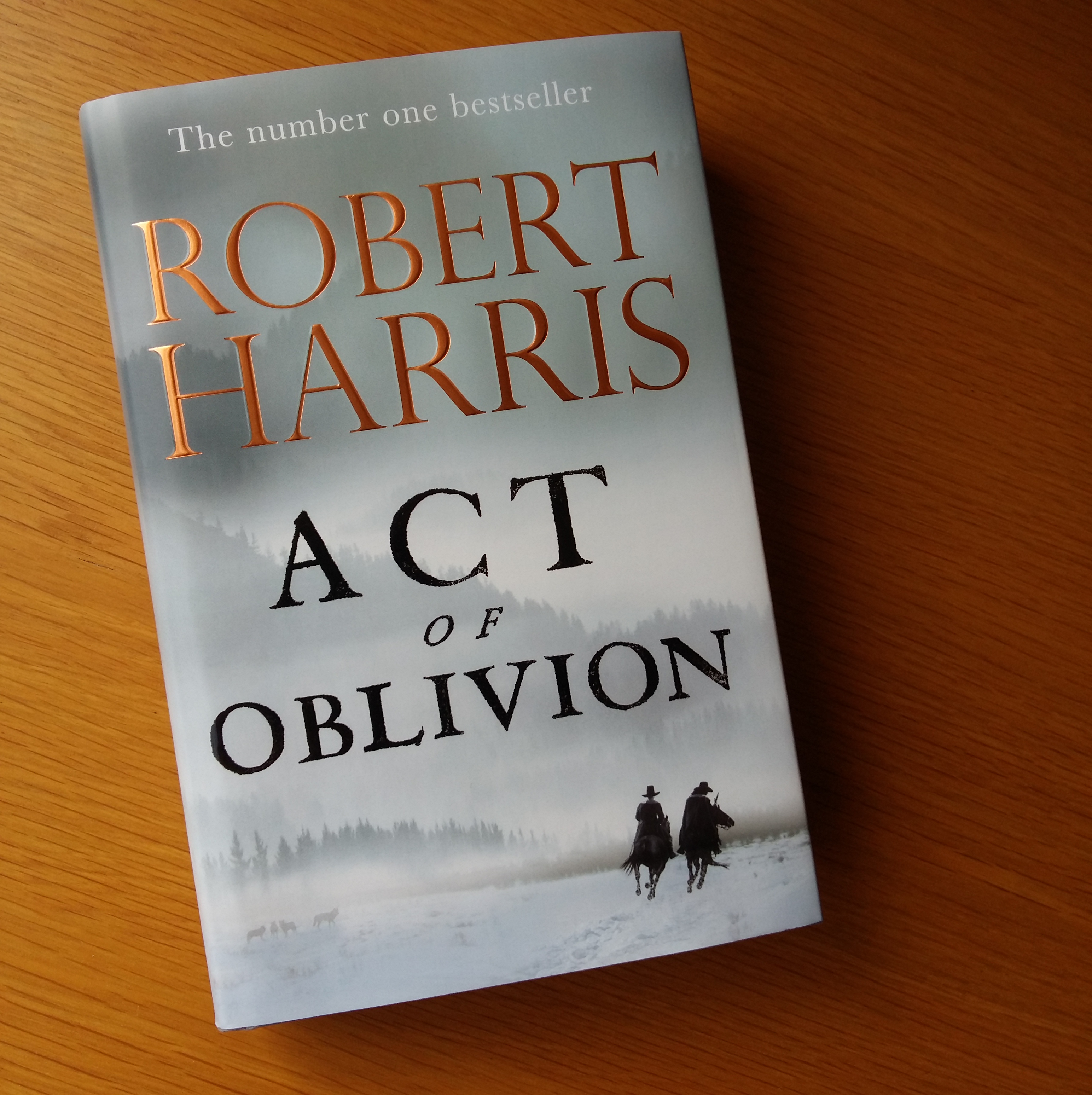
Henley Literary FestivalThe Baillie Gifford Marquee at Phyllis Court was packed to the rafters on Sunday 2nd October to hear Daniel Hahn interview Robert Harris about his latest book, Act of Oblivion. (Passed in 1660, the Act of Oblivion was a general pardon for everyone who had committed crimes during the English Civil War and the subsequent Commonwealth period with the exception of certain people, such as those involved in the regicide of Charles I.)

Daniel asked about the moment that inspires one of Robert’s books.  Robert said it could be anything – a character, a phrase or, as in the case of Act of Oblivion, a tweet about the ‘greatest manhunt of the 17th century’. As he read more about it he thought, ‘This is fantastic’, because it was such an interesting situation with so many possibilities and of course it involves that classic element, a chase. Although more than fifty men involved in the execution of Charles I fled overseas, he decided to focus on just two who fled to Amerrca: Colonel Edward Whalley and his son-in-law, Colonel William Goffe, each very different characters. Given there was a manhunt there must have been a manhunter, although Robert was obliged to invent one – Richard Nayler, secretary of the regicide committee of the Privy Council.

Daniel asked about the writing process. Robert explained, for him, the characters are the most important. The reader needs to care about them, empathise with them. They need not be virtuous, but they need to be human. Everything about them needs to be plausible so Robert asks himself what would someone do in a particular situation. For instance, in the case of the two characters in Act of Oblivion, how would they travel, what would this have been like, where did they stay? All this detail provides an immersive experience for the reader.

Daniel asked if this was more difficult with characters from a different age. Robert acknowledged it is a tough proposition but thinking of his two characters as the Puritan equivalents of Butch Cassidy and the Sunshine Kid helped! Puritan colonels may not seem the most engaging of characters but there were aspects of the two men he thought helped humanise them such as the fact Goffe had to leave his wife and five children behind. And he felt Whalley, the more moderate of the two, might have started to have doubts about his actions.

Daniel observed that the manhunter, Richard Naylor, is a zealot but he is given a personal reason for his involvement which perhaps makes it easier for the reader to understand him. Robert said while reading the diary of John Evelyn, the 17th century writer and gardener, he came across an account of a secret (and at the time, illegal) Mass held in a private chapel at Christmas in 1657. It was Goffe and Whalley who interrogated the participants so Robert put Richard in the scene providing the personal motivation referred to and posing the question, what happens when you become obsessed with revenge.

At this point Robert read an excerpt from the closing part of the first chapter which describes Goffe and Whalley’s arrival in America.

Daniel noted there are two events that take place on the same date and ventured this is more than coincidence. Robert said he feels the day of the week on which something takes place is important because each day has a different routine. It’s something he researches as he believes it’s this sort of detail that provides a connection with the past. For the same reason, he also likes to include the weather. He said he likes to write ‘novels of sensation’ – what something feels like, smells like, whether a journey is uphill or downhill.  He believes his job as a writer is to take the reader there and these sort of details are not superficial.  However, when it comes to history, there are always gaps in our knowledge but those gaps are great things. After all, he observed, if we knew everything there wouldn’t be any point in writing historical fiction!

Daniel asked how the relationship between Goffe and Whalley changes as the book progresses. Although it involved an agonising end (described in a paragraph that Robert advised skipping if you’re squeamish), most of the regicides faced death bravely convinced that it was ‘a fast ticket to heaven’ and actually looked down on those who fled. Whalley is a ‘pragmatic survivor’ but Goffe comes to regret he will not suffer a martyr’s death. Many believed 1666 was to be the year of the ‘Second Coming’ and it was important to think what this would mean to them.

Daniel asked about the inclusion of events in London happening at the same time, including those involving Goffe’s wife, Frances. Robert said Frances was a daunting character in a way because she is left behind, forced to live in the houses of Puritan sympathisers. He wondered what this would have been like for her, resolving ‘I must put her in the book’, and in fact she becomes an important figure and helps drive the plot.

Having mentioned that at times when writing Act of Oblivion he hated it, Daniel asked if he was currently hating a new one. Robert said he was at the best stage of a new book when you have ‘delightful possibilities’ starting to evolve in your head.  He admits he makes it hard for himself because he aims to complete a book in six months (which means 800 pages a day), confessing he needs the adrenaline of a deadline.

Audience questions included Robert’s approach to research, such whether he visited places that appear in the book. Robert explained sometimes there was little point in this as they would have changed so much over the centuries. He also observed that it was important to know when to stop your research. ‘Just because it’s true doesn’t make it interesting’, he remarked. He was also asked about his involvement in the film adaptations of his novels. Although he wrote the screenplays for some of them he said in general he was a fan of Kingsley Amis’s advice to ‘take the money and run’. Finally, Robert was asked why the Act of Oblivion and its consquences is so little known about. (Confession: I had never heard of it before learning about this book.) He thought the divisive nature of the English Civil War is perhaps a national trauma we still shy away from addressing and there has been much more focus in fiction on the Tudor period.

Act of Oblivion SignedI know I’m not alone in having thoroughly enjoyed hearing Robert talk about his book. One advantage of attending the event in person was leaving clutching your very own copy of the book. The line to get your book signed was long but Robert was still thanking people for coming until the very end of the queue.
This review is based on notes I took during the event and my own recollections. Any errors in recording views expressed during the discussion are my own.


Act of OblivionAbout the Book

‘From what is it they flee?’
He took a while to reply. By the time he spoke the men had gone inside. He said quietly, ‘They killed the King.’

1660. Colonel Edward Whalley and his son-in-law, Colonel William Goffe, cross the Atlantic. They are on the run and wanted for the murder of Charles I. Under the provisions of the Act of Oblivion, they have been found guilty in absentia of high treason.

In London, Richard Nayler, secretary of the regicide committee of the Privy Council, is tasked with tracking down the fugitives. He’ll stop at nothing until the two men are brought to justice. A reward hangs over their heads – for their capture, dead or alive.

Act of Oblivion is an epic journey across continents, and a chase like no other.


Robert HarrisAbout the Author

Robert Harris is the author of fourteen bestselling novels: the Cicero Trilogy – Imperium, Lustrum and DictatorFatherland, Enigma, Archangel, Pompeii, The Ghost, The Fear Index, An Officer and a Spy which won four prizes including the Walter Scott Prize for Historical Fiction, Conclave, Munich, The Second Sleep and V2. His work has been translated into forty languages and he is a Fellow of the Royal Society of Literature. He lives in West Berkshire with his wife, Gill Hornby.

Connect with Robert
Website | Twitter | Facebook