#EventReview Henley Literary Festival 2022 Round-Up

Henley Literary Festival

Today is the last day of this year’s Henley Literary Festival bringing to a close nine days of fantastic author talks, interviews and panel sessions as well as a full programme of children’s events.

Below are brief reviews of the events I attended either in person or virtually. Links from the book title will take you to the entry on Goodreads. You can read a full review of the first event I attended, with author Robert Harris here.

And finally, a date for you diary. Next year’s Henley Literary Festival will take place between 30th September and 8th October 2023.
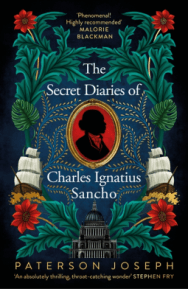

The Secret Diaries of Charles Ignatius SanchoTuesday 4th October – Paterson Joseph, author of The Secret Diaries of Charles Ignatius Sancho

Appropriately for an actor turned author, Paterson Joseph took to the stage of the Kenton Theatre, the fourth-oldest working theatre in the UK, to talk about his book The Secret Diaries of Charles Ignatius Sancho which was published on 6th October 2022. Based on Sancho’s diaries, the novel charts the life of a man who was born on a slave ship in 1729, orphaned at the age of three and sent to live with three spinsters in Greenwich but who, despite a series of hardships, became a leading figure in Georgian England, including being the first Black voter.

Paterson explained how he first came across Sancho’s story in 1999 and how it opened his eyes to the presence of people who looked like him further back in English history than he had imagined. Bringing Sancho’s story to a wider audience – including in a one man show performed in New York – has been a 20 year obsession and a real labour of love. Paterson gave two brilliant readings from the book – my favourite being a scene set in the Black Tar Tavern – in which, as you might expect from an actor of his stature, he really brought the character of Sancho to life. Paterson feels there is still much more to be discovered about Sancho’s life and, if there is, I’m pretty sure the author is the man to do it.

Paterson was asked if he intends to write more novels. He said he’s a ‘gadfly’ and has no plans, confessing writing this novel was the hardest thing he’s done. At the same time, he’d found it exciting because as an actor you’re always in the middle – between the playwright and the audience – whereas with a book the connection with the reader is direct. However, if he did write another book, it would most likely be based on his own family history. To me that sounds like a yes to the question.

I’m currently reading The Secret Diaries of Charles Ignatius Sancho and I’m going to put a marker down now for its appearance on the longlist for the Walter Scott Prize for Historical Fiction.

Thursday 6th October – Patrick Gale, author of Mother’s Boy & Sarah Winman, author of Still Life

Mother's BoyWhat a joy to have these two brilliant authors came together to talk about their books with writer and translator, Daniel Hahn. Asked about the inspiration for their books, Patrick explained Mother’s Boy arose out of a kind of panic that the poet Charles Causley was ‘slipping from public view’, his work having been removed from the National Curriculum. As a Patron of The Charles Causley Trust, Patrick felt the need to rescue Causley and that his novel is an ‘act of missionary work’ that would introduce readers to the real Charles Causley.

Still LifeFor Sarah, the inspiration was a trip to Florence and learning about the floods that affected the city, the traces of which can be seen today in the form of flood markers, and seeing photographs of young people from all over the world who travelled to Florence to help restore the artwork.

Both authors touched on how war enabled individuals to travel to new places, experience different cultures, different foods and escape the conventions of life at home, that it could be quite liberating.

Both books centre on relationships between two individuals. In the case of Still Life, it’s young soldier Ulysses Temper and Evelyn Skinner, a middle-aged art historian, who meet by chance at a roadside inn in Italy 1944. Sarah joked that in this period there are always English spinsters who turn up in the most unexpected places. In Patrick’s book it’s the relationship between Charles and his mother, Laura. Patrick explained he decided to include Laura because he thought there needed to be someone who loved Charles, because he could come across as quite hard to love. Laura never gives up on him and that means, Patrick hopes, the reader won’t either.

Both authors gave readings from their books: Patrick from a section of the book which describes a touching episode from Charles’ childhood; and Sarah from a scene in which art historian Evelyn attempts to formulate and introduction to still life paintings.

Those who have read Still Life won’t perhaps be as puzzled as those of us who haven’t by a question from an audience member about how she wove a sentient animal into the story. Sarah said it started as a bit of a joke, amusing herself with playful moments as she was writing, but the character just stuck.
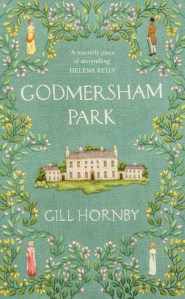
Godmersham ParkThursday 6th October – Gill Hornby, author of Godmersham Park

Gill’s latest historical novel, the follow-up to Miss Austen, focuses on Anne Sharpe who arrived at Godmersham Park in January 1804 to take up the position of governess to Fanny Austen, one of Jane Austen’s many nieces. Asked by interviewer, fellow author Ayisha Malik, about the process of writing the book, Gill explained very little is known about Anne’s life other than the period of two years she spent there as governess, references to which are found in Fanny’s journal. Gill has been able to take advantage of the unknown parts of Anne’s life – the circumstances which led to her taking a position as a governess and the reason for her summary dismissal two years later – to craft her novel. What is known, Gill explained, is that Anne became a very close friend of Jane Austen. Indeed, the last letter Jane wrote before she died was to Anne and she also gave her a presentation copy of her novel, Emma (sold at auction in 2008 for £180,000).

Ayisha asked about the nature of the relationship between Jane and Anne; could it have been more than platonic? Gill thought it unlikely Jane was gay although there was undoubtedly deep affection between them. As she remarked, there might have been ‘sex and drugs and rock’n’roll’ taking place in Georgian London, but not in Hampshire.

Gill explained the role of governess was a uniquely difficult one. (It was also one of the only three options, along with companion or prostitute, that was open to an unmarried woman without financial support.) As governess, Anne is neither one of the family, nor one of the servants. One wrong move might result in instant dismissal, which is what happened in Anne’s case although the reason put forward in the book comes from Gill’s imagination and a few clues in Fanny’s journal.

Gill was asked by an audience member if her husband Robert Harris’s claim (mentioned at his own event earlier in the week) that he completes a book in six months is true and she confirmed it was. Gill is currently working on another Austen-related historical novel, about a marriage which started out as an elopment, which she also intends will take her six months to write.

Book ClubThursday 6th October – ‘Book Club Thursday’ with Mike Gayle, author of The Museum of Ordinary People, Justin Myers, author of The Fake-Up and Clare Pooley, author of The People on Platform 5

Jo Finney, Books Editor at Good Housekeeping, chaired this panel session comprising three successful authors of what is known in the publishing world as ‘commercial fiction’ or, as Clare observed, books that sell loads.  Jo asked about the inspiration for their latest books with answers ranging from Adele’s divorce, to items found in a skip, to what extreme event it might take for regular commuters on a train to talk to one another.

All three authors have written non-fiction: Mike, about his year spent completing the items on his To-Do list; Justin, about his experiences as a gay man of dating; and Claire, about her journey to sobriety.

The three authors shared their views on social media, acknowledging that although some aspects of it can be toxic, it now has an important role in promoting their books, especially since ‘commercial fiction’ seems to get less serious coverage than, say, literary fiction. Mike was particularly generous about the role of book bloggers in sharing their love of the sort of books he, Justin and Clare write.

One Of Our Ministers Is MissingFriday 7th October – Alan Johnson, author of One of Our Ministers Is Missing

Prompted by fellow author Craig Brown, Alan recalled his switch from writing memoir to fiction. Now the author of two crime thrillers (and working on a third), he had initially planned to write historical fiction based on the history of the area in which he lives, on the Isle of Axholme in Lincolnshire. (He might still do, as he conceded whilst he signed my copy of his book.) Alan has always paid tribute to the English teacher who encouraged him to write and shaped the kind of books he read, introducing him to authors such as Wilkie Collins, Arnold Bennett and Anthony Trollope.  Alan read a section from This Boy, his first volume of memoirs, which illustrates this.  Craig observed that this introduction to literature was one of just a series of ‘What If?’ moments in Alan’s life, another being the intervention of a social worker, Mr Pepper, who ensured Alan and his sister were not separated after their mother’s death.  For this reason, he’s a man they ‘venerate’.

Craig asked if it was important to be very organised when writing a thriller because of the requirement to brings lots of threads together.  Alan said for him it starts with the characters and a sense of the general direction the story will take but his philosophy is very much ‘Set sail and see where it takes you’. He loves every bit of writing his crime novels, especially the opportunity to mislead people which he couldn’t do when he was a Member of Parliament. Cue, lots of laughter from the audience.

A regular visitor to Henley Festival, Alan’s seemingly endless supply of anecdotes, the majority of which involve self-deprecating humour, make him an engaging speaker.  His books are great too.


These reviews are based on notes I took during the event and are my own recollections. Any errors in recording views expressed during the discussions are my own.

Down the TBR Hole #26

BookPileThis meme was originally created by Lia at Lost in a Story as a way to tackle the gargantuan To-Read shelves a lot of us have on Goodreads.

The rules are simple:

  1. Go to your Goodreads To-Read shelf.
  2. Order on ascending date added.
  3. Take the first 5 (or 10 if you’re feeling adventurous) books
  4. Read the synopses of the books
  5. Decide: keep it or should it go?
  6. Repeat until the entire list has been filtered

It’s time for me to attempt a bit more pruning of my To-Read shelf on Goodreads which now contains 485 books, down from 487 last time. Okay, I know, not much to boast about. Anyway, let’s have another try.

TheHoneyFarmontheHillThe Honey Farm on the Hill by Jo Thomas (added 3rd August 2017)

We never forget the one who got away.

Eighteen years ago Nell fell in love in the mountains of Crete and life changed for ever. Nell’s daughter, Demi, has never met her dad. Nell never saw him again. When she gets the chance to return to the hilltop town of Vounoplagia – where everything began – Nell can’t resist the urge to go back and find him.

Working on a honey farm perched high up in the hills, there’s plenty to keep her busy. And she will quickly realise the town harbours just as many secrets as she does.

But if Nell’s favourite romantic films are right, there’s a happy ending in store for each of us. All she has to do is seek out the magic of the mountains…

Verdict: Keep – This is a bit lighter than my usual fare but, having visited Crete, I’m attracted by the setting and prepared to give it a go. It was also one of the books on my list for the 20 Books of Summer 2022 reading challenge and, yes, I am aware that’s it’s now autumn.  

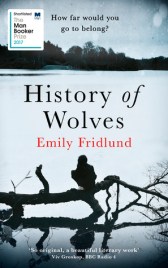
History of WolvesHistory of Wolves by Emily Fridlund (added 6th August 2017)

How far would you go to belong? 

Fourteen-year-old Linda lives with her parents in an ex-commune beside a lake in the beautiful, austere backwoods of northern Minnesota. The other girls at school call Linda ‘Freak’, or ‘Commie’. Her parents mostly leave her to her own devices, whilst the other inhabitants have grown up and moved on.

So when the perfect family – mother, father and their little boy, Paul – move into the cabin across the lake, Linda insinuates her way into their orbit. She begins to babysit Paul and feels welcome, that she finally has a place to belong.

Yet something isn’t right. Drawn into secrets she doesn’t understand, Linda must make a choice. But how can a girl with no real knowledge of the world understand what the consequences will be?

Verdict: Keep – I’m still intrigued by this and it was shortlisted for the Booker Prize in 2017.

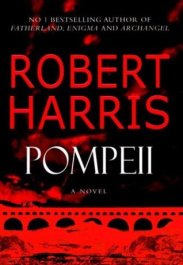
PompeiiPompeii by Robert Harris (added 15th August 2017)

All along the Mediterranean coast, the Roman empire’s richest citizens are relaxing in their luxurious villas, enjoying the last days of summer. The world’s largest navy lies peacefully at anchor in Misenum. The tourists are spending their money in the seaside resorts of Baiae, Herculaneum, and Pompeii.

But the carefree lifestyle and gorgeous weather belie an impending cataclysm, and only one man is worried. The young engineer Marcus Attilius Primus has just taken charge of the Aqua Augusta, the enormous aqueduct that brings fresh water to a quarter of a million people in nine towns around the Bay of Naples. His predecessor has disappeared. Springs are failing for the first time in generations. And now there is a crisis on the Augusta’s sixty-mile main line – somewhere to the north of Pompeii, on the slopes of Mount Vesuvius.

Attilius – decent, practical, and incorruptible – promises Pliny, the famous scholar who commands the navy, that he can repair the aqueduct before the reservoir runs dry. His plan is to travel to Pompeii and put together an expedition, then head out to the place where he believes the fault lies. But Pompeii proves to be a corrupt and violent town, and Attilius soon discovers that there are powerful forces at work – both natural and man-made – threatening to destroy him.

Verdict: Keep – I love Robert Harris’s books. In fact, I’ve just added his latest one, Act of Oblivion, to my TBR pile. So I have no explanation to offer as to why I haven’t read this yet. 

BeyondTopSecretUBeyond Top Secret U by Ewen Montagu (added 18th August 2017)

A keen sailor in the years preceding the outbreak of World War II, Ewen Montagu joined the Navy’s supplementary reserve, hoping that they would find some use for him. Following the emergence of his qualifications as a K.C. he found himself attached to the Admiralty and stepping into the shadowy world of British Intelligence.

For most officers Top Secret was the highest classification, but for those involved with Enigma it was Ultra Secret (Top Secret U), and yet there was a higher classification still. Working under the Director of Naval Intelligence, Montagu was one of those few privy to that highest classification, beyond Top Secret U, and the Double Cross System. Involved in the strategic deception surrounding D-Day and V-bombs, as well a lead role in Operation Mincemeat, his work was so secretive that it even prevented promotion.

Verdict: Dump – I’ve read The Man Who Never Was about the author’s involvement in Operation Mincemeat (recently brought to the big screen) and, although I think this would be interesting, I can’t see myself getting around to reading it. 

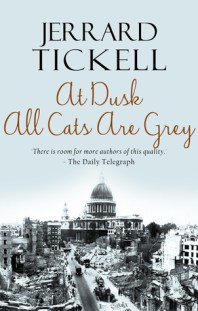
AtDuskAllCatsAreGreyAt Dusk All Cats Are Grey by Jerrard Tickell ohn Boyne (added 18th August 2017)

It’s not only the cats slinking through the dark…

Twenty-two-year-old Joanna Shirley is the only daughter and child of Lady and Sir Robert Shirley. Joanna grew up in the countryside of the Cotswold; in her view, she had an idyllic childhood roaming the rolling, green hills. Her teens were spent socialising in France, Austria and Germany, where she learnt of her affinity for languages and accents. In fact, while skiing once in Austria, her German was so good that she was arrested by the Gestapo on suspicion of being a spy…

It once seemed a jolly funny story to tell people, but now rumours that Hitler is edging his way to the Polish border and, feeling that now she must earn her own keep, Joanna moves to London. While studying at secretarial college, she meets Peter Havelock – a dull, somewhat absent-minded man who is desperately in love with her.

She soon gets a job at an advertisement firm – Silvertops run by the esteemed P. J. Martin. Like London as a whole, the firm is full of strange characters. There’s the stalwart Miss Phillips who keeps the firm from ruining itself into bankruptcy – and the conceited womaniser and copywriter, Neil Trevor. Trevor takes quite a fancy to Joanna but finds his old habits of woman, booze and lying hard to change.

Meanwhile, meeting Peter’s in-laws, Joanna meets Old Mr Havelock, who happens to also be a client of Silvertops. While she makes an impression on him, she makes an even greater impression on Colonel Seymour – especially with her proficiency in French and German. The Colonel wants to know if she’s interested in something a little more profitable and discreet than a receptionist. All she has to do is report back about a group of Austrian refugees…

A sinister darkness is creeping over Europe, and Joanna finds herself unable to recognise the world she once knew so well…

Verdict: Dump – I was exhausted just reading the blurb and have no interest in the book having done so. One of those books where you ask yourself, how on earth did this end up on my Kindle?

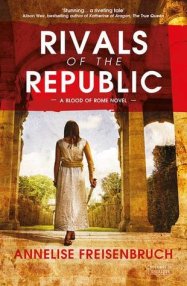
RivalsoftheRepublicRivals of the Republic by Annelise Freisenbruch (added 24th August 2017) 

As Rivals of the Republic begins, Roman high society is humming with gossip about the sudden, suspicious suicide of a Roman senator. Shortly afterward, the body of a Vestal Virgin is discovered in the River Tiber. When the Roman authorities turn a strangely blind eye, Hortensia, the daughter of the capital’s most celebrated lawyer, begins investigating a trail of murders that leads straight into the dark heart of Rome.

Defying her husband and her father and rebelling against the constraints imposed upon her sex, Hortensia plunges deeper into the corrupt underworld that lurks in the shadows cast by the city’s all-powerful elite. When more key witnesses are silenced by an unknown mastermind, Hortensia is forced to seek an unconventional ally: Lucrio, an ex-gladiator with secrets of his own.

Verdict: Keep – Bestselling author Alison Weir described this novel as ‘stunning’ and it was on my list for the 20 Books of Summer 2022 reading challenge, which I’m still working my way through. It’s also relatively short.

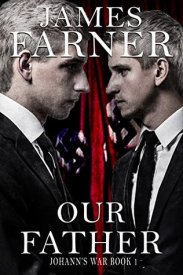
OurFatherOur Father by James Farner (added 22nd September 2017)

The Second German Reich has collapsed in the flames of World War I and the country is in chaos. Republicans, rogue soldiers, and communists are rampaging through the cities and villages of Germany. Faced with destruction, the nationalists fight back against their enemies, turning the country into a battlefield.

In Munich, Erich and Johann Brandt are a pair of impressionable teenagers just trying to get by. When Erich falls under the sway of young speaker Adolf Hitler, he joins the party without a second thought. Erich drives further and further into Hitler’s inner circle, which all culminates in a deadly march through the heart of Munich.

Horrified at his brother’s fall into National Socialism, Johann does what he can to fight back against the spell that Hitler has placed the country under. That is until he attracts the brutal attentions of SA captain Oswald Yorck. As elections turn against the democratic parties, Johann does his best to save his country before it’s too late. But it could cost him his life…

Verdict: Dump – I dithered about keeping this. On the one hand, it’s relatively short and being set in Germany between the two World Wars makes it interesting. However, it sounds similar in theme to Louise Fein’s People Like Us

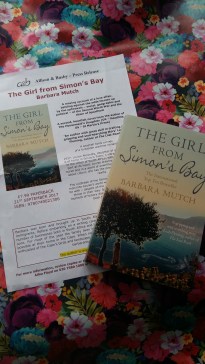
TheGirlFromSimon'sBayThe Girl from Simon’s Bay by Barbara Mutch (added 28th September 2017)

Simon’s Town is a vibrant seafaring community in a picturesque part of the Union of South Africa. Louise Ahrendts, daughter of a local shipbuilder, nurtures the dream of becoming a nurse amid the unwritten, unspoken rules about colour that might hold her back.

As the port becomes a hub of activity following the outbreak of the Second World War, Louise crosses paths with man she is determined to be with – despite all the obstacles that life and war can throw in their way.

But when a new troubled moment of history dawns, can they find their way back to each other?

Verdict: Keep – Possibly this has more of a romance element than I would normally go for but I’m a sucker for a book set in WW2 and the South African location is a little different. It’s also another of the books on my list for the 20 Books of Summer 2022 reading challenge. And, apologies to Allison & Busby who sent me the review copy.  

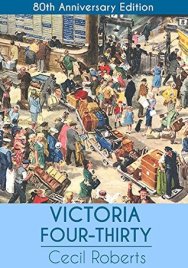
VictoriaFour-ThirtyVictoria Four-Thirty by Cecil Roberts (added 30th September 2017)

“It would be very interesting to know the life history of everybody on this train – why we are travelling on it…”

London, 1937. A world famous composer, a honeymooning couple, a novelist in search of a plot, a German film star, a young crown prince and a sister of charity are among the disparate group of travellers on the boat train to continental Europe. Set amid the political upheaval of the 1930s, this is the witty, insightful and bittersweet story of the passengers on the 4.30pm from Victoria. Each is facing a different journey, with their own hopes, fears and challenges; and for some, their lives will cross in unexpected ways.

Verdict: Keep – Well, this is a little curiosity, isn’t it? It’s an 80th anniversary edition of a book first published in 1937. I find myself intrigued by it and I love the cover.

TheTobacconistThe Tobacconist by Robert Seethaler (added 30th September 2017)

When seventeen-year-old Franz exchanges his home in the idyllic beauty of the Austrian lake district for the bustle of Vienna, his homesickness quickly dissolves amidst the thrum of the city. In his role as apprentice to the elderly tobacconist Otto Trsnyek, he will soon be supplying the great and good of Vienna with their newspapers and cigarettes. Among the regulars is a Professor Freud, whose predilection for cigars and occasional willingness to dispense romantic advice will forge a bond between him and young Franz.

It is 1937. In a matter of months Germany will annex Austria and the storm that has been threatening to engulf the little tobacconist will descend, leaving the lives of Franz, Otto and Professor Freud irredeemably changed.

Verdict: Dump – So we’re back in pre-WW2 Germany again. If I didn’t have so many other unread books I’d be tempted to keep this but it does sound a little similar to Sebastian Faulk’s Snow Country which I read in August last year.

The Result – 6 kept, 4 dumped. Would you have made different choices? Next time we might even be on to books added to my To-Read shelf less than five years ago. Fancy that!