The book I’ll be reading for Classics Club Spin No.46 #ccspin @ourclassicsclub

Classics Club Spin

The Classics Club Spin involves the folks at The Classics Club spinning the wheel of fortune to pick a book from our prepared list of 20 books remaining to be read on our Classics Club list. The challenge is to read the book selected between now and 3rd January 2027.

Hoping to kill two birds with one stone, I was keeping my fingers crossed the selected book would also qualify for one of the reading events taking place this month such as Reading Scotland and Novellas in November.

Unfortunately the spin gods had other ideas so the book I shall be reading is number 4 on my list, The Smiler with the Knife by Nicholas Blake, the fifth book in his Nigel Strangeways series, originally published in 1939. Initially I was a bit disappointed given I didn’t really enjoy the last Nicholas Blake book I read, Head of a Traveller. However, my interest picked up when I saw the reference to The Thirty-Nine Steps, being a longtime admirer of John Buchan. Perhaps this might actually be as entertaining as the blurb promises…

About the Book
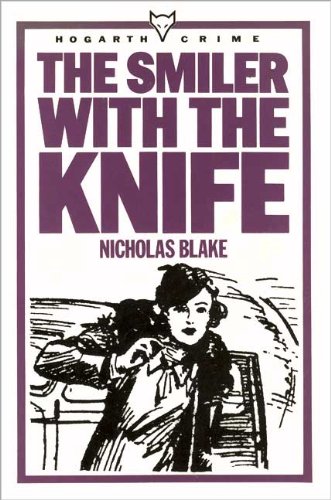
Seldom does a little bit of gardening change the course of history. Trimming the hedgerow one sunny morning, those incomparable partners in crime, Nigel and Georgia Strangeways, discover a tarnished locket. Hidden inside are dark secrets which threaten the nation’s democracy.

Leaving Nigel disconsolate at home, Georgia sets off on an hilarious romp across the country, pursuing – in one of Nicholas Blake’s most timely and entertaining novels – a clique of Little Englanders inspired by Fascist Germany. But like Richard Hannay in The Thirty-Nine Steps, Georgia soon discovers that the thrill of the chase is no laughing matter.

In her battle for Britain she encounters reckless gamblers and a quiet village vicar, England’s top batsman and the Radiance Girls in flowing orange chiffon, and, most suspicious of all, a peer of the realm with more on his mind than a coronet. Who is friend? Who is foe? Who would destroy the sanctity of England’s green and pleasant land?

My Spin List

  1. The Fall of the House of Usher and Other Stories by Edgar Allan Poe
  2. The Hound of Death and Other Stories by Agatha Christie
  3. Victoria Four-Thirty by Cecil Roberts
  4. The Smiler with the Knife by Nicholas Blake
  5. The King’s General by Daphne du Maurier
  6. A Maigret Christmas and Other Stories by George Simenon
  7. The Birds and Other Stories by Daphne du Maurier
  8. Beyond the Black Stump by Nevil Shute
  9. Cat Among the Pigeons by Agatha Christie
  10. Trial by Terror by Paul Gallico
  11. Shannon’s Way by A. J. Cronin
  12. The Story of Esther Costello by Nicholas Montserrat
  13. The Red Rock Wilderness by Elspeth Huxley
  14. The Greengage Summer by Rumer Godden
  15. Good-bye, Mr. Chips by James Hilton
  16. Lord Hornblower by C. S. Forester
  17. Alone in Berlin by Hans Fallada
  18. Quartet by Jean Rhys
  19. Stephen Morris by Nevil Shute
  20. The Outsider by Albert Camus

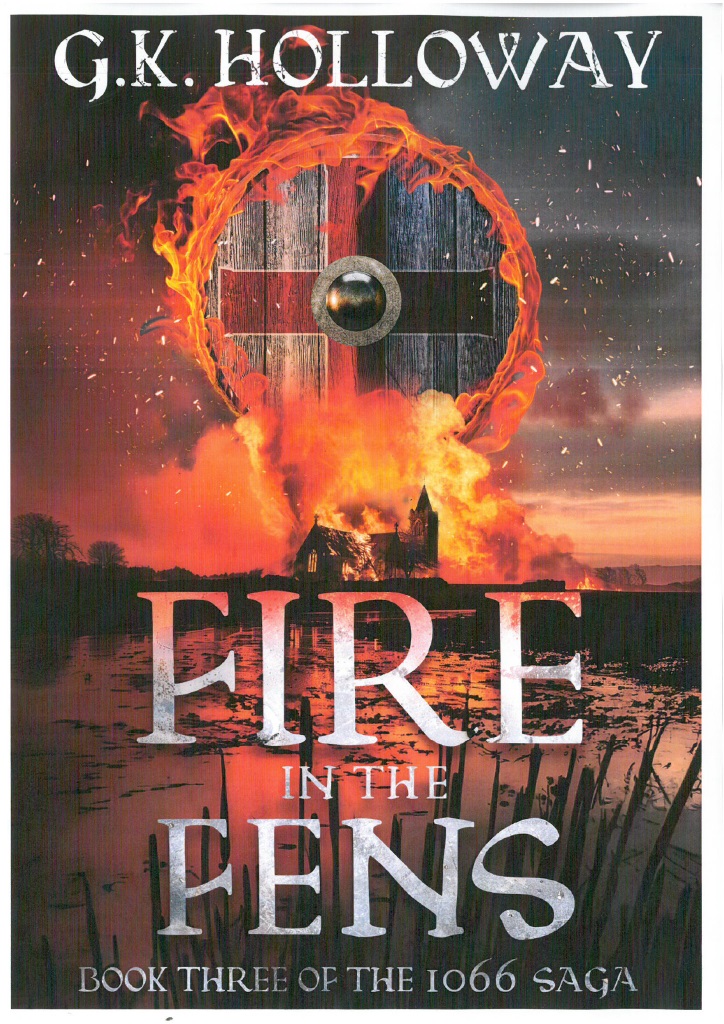
‘Why I Wrote A Saga’ – A Guest Post by G.K. Holloway, author of Fire in the Fens

I’m delighted to welcome author G.K. Holloway to What Cathy Read Next today. Glynn’s latest book, Fire in the Fens, will be published on 28th November and is available to preorder now from Bookshop.org* and other online retailers.

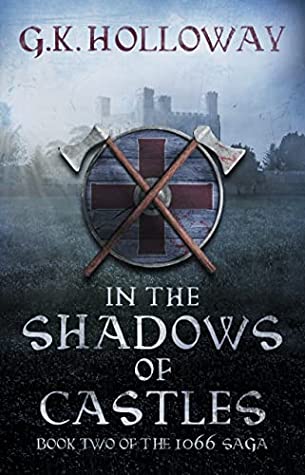
Fire in the Fens is the third book in the 1066 Saga, the follow-up to 1066: What Fates Impose and In the Shadows of Castles. My thanks to Glynn for my digital copy of Fire in the Fens. Review coming soon!

In his fascinating guest post, Glynn reveals the Christmas gift that inspired him to take on the daunting task of writing a saga, why it has come to its natural end and what he’s working on next.

*Disclosure: If you buy books linked to our site, we may earn a commission from Bookshop.org, whose fees support independent bookshops

About the Book

Duke William of Normandy has conquered all of England, except for the Island of Ely, deep in the heart of the Fens. A land of myths, mists, mire and marshes, where death comes quickly to the careless.

Taking refuge are people caught up in these desperate times. A charismatic soldier appears to lead them into battle against a merciless despot and his henchmen. Overcoming loss and adapting to the worst of trials in their own different ways, these refugees in their home country are willing to lay down their lives for their rights and old way of life.

Will their proclaimed king arrive with an army and save the day? Can they evade capture, or will they have to face the wrath of the Tyrant? Whatever the outcome, life will never be the same for them again.

Find Fire in the Fens on Goodreads

‘Why I Wrote A Saga’ by G.K. Holloway, author of Fire in the Fens

It was never my intention to write a saga. I intended to write just one book about Harold Godwinson, and that would be that. The novel was to be called 1066: What Fates Impose, and the inspiration for writing it came from a Christmas present from my wife, Alice, who bought me a copy of Harold, the Last Anglo Saxon King by Ian W. Walker.

Although I’m a history graduate, I must admit that at the time Alice gave me the present I didn’t know a lot about 1066, the Battle of Hastings and the events that led up to the Norman invasion. Walker’s book opened a door. Fascinated by what I’d read, I had a real hunger to know more which led me to reading just about everything I could find on mid-eleventh-century English history. The more I read, the more enthralled I became with the era.

I’ve always been interested in history. As a boy, the view from my bedroom window was of a castle on a hill that dominated the landscape for miles. It was the kind of view that would fire the imagination of any child. Naturally, the questions followed, the answers informed, and the tales flowed. Eventually, I studied history and politics for my degree. Looking back, I always wanted to produce a novel or a movie or anything really, so long as it was a story.

After reading more about Anglo-Saxon England and the Norman invasion, I felt compelled to tell the story. I was like a junior reporter who had the most exciting scoop ever and wanted to tell the world the news, even if it was 950 years old!

The research was an absolute joy; not just discovering the roles played by the major figures, but more obscure things, such as how the organ in Winchester Minster worked, how to make a sword, eleventh-century power struggles. All of it was a pleasure. So much so, that the original novel was 297,000 words long and still nowhere near complete. I had the good sense to send the manuscript to an editor who advised me to cut it down by half. I did this and, after some further work, I had a completed novel.

It was only after it had been published that I realised the story wasn’t over. My novel finished the day after the Battle of Hastings, so the reader had no idea of the significance of losing to Duke William. A second novel was called for which concentrated on people caught up in the resistance to the Normans. In the Shadows of Castles followed. This second novel focuses on the adventures of four people caught up in ‘The Harrying of the North’ and demonstrates, amongst other things, that the English did more to resist Norman rule than fight for just one day.

The third novel in the series, Fire in the Fens, tells the story of the same four people struggling to cast off the Norman yoke during the last throes of the rebellion against William the Conqueror. The three books cover a natural arc, so that is the end of the saga.

What I’m working on now is a story about Edmund Ironside. Still in the Anglo-Saxon era, but before the Conquest. Not only does it feature a doomed hero, but it has a villain commonly regarded as the worst Englishman to have lived in eleventh-century England. Lovely.

About the Author

G. K. Holloway did several jobs after leaving school before taking A Levels at his local college and later a degree in History and Politics at Coventry University. Once he had graduated, he spent the next twenty years working in education in and around Bristol.

After reading a biography about Harold Godwinson, he studied the late Anglo-Saxon era in detail and discovered a time of papal plots, court intrigues, family feuds, loyalties, betrayals, assassinations and a few battles. When he had enough material to weave together fact and fiction, he produced his award-winning novel, 1066: What Fates Impose, the first in a series about the Norman Conquest.

G. K. Holloway lives in Bristol with his wife and two children. (Photo: Author Website)

Connect with G.K. Holloway
Website | X | Facebook