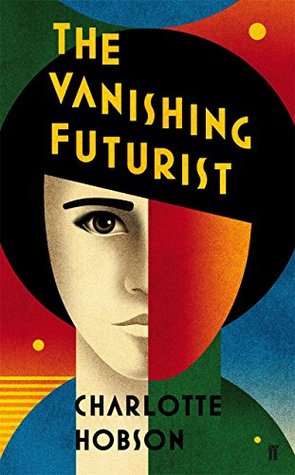
About the Book
When twenty-two-year-old Gerty Freely travels to Russia to work as a governess in early 1914, she has no idea of the vast political upheavals ahead nor how completely her fate will be shaped by them. Yet as her intimacy with the charismatic inventor, Nikita Slavkin, deepens, she’s inspired by his belief in a future free of bourgeois clutter, alight with creativity and sleek as a machine.
In 1917, revolution sweeps away the Moscow Gerty knew. The middle classes – and their governesses – are fleeing the country, but she stays, throwing herself into an experiment in communal living led by Slavkin. In the white-washed modernist rooms of the commune the members may be cold and hungry, but their overwhelming feeling is of exhilaration. They abolish private property and hand over everything, even their clothes, to the collective; they swear celibacy for the cause.
Yet the chaos and violence of the outside world cannot be withstood forever. Nikita Slavkin’s sudden disappearance inspires the Soviet cult of the Vanishing Futurist, the scientist who sacrificed himself for the Communist ideal. Gerty, alone and vulnerable, must now discover where that ideal will ultimately lead.
Format: Hardcover (320 pages) Publisher: Faber & Faber
Publication date: 3rd May 2016 Genre: Historical Fiction
Find The Vanishing Futurist on Goodreads
Purchase The Vanishing Futurist from Bookshop.org [Disclosure: If you buy books linked to our site, we may earn a commission from Bookshop.org, whose fees support independent bookshops]
My Review
The Vanishing Futurist is one of the novels shortlisted for the 2017 Walter Scott Prize for Historical Fiction. You can find out more about the prize and the other shortlisted novels here. The Vanishing Futurist is probably the least known of the shortlisted novels, so much so that is the one title I was unable to borrow from my local library. Certainly it was not on my radar until I saw it on the shortlist.
The book uses that favourite device of authors – the memoir or journal. Gerty is making a written record for her daughter of her experiences as a governess in Moscow in the run-up to and during the Russian Revolution. There are hints of a secret that Gerty’s memoir will reveal to her daughter, a secret she has felt unable to tell her about in person.
Gerty’s time with the Kobolev family in Moscow initially seems like an adventure, a chance to escape her stifled upbringing and enjoy a degree of freedom. Here she first encounters Nikita Slavkin, quixotic and idealistic inventor. The events of the Russian Revolution intervene but, rather than flee Moscow with the family, Gerty decides to stay, influenced largely by her growing attraction to Slavkin. At Slavkin’s urging, Gerty and others embrace the notion of communal living. I really enjoyed the humour of the day to day absurdities of their attempts at this – rules for everything from cleaning to underwear distribution.
Gerty describes the daily struggle to find food and fuel, and to avoid the attention of the brigades searching out signs of bourgeois tendencies. Despite these travails, the commune members are sustained by the promise of the change in society they believe communism will bring about and a belief that their suffering is, in fact, an essential part of creating that change.
‘We were constantly hungry, we were cold, the country was in chaos. Despite it all, we set out on the hard, hard path of change. We were not daunted, we were tenacious. The real cause for astonishment, to my mind, does not lie in our failures – of which of course there were many – but in the incredible extent of our success.’
The book describes how the Revolution inspired a period of inventiveness with the rise of avant-garde movements in theatre, literature and the arts generally. As the author notes in the afterword, there was a belief in the power of art ‘not just to depict but to transform’. Slavkin embraces this spirit of creativity to create the first of his many inventions, the Propaganda Machine. A rather comical creation, it is a cobbled together cocoon-like structure that makes use of elements of sensory deprivation and subliminal messaging.
Later, inspired by the theories of Einstein and Planck, Slavkin ventures into the field of quantum physics, coming up with the idea for the machine – the Socialisation Capsule – that will eventually earn him the soubriquet, The Vanishing Futurist.
‘There are other versions of reality, other dimensions, with which we perhaps share matter; our matter, far from existing solidly in our world, flickers between an infinite number of worlds that all co-exist within this universe. And it this multitude of other realities, all the possibilities thrown up by our reality are played out; every unchosen path is taken, every unsaid word is spoken.’
The book is clearly based on painstaking research and there is an authentic feel to the descriptions of daily life and events. Indeed the author states in her afterword that it took her years to write the book and gives more historical background to the fictional story contained in The Vanishing Futurist.
I found it a little difficult to understand Gerty’s adoration for Slavkin. Whilst clearly possessing a brilliant, inventive mind and a persuasive personality, I’m not sure the author completely succeeds in presenting him as an attractive enough character to justify Gerty’s love for him. Gerty willingly agrees to end the physical side of their relationship based on his argument that romance ‘was a product of an outdated social order’ and contrary to the ideals of the revolution. She remains devoted to him to the end, despite his view of being in love as ‘that state of exaggerated ego in which each partner wilfully creates an ideal beloved of the other.’
I very much enjoyed the book and would certainly recommend it to readers interested in the Russian Revolution. You can read an interview with Charlotte Hobson about the book here.
In three words: Authentic, fascinating, historical
Try something similar… Dark Matter by Blake Crouch (in playful homage to Slavkin’s Socialisation Capsule)
About the Author
Charlotte Hobson’s first book, Black Earth City, won a Somerset Maugham Award and was shortlisted for the Duff Cooper Prize and the Thomas Cook Travel Book Award. She lives in Cornwall with her husband, the writer Philip Marsden, and their two children.
Connect with Charlotte
Facebook ǀ Twitter ǀ Goodreads








 What Cathy Read Next...