Throwback Thursday: The Clocks In This House All Tell Different Times by Xan Brooks

ThrowbackThursday

Throwback Thursday is a weekly meme hosted by Renee at It’s Book Talk.  It’s designed as an opportunity to share old favourites as well as books that we’ve finally got around to reading that were published over a year ago.  If you decide to take part, please link back to It’s Book Talk.

Today I’m reviewing The Clocks In This House All Tell Different Times by Xan Brooks, published in April 2017.  It’s one of the thirteen books on the longlist for The Walter Scott Prize for Historical Fiction 2018.  I’m attempting to read all the books on the longlist and you can find the complete list here along with links to my reviews of those I’ve read so far.  Some way still to go!


WaltScott_The Clocks In This House All Tell Different TimesAbout the Book

‘An orphan is travelling through the deep, dark woods and discovers that the monsters she encounters are as much tragic as wicked and that the handsome young prince may be ugly inside. The world around her is callous, unjust and horribly scarred by the past. But she brings compassion and even a glimmer of hope.’

Summer 1923. The modern world. Orphaned Lucy Marsh climbs into the back of the old army truck and is whisked off to the woods, where the funny men live. If she can only avoid all the hazards on the path, she may just survive into a bright new tomorrow.

Format: ebook, paperback (384 pp.) Publisher: Salt Publishing
Published: 15th April 2017                  Genre: Historical Fiction

Purchase Links*
Publisher ǀ Amazon.co.uk ǀ  Amazon.com ǀ Hive.co.uk (supporting UK bookshops)
*links provided for convenience, not as part of any affiliate programme

Find The Clocks In This House All Tell Different Times on Goodreads


My Review

The recent experiences of the so-called ‘funny men’ who 14-year old orphan Lucy and her companions meet on their trips to the woods turn out to have been anything but funny.  In fact, they have been traumatic and life-changing, leaving them excluded from society.  And the Sunday evening trips to the woods, though they involve seemingly innocent games and coveted treats like trifle and ice-cream, turn out to be far from benign.

Tragically, Lucy and her friends are initially too innocent to see how they are being manipulated and used.  Gradually, the true nature of events is revealed – I have to say to the disquiet of this reader.   Lucy comes to suspect that what is taking place is wrong.  After all she and her friend, Winifred, refer to it as ‘The Terrible Unmentionable’, as if not naming it for what it is makes it less real.  However, the trips to the ‘funny men’ also fill a void in Lucy’s life, leaving her conflicted.  ‘And this is why, as long as she lives, she will never completely regret her trips to the forest, in spite of the trouble they cause and the horrors that follow.’

Alongside Lucy’s experiences with the ‘funny men’, the book introduces several other often eccentric, sometimes grotesque, characters and other narrative threads that, initially, seem quite random and disparate.   However, the connection the author makes between these characters and story lines is the long-lasting impact of the First World War on people, livelihoods and places.  One character observes: ‘It is a time of beginnings for those who can make them and this is surely essential; the world must move on.’  But what about those who can’t move on?

The lives of the main characters converge in the second part of the book, set in Grantwood House, the home of aristocrat Rupert Fortnum-Hyde, heir to the Grantwood estate.     In a manner reminiscent of Jay Gatsby, he throws wild drug and alcohol-fuelled parties, gathering around him a group of misfits and outcasts as a kind of human zoo, with his ‘collection’ expected to provide endless novelty and entertainment.   However, events will take a tragic turn with cataclysmic consequences.

I really admired the author’s imaginative writing, in which metaphors morph into others, such as in this description of a performance by the jazz band, The Long Boys.  ‘Aboard the Maplewood stage, the Long Boys take songs that are already unfamiliar and proceed to twist them out of shape, so that a tune that sets forth dressed as one thing changes costumes in the space of a bar, or doubles back on itself, or spins to reveal a set of outlandish music cousins who start to chatter and squabble, each vying for attention.’

The book ends in a way that suggests there may be redemption and repentance for some, and more hopeful times ahead for Lucy and those who care for her.  However, this couldn’t quite wipe out for me the memories of the book’s darker moments.  I’m afraid I found it difficult to get past the problematic nature of Lucy’s encounters with the ‘funny men’.  I appreciate that the men’s wartime experiences had been dreadful leaving them scarred in all sorts of ways, but I couldn’t understand why this would make them want to act as they do with children.

‘When the world has been shattered, nothing makes any sense.’  I regret I did feel a little like this about the book. It has a dreamlike quality at times and at other times is more like the stuff of nightmares.  The Clocks In This House All Tell Different Times is a book I admired for the skilful writing and imaginative characters but couldn’t fall completely in love with because of its dark, unsettling themes.

Follow my blog with Bloglovin

In three words: Dark, intense, unsettling

Try something similar…Regeneration by Pat Barker or Atonement by Ian McEwan

Xan BrooksAbout the Author

Xan Brooks is an award-winning writer, editor and broadcaster. He spent his rude youth as part of the founding editorial team of the Big Issue magazine and his respectable middle period as an associate editor at the Guardian, specialising in film. The Clocks in This House All Tell Different Times is his first novel.

Connect with Xan

Website  ǀ  Twitter  ǀ  Goodreads


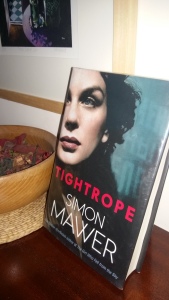
Throwback Thursday: Tightrope (Marian Sutro #2) by Simon Mawer

ThrowbackThursday

Throwback Thursday is a weekly meme hosted by Renee at It’s Book Talk.  It’s designed as an opportunity to share old favourites as well as books that we’ve finally got around to reading that were published over a year ago.  If you decide to take part, please link back to It’s Book Talk.

Today I’m reviewing Tightrope (Marian Sutro #2) by Simon Mawer, published in 2015.  It’s my book for the March theme (And The Award Goes To…) of The BookBum Club on Goodreads, run by the lovely Zuky, as it won The Walter Scott Prize for Historical Fiction in 2016.


TightropeAbout the Book

As Allied forces close in on Berlin in spring 1945, a solitary figure emerges from the wreckage that is Germany. It is Marian Sutro, whose existence was last known to her British controllers in autumn 1943 in Paris. One of a handful of surviving agents of the Special Operations Executive, she has withstood arrest, interrogation, incarceration, and the horrors of Ravensbrück concentration camp, but at what cost?

Returned to an England she barely knows and a post-war world she doesn’t understand, Marian searches for something on which to ground the rest of her life. Family and friends surround her, but she is haunted by her experiences and by the guilt of knowing that her contribution to the war effort helped lead to the monstrosities of Hiroshima and Nagasaki.  When the mysterious Major Fawley, the man who hijacked her wartime mission to Paris, emerges from the shadows to draw her into the ambiguities and uncertainties of the Cold War, she sees a way to make amends for the past and at the same time to find the identity that has never been hers.

A novel of divided loyalties and mixed motives, Tightrope is the complex and enigmatic story of a woman whose search for personal identity and fulfillment leads her to shocking choices.

Format: Hardcover (408 pp.)       Publisher: Little, Brown
Published: 4th June 2015              Genre:  Historical Fiction

Purchase Links*
Amazon.co.uk  ǀ  Amazon.com  ǀ Hive.co.uk (supporting UK bookshops)
*links provided for convenience, not as part of any affiliate programme

Find Tightrope on Goodreads


My Review

Based on the book description, I was anticipating an enthralling Cold War spy story in the manner of John Le Carré and I certainly got that in the final third of the book.  What I wasn’t expecting was such a devastating portrait of the lasting impact of their experiences on those who, like Marian, performed undercover roles in the Second World War.

Our narrator is Sam, who first encounters Marian when he is a child (as a friend of his mother), later when he is an impressionable teenager and finally when he is an adult but still slightly in thrall to her.  Marian’s story, as presented to the reader, is part her testimony, part Sam’s first-hand experience, part evidence he has gleaned from official files and part his recreation of how he imagines events may have taken place.  The reader is never entirely sure which. Of course, part of Marian’s undercover role involved presenting herself as someone she wasn’t, living an acquired identity, never really being herself.  ‘That was the problem with words – they nailed the thought down, made it explicit, fixed it, crucified it on the cross of exact meaning.  But life has no exact meanings, only shades of meaning, hints, versions and contradictions, s confusion of loves and hates, of motives and desires.’   What is the true story?

The author convincingly portrays Marian’s difficulty in adjusting to ‘normal’ life and overcoming the psychological, physical and emotional scars she bears as a result of her terrible experiences: arrest, interrogation, torture and, ultimately, confinement in the Ravensbrück concentration camp.  Marian feels a sense of dislocation from other people.  ‘It was just indifference, a sensation of estrangement from the ordinary matters of human contact.  Conversation with anyone felt like trying to talk to people in a foreign language when you only have a fraction of the vocabulary at your disposal and half the grammar.’  It is as if a yawning gulf separates her from the rest of humanity: ‘And she felt something strange, the sensation of uniqueness.  It wasn’t a good feeling, just one of separation’.

It’s not just Marian who has been changed by the war.  The author gives us an evocative and comprehensive picture of the impact of the war on people, places, geopolitics, political and philosophical argument, technology and much else.  Even small things, like the way people interact:
‘“Where are you from, then?” the barman asked.
No stranger ever asked a question like that last time she was in the city.  Questions drew you into other people’s stories, got you involved, got you into trouble.  Now no one cared.’

Marian and her brother, Ned, are appalled by the use of the atomic bomb on Hiroshima and Nagasaki and the prospect of the United States developing the technology still further.  In particular, Marian is plagued by guilt that her actions during the war might unwittingly contribute to a repetition of the horrors she has already witnessed, but multiplied a hundredfold.  This guilt propels Marian down a path of secrets, lies and betrayal that will require the use of all the skills and tradecraft she acquired in preparation for her wartime exploits.   Like how to fashion a weapon out of what’s to hand, how to tell if you’re being followed and how to shake off your followers.  It will put her in danger and make her question who, if anyone, she can trust so that carefully planning each small move, each sentence uttered, becomes critical.

‘She waited a moment, looking at him.  And then she made her move.  It felt like walking a tightrope, feeling the balance, knowing that a slight shift either side might be fatal.  She reached her foot forward and poised to transfer her weight onto it, feeling the rope wobbling.  No safety net.’

I loved Tightrope.  I was completely drawn into Marian’s story although the romantic in me would have liked a slightly different outcome for her and the man who becomes such an important part of her life.  However, the path the author chose for her was admittedly more true to her character. I haven’t read the first book in the series, The Girl Who Fell From The Sky (published under the title Trapeze in the United States), so I don’t have the benefit of knowing how much of this book repeats events from the earlier one. What I do know is that Tightrope works brilliantly as a standalone read and from the very beginning I got that comforting feeling that I was in the hands of a skilled writer and accomplished storyteller.

Follow my blog with Bloglovin

In three words: Insightful, powerful, moving

Try something similar…Nucleus (Tom Wilde #2) by Rory Clements (click here to read my review)


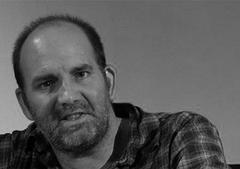
Simon MawerAbout the Author

Simon Mawer is a British author of ten novels and two non-fiction books. The Glass Room, published by Little, Brown in January 2009, was on the Man Booker shortlist. His current novel is entitled Tightrope. The UK paperback and the e-book are out now. The US edition was published in November 2015.

He currently lives in Italy.

Connect with Simon

Website  ǀ  Facebook  ǀ  Twitter ǀ  Goodreads