

Throwback Thursday is a weekly meme created by Renee at It’s Book Talk. It’s designed as an opportunity to share old favourites as well as books that we’ve finally got around to reading that were published over a year ago.
Today I’m revisiting a book I reviewed in April 2018 but which had been on my author review pile for quite a long while before that – The Good Father by S. R. Wilsher. The Good Father was published in April 2017 and you can find purchase links below. You can also read my earlier Q&A with S.R. Wilsher here.
As you’ll see from my review below, I really enjoyed The Good Father so I was thrilled to learn from Rachel at Rachel’s Random Resources that the author has another book due out on 20th August, The Glass Diplomat. You probably won’t be surprised that I’ve signed up to take part in the blog tour that Rachel is organising to promote the book.
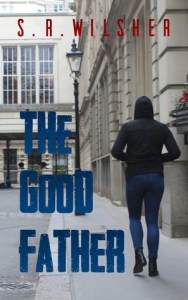 About the Book
In 1994, nine year old Effie and her twelve year old brother Ajan, endure the horrors of life in the besieged city of Sarajevo after the loss of their parents. Desperate to help preserve their city, Ajan becomes involved with a criminal gang among the makeshift defenders. When Effie is forced to flee alone, she must survive long enough to reach those outside of the city who have come to help. But the influence of those pursuing her is such that not even the soldiers of the UN might be able to save her. Any hope of a future for Effie eventually lies with only one man, Captain Nathan Lane.
It is 2017, and an attempt is made on the life of Foreign Secretary, Caroline Hardy. As the Security Services hunt for her attacker, the reality she is only a bit part player in the affair doesn’t occur to anyone. Not until her daughter, Mia goes missing and is implicated in the disappearance of a well-connected lawyer. As the focus switches to Mia, a secret that Caroline has kept hidden for a long time threatens them both, until there becomes only one place she can turn, to the man who shares her secret.
Format: ebook (434 pp.) Publisher:
Published: 27th April 2017 Genre: Contemporary Fiction, Thriller
Purchase Links*
Amazon.co.uk ǀ Amazon.com
*links provided for convenience, not as part of any affiliate programme
Find The Good Father on Goodreads
My Review
Recent events in Syria have brought to the fore again the question of the legitimacy of other countries getting involved in conflicts within another sovereign state, even for humanitarian reasons. This came to mind as I was reading the opening scenes of the book set in the Bosnian conflict of the 1990s. The author convincingly portrays the devastation wrought by the bombing of Sarajevo and the effect on the population; the constant risk from snipers, the homes reduced to rubble, public services including hospitals destroyed and those inhabitants who remain struggling to find enough food to keep themselves alive.
‘Each season throws up its impossible challenges. People die from cold in the winter. While in summer they die from complacency. Food and water and shelter are issues every day irrespective of where the sun sits in the sky. The snipers and the artillery are indifferent to the time of year. Death enjoys every day.’
In particular, the story focuses on the children affected by the conflict, many of them orphans left to fend for themselves or part of feral gangs, open to exploitation. If they survive it’s because they have learned to steal, trust no-one and fight for their lives if necessary. It’s a chilling picture of a stolen youth.
The action moves ahead twenty-three years and, in what seems initially to be a separate storyline, an assassination attempt on British Foreign Secretary, Caroline Hardy. Both she and her daughter, Mia, who was in the car at the time, escape with their lives although Mia is injured. When a further incident occurs, Caroline begins to wonder if she was actually the intended target or if the answer lies in secrets from the past. Some people, it seems, have long memories and, as the saying goes, revenge is a dish best served cold.
Caroline enlists the investigative assistance of Nathan Lane, a former army officer, who shares her secret. It’s not long before Nathan realises the case is more complex than it first appeared and the would-be assassin is not the only person motivated by revenge for past events. As well as following Nathan’s investigation, the reader is given an insight into Mia’s life in the weeks leading up to the assassination attempt. The book builds to an action-packed conclusion by which time I was convinced that if I’m ever in trouble, I want a Nathan Lane in my life.
Thank you to the author for my review copy in return for an honest and unbiased review. I feel bad it’s taken me so long to get round to reading The Good Father, not only because the author has been patiently awaiting my review but because I’ve deprived myself of a really entertaining, well-structured thriller. The Good Father also earns points for the first mention of Brexit and its implications I’ve come across in a book.
In three words: Compelling, action-packed, suspenseful
Try something similar… The Last Train by Michael Pronko (read my review here)
 About the Author
S. R. Wilsher writes: I began writing when I was twenty, even though I was uncertain that I had a book in me. And I was so afraid of being a failed writer that, for a very long time, nobody knew I wrote. I’ve dealt with that fear of failing by always continuing to write. I figure that if I keep going I’ve not failed yet.
I resisted self-publishing for years, having grown up in an era where the only alternative to traditional publishing was vanity publishing. But, eventually, I decided to stop hiding inside a bubble of rewriting based only on second-guessing rejection letters, and accepted that the traditional route was closed to me. The thirty years of rejections might have been trying to tell me something, but they rarely spelled out whether I should write or not. I hoped self-publishing would supply that answer. That’s why I’m always grateful for reviews, as they encourage me to keep trying.
However, I continue to write for no other reason than I enjoy it deeply. I like the challenge of making a story work. I get a thrill from tinkering with the structure, of creating characters that I care about, and of manipulating a plot that unravels unpredictably yet, hopefully, logically. I like to write myself into a corner and then see how I can escape. To me, writing is a puzzle I like to spend my time trying to solve. Publication is the deep sigh of setting the completed puzzle aside. The marketing bit beyond that is something else entirely!
Connect with S. R. Wilsher

 About the Book

