#TopTenTuesday Opening Lines

Top Ten Tuesday newTop Ten Tuesday is a weekly meme created by The Broke and the Bookish and now hosted by Jana at That Artsy Reader Girl.

The rules are simple:

Opening lines
Photo by Andrea Piacquadio on Pexels.com

Each Tuesday, Jana assigns a new topic. Create your own Top Ten list that fits that topic – putting your unique spin on it if you want. Everyone is welcome to join but please link back to That Artsy Reader Girl in your own Top Ten Tuesday post. Add your name to the Linky widget on that day’s post so that everyone can check out other bloggers’ lists. Or if you don’t have a blog, just post your answers as a comment.

This week’s topic is Opening Lines. Here are some examples of memorable opening lines from books I’ve read…


TTT_Rebecca‘Last night I dreamt I went to Manderley again.’ (Rebecca by Daphne du Maurier)

Why it’s so good: Every time I read this I can’t help hearing Joan Fontaine’s voice at the beginning of Alfred Hitchcock’s wonderful 1940 film version of Rebecca. I think she’s perfect as the unnamed second wife alongside Laurence Olivier as the mysterious Max, George Sanders as the caddish Jack Favell and Judith Anderson as the creepiest housekeeper ever, Mrs Danvers.   It’s a great opening line because you know immediately the narrator is speaking about something that happened in the past. So it straightaway begs the question why can she only visit Manderley in her dreams? What is it about Manderley that makes her long to go back there?   You’re hooked – at least, I am.
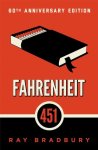
6Degrees_Fahrenheit451‘It was a pleasure to burn.’ (Fahrenheit 451 by Ray Bradbury)

Why it’s so good: It’s arresting. Burning things shouldn’t be a pleasure as it’s an activity associated with destruction. So why does our narrator take pleasure in it? What is being burned? Why? Already your mind is coming up with questions and it’s only the first sentence.
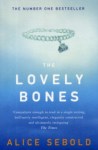
9780330485388‘My name is Salmon, like the fish; first name, Susie. I was fourteen when I was murdered.’ (The Lovely Bones by Alice Sebold)

Why it’s so good: Firstly, if you were named Susie Salmon don’t you think you’d be constantly explaining to people about your surname? So let’s get it over and done with in the first sentence. Then, whoa, you’ve been murdered. How is that possible because you’re telling us about it and you’re dead aren’t you? Straightaway you know the author has come up with something original, isn’t afraid to tell you from the off and probably knows she has already got you hook, line and sinker (see what I did there?). OK, technically this is two lines but let’s not quibble.
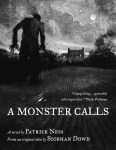
monster‘The monster showed up just after midnight. As they do.’
A Monster Calls by Patrick Ness

Why it’s so good: We’re straight into the story – no ifs, no buts. The book’s title told us there’d be a monster and here it is – it’s real and it’s turned up right from the off. And, of course, everyone knows midnight is the time that monsters arrive… (I know this is another two line example but you could argue it should have been a semi-colon not a full stop between the two phrases, couldn’t you?)
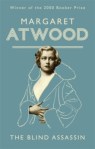
9781860498800‘Ten days after the war ended, my sister Laura drove a car off a bridge.’ (The Blind Assassin by Margaret Atwood)

Why it’s so good: You’ve just got to read on to find out more about Laura and what could have happened to make her do that. What has the timing of the ending of the war got to do with it?  What has Laura’s death got to do with a ‘blind assassin’? Was Laura the ‘blind assassin’ or did the ‘blind assassin’ somehow bring about her death? The other brilliant thing about it is that it’s stated so matter-of-factly. As if it could have been, ‘Ten days after the war ended, my sister Laura bought a cabbage for dinner.’

The Saracen's Mark Cover“In the moment before they caught him, Adolfo Sykes was dreaming of oranges.”
The Saracen’s Mark by S. W. Perry

Why it’s so good: It’s another example of a clever opening line that provokes so many questions. Who are the ‘they’? Who is Adolfo Sykes? Why are people after him? Why in particular was he dreaming of oranges?
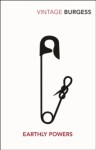
9780099468646“It was the afternoon of my eighty-first birthday and I was in bed with my catamite when Ali announced that the Archbishop had come to see me.” (Earthly Powers by Anthony Burgess)

Why it’s so good: It’s clearly crafted to shock and amuse…and to end up on lists like this.  I love the precision of it being the narrator’s eighty-first birthday and the inclusion of the exotic sounding ‘catamite’, a word I expect, like me, had many readers reaching for their dictionary. (We had them in those days.) By the way, this recent Guardian article recounts how Burgess toyed with alternative versions of the line.

My Cousin Rachel“They used to hang men at Four Turnings in the old days.” (My Cousin Rachel by Daphne du Maurier)

Why it’s so good: Well, it’s Daphne again for a start. It also harks back to earlier times and there’s a hint of ancient superstitions associated with the location, a crossroads known as the Four Turnings.

TTT_A Christmas Carol“Marley was dead, to begin with.” (A Christmas Carol by Charles Dickens)

Why it’s so good: A Christmas Carol happens to be one of my favourite books and reading, listening to or watching an adaptation of it is an annual tradition in my house. When I read or hear that line, I know Christmas is upon us.

The Long and Winding Road‘I knew I shouldn’t have gone’.
The Long and Winding Road by Alan Johnson

Why it’s so good: Why shouldn’t he have gone, and to what? You’ve just got to read on, haven’t you? In crafting that line, Alan Johnson proves himself to be not only a respected former Member of Parliament but a gifted author.

What are some of your favourite opening lines?

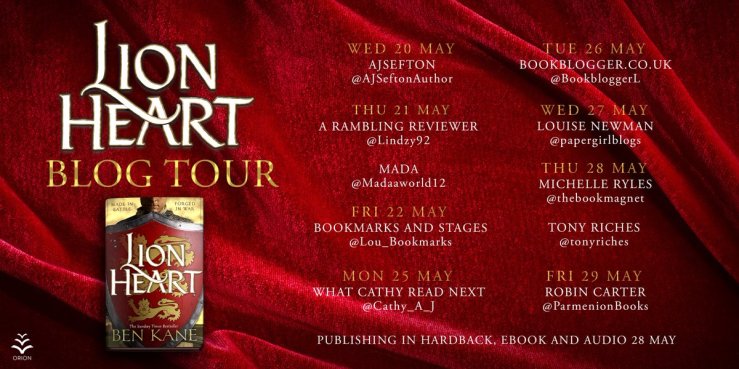
Lionheart by Ben Kane #BookReview #BlogTour @orionbooks

EYXtb37XsAAnCYXWelcome to today’s stop on the blog tour for Lionheart by Ben Kane, which will be published by Orion on 28th May 2020 but is available to pre-order now. My thanks to Virginia at Orion for inviting me to take part in the tour and for my proof copy.


LionheartAbout the Book

1179. Henry II’s Norman conquerors have swept through England, Wales – and now Ireland.

Irish nobleman Ferdia has been imprisoned in Wales to ensure the good behaviour of his rebellious father. But during a skirmish on a neighbouring castle, Ferdia saves the life of the man who would become one of the most legendary warriors to have ever lived: Richard Plantagenet. The Lionheart.

Taken as Richard’s squire, Ferdia crosses the Narrow Sea to resist the rebellious nobles in Aquitaine, besieging castles and fighting bloody battles with brutal frequency.

But treachery and betrayal lurk around every corner. Infuriated by his younger brother Richard’s growing reputation, Henry rebels. And Ferdia learns that the biggest threat to Richard’s life may not be a foreign army – but Richard’s own family . . .

Format: Hardcover (400 pages)    Publisher: Orion
Publication date: 28th May 2020 Genre: Historical Fiction

Find Lionheart on Goodreads

Pre-order/Purchase links*
Amazon UK | Hive (supporting UK bookshops)
*links provided for convenience not as part of an affiliate programme

EYO0ZPoX0AEDRzS


My Review

Lionheart is the first book I’ve read by Ben Kane although I’m aware of his reputation as a bestselling and highly regarded author of historical fiction set in the Roman period. Series such as Spartacus, Hannibal and Eagles of Rome have earned him a devoted following and I can now appreciate why. In Lionheart, the first in a new series, the author turns his attention to 12th century England and France, and in particular to that famous historical figure, Richard the Lionheart.

The narrator of the story is Ferdia, the son of an Irish nobleman defeated by the English. During his time held as a hostage, Ferdia (or Rufus, as he is nicknamed for his red hair) encounters Richard, then Duke of Acquitaine. The manner of their meeting will change the course of both their lives. Rather against his will, Ferdia finds himself drawn to Richard because of the latter’s leadership qualities, military prowess and personal charisma. Whilst held hostage, Ferdia also makes himself a deadly enemy but, luckily, acquires a loyal supporter in the shape of Rhys, a young Welsh urchin.

Over the course of the next few years Ferdia comes to appreciate the camaraderie of his fellow squires and the bonds forged in battle. He also indulges in a young man’s interests: sparring, drinking and trying to attract the attention of young ladies.

As you might expect from a book set in an eventful period of history, Lionheart is full of vivid battle scenes and details of weaponry, armour and military tactics. In the background – an element I particularly enjoyed – is the picture of a family at war between themselves. King Henry’s sons – Henry (known as the Young King), Richard, Geoffrey and John – are distrustful of one another and constantly sparring for favour. As it transpires, some are prepared to go further than others to achieve their ambitions. Poor King Henry’s attempts to create peace between his sons usually come to naught, including during one especially uncomfortable Christmas at Caen.

At this point, I’d like to mention the 1968 film The Lion in Winter, starring Peter O’Toole as Henry, Katharine Hepburn as Eleanor and Sir Anthony Hopkins as Richard. Although historically inaccurate – Eleanor was imprisoned by her husband for rebelling against him from 1173 until his death – it’s still a wonderful depiction of the strife in the family. With a screenplay by James Goldman based on his 1966 play of the same name, the film won three Oscars including one for John Barry’s glorious soundtrack.

Interspersed between Ferdia’s first person narration are occasional sections from the point of view of Sir William Marshal. A real life figure known as ‘the greatest knight in Christendom’ and attached to the household of first the Young King and then King Henry, these sections provide the reader with an up close and personal insight into the turbulent relationships within the Royal family. The book ends at a pivotal moment for the realm, for Richard and for Ferdia. God’s legs, as Richard would say, the author knows how to leave his readers with both a warm feeling and wanting more.

Full of adventure, action and intrigue, Lionheart is a thrilling read. But don’t just take my word for it, read this brilliant review by Kate at For Winter Nights who really knows her stuff when it comes to historical fiction. Or check out some of the other stops on the blog tour.

I’m really looking forward to the next in the series, due in 2021, especially since the author promises us an appearance by Eleanor! Fans of classic films may want to get ready for the next instalment by watching Ivanhoe (1952) and/or The Adventures of Robin Hood (1938).

In three words: Dramatic, immersive, exciting

Try something similar: Lionheart by Sharon Kay Penman

Follow this blog via Bloglovin


contributor-ben-kane-56About the Author

Kenya born, Irish by blood and UK resident, Ben Kane’s passion for history has seen him change career from veterinary medicine to writing, and taken him to more than 60 countries, and all seven continents. During his travels and subsequent research, including walking hundreds of miles in complete Roman military gear, he has learned much about the Romans and the way they lived. Ten of his thirteen novels have been Sunday Times top ten bestsellers, and his books are published in twelve languages; a million copies have sold worldwide. In 2016, his research was recognised by Bristol University with an honorary Doctor of Letters degree. Kane lives in Somerset with his wife and children, where he writes full time. (Photo/bio credit: Publisher author page)

Connect with Ben
Website | Twitter | Facebook