Buchan of the Month: Introducing…Mr. Standfast

Buchan of the Month

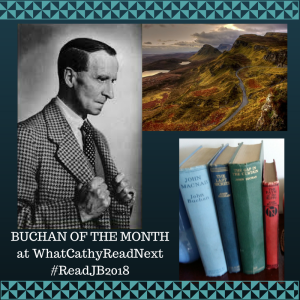
Mr. Standfast is the third book in my John Buchan reading project, Buchan of the Month.  To find out more about the project and my reading list for 2018, click here.  You can also find links to my reviews of the two previous books, The Power-House and John Macnab.  If you would like to read along with me you will be very welcome – leave a comment on this post or on my original challenge post.

What follows is an introduction to the book (no spoilers!).  It is also an excuse to show off a picture of my lovely little Nelson edition of Mr. Standfast, complete with dust jacket. I will be posting my review of the book later in the month.


JohnBuchanThrillersLike Buchan’s earlier adventure stories, Mr Standfast first appeared in instalment form.  However, it was never serialized in the UK, instead appearing in four parts between January and February 1919 in  The Popular Magazine, an early American all-fiction magazine (also referred to as a ‘pulp’) published by Street & Smith.

It was published in novel form by Hodder & Stoughton in June 1919.  Interestingly, by this stage in his writing career, Buchan was able to negotiate very lucrative royalty deals for his books.  His biographer, Janet Adam-Smith, reports that for Mr Standfast he agreed 25% for the first 5,000 sales, 30% up to 15,000 sales and 33⅓% thereafter. The book sold 19,000 copies in its first year after publication and had combined sales of 231,000 by 1960.

Mr Standfast is the third outing for Richard Hannay (after The Thirty-Nine Steps and Greenmantle).   Its title refers to one of the characters in John Bunyan’s The Pilgrim’s Progress, a very influential text for Buchan throughout his life. In his autobiography, Memory-Hold-The-Door (published as Pilgrim’s Way in the United States), Buchan describes The Pilgrim’s Progress as ‘his constant companion’ in childhood noting, ‘Even today I think that, if the text were lost, I could restore most of it from memory’.  Certainly, Mr Standfast contains many intertextual links to Bunyan’s work, both direct references and allusions.

The novel transports the reader from London, to the Home Counties, to Glasgow, to the Highlands and Islands and to Switzerland before its climax on the Western Front in France in 1918. Many of the compelling battlefield scenes in the novel benefit from information gleaned from Buchan’s role as Director of the Department of Information and Director of Intelligence in the Ministry of Information between 1917 and 1918.  However, the novel also engages with the pacifist movement that was active in parts of Britain during the First World War and with conscientious objection.  It also features an important role for a female character.  As in The Power-House and The Thirty-Nine Steps, our hero’s adversary takes the form of an individual with a massive intellect but very few scruples and a gift for passing themselves off as something they’re not.

David Daniell, author of The Interpreter’s House: A Critical Assessment of the Works of John Buchan (another The Pilgrim’s Progress reference!), describes Mr Standfast as ‘possibly the best thing [Buchan] wrote’.  I’ll not demur.  Whilst not wanting to pre-empt my review, I’ll confess now that Mr Standfast is one of my favourite Buchan novels.  If you decide to read it, I do hope you enjoy it.

Sources:

John Buchan, Memory-Hold-The-Door (Hodder & Stoughton, 1964 [1940]), p.16

David Daniell, The Interpreter’s House: A Critical Assessment of the Work of John Buchan (Nelson, 1975)

Kate Macdonald, John Buchan: A Companion to the Mystery Fiction (McFarland, 2009)

Janet Adam Smith, John Buchan: A Biography (OUP, 1985 [1965]), p.295-7

Throwback Thursday: Memento Mori by Muriel Spark

ThrowbackThursday

Throwback Thursday is a weekly meme hosted by Renee at It’s Book Talk.  It’s designed as an opportunity to share old favourites as well as books that we’ve finally got around to reading that were published over a year ago.  If you decide to take part, please link back to It’s Book Talk.

Today I’m reviewing Memento Mori by Muriel Spark, a book from my Classics Club list, first published in 1959. The lovely Ali at Heavenali is running a year long reading event to mark the centenary of Muriel Spark’s birth.  You can find out more information here.


Memento MoriAbout the Book

“Remember you must die,” said the voice on the telephone.

Dame Lettie Colson is the first of her circle to receive these anonymous calls, and she does not wish to be reminded.  Nor do her friends and family – though they are constantly looking out for signs of decline in others, and change their wills on a weekly basis.

As the caller’s activities become more widespread, soon a witch-hunt is in full cry, exposing past and present duplicities, self-deception and blackmail.  Nobody is above suspicion.  Only a few, blessed with a sense of humour and the gift of faith, can guess at the caller’s identity.

Format: Paperback (226 pp.)                         Publisher: Virago
Published: 4th February 2010 [1959]           Genre: Literary Fiction

Purchase Links*
Amazon.co.uk  ǀ  Amazon.com  ǀ Hive.co.uk (supporting local bookshops)
*links provided for convenience, not as part of any affiliate programme

Find Memento Mori on Goodreads


My Review

My only previous experience of Muriel Spark’s writing is The Prime of Miss Jean Brodie.  So I was expecting elegant writing, wit and acute observation but what I wasn’t expecting was the dark satire of Memento Mori and its unflinching portrait of old age, petty foibles and self-deception.  And the author isn’t afraid to deliver some quite breathtakingly sudden reverses for some of the characters. As I was reading the book, I wasn’t sure I liked it that much but, having now finished and reflected on it, I feel rather differently and have come to admire it.

Spark is good at identifying the way in which the elderly are regarded and the indignities that often come with old age.  There is a lot of truth in the depiction of the ‘Grannies’ and their loss of identity.  They are not in fact all grandmothers but referred to in that way by the nurses who care for them.  She’s equally good at pointing out traits which we’ve probably noticed in older relatives ourselves.  For example, frequently telling each other (and possibly reminding themselves) of their age and dwelling on their infirmities.  I’m not sure however that people spend quite as much time changing their wills as they do in Memento Mori.

While I didn’t find the humour in the book to be of the laugh out loud variety, I enjoyed some of the acerbic comments on domestic life.  ‘There was altogether too much candour in married life; it was an indelicate modern idea, and frequently led to upsets in a household, if not divorce…’. 

My favourite character was Charmian, a successful novelist in the past, whose books are now being rediscovered by a new generation (and who does that remind you of?).  At the beginning of the book, she appears increasingly absent-minded, if not in the early stages of dementia, but she turns out to be much sharper than people give her credit for. Some of the other characters are downright unlikeable, such as the dreadful and manipulative Mrs Pettigrew, adept at finding out secrets and using that knowledge to her advantage.  However, likeable or not, all the characters come alive on the page.  There’s Alec Warner with his compulsion for collecting facts about ageing and comparing the infirmities he observes in others with his own situation.  Or Charmian’s husband, Godfrey, with his odd peccadilloes and obsession with people’s loss (or otherwise) of their faculties.

Each of the characters who receive the cryptic message from the anonymous caller reacts differently – with outrage, with determination to find out the caller’s identity, with fear, with an academic interest about their own reaction to it, and in some cases, with acceptance.  The latter is the case with retired Chief Inspector Henry Mortimer, who made me think of the Inspector in J.B. Priestley’s play An Inspector Calls, as he tries to encourage the other recipients of the message to engage with its meaning, its inevitable truth, rather than focus on a search for the identity of the caller.   He greets the message with equanimity himself: “Death, when it approaches, ought not to take one by surprise.  It should be part of the full expectancy of life.  Without an ever-present sense of death, life is insipid.”  I guess that is the real message of the book.

Follow my blog with Bloglovin

In three words: Dark, macabre, satirical


Muriel SparkAbout the Author

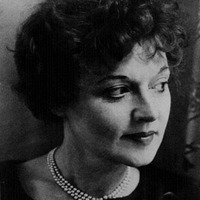
Dame Muriel Spark, DBE was a prolific Scottish novelist, short story writer, and poet whose darkly comedic voice made her one of the most distinctive writers of the twentieth century. In 2008 The Times newspaper named Spark in its list of “the 50 greatest British writers since 1945”.  Spark grew up in Edinburgh and worked as a department store secretary, writer for trade magazines, and literary editor before publishing her first novel, The Comforters, in 1957. The Prime of Miss Jean Brodie, published in 1961, and considered her masterpiece, was made into a stage play, a TV series, and a film.

Spark received the James Tait Black Memorial Prize in 1965 for The Mandelbaum Gate, the Ingersoll Foundation TS Eliot Award in 1992 and the David Cohen Prize in 1997. She became Dame Commander of the Order of the British Empire in 1993, in recognition of her services to literature. She has been twice shortlisted for the Booker Prize, in 1969 for The Public Image and in 1981 for Loitering with Intent. In 1998, she was awarded the Golden PEN Award by English PEN for “a Lifetime’s Distinguished Service to Literature”. In 2010, Spark was shortlisted for the Lost Man Booker Prize of 1970 for The Driver’s Seat.

Muriel Spark died in 2006.