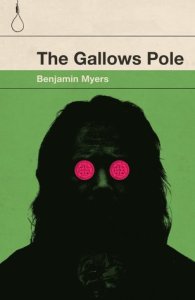
Book Review: The Gallows Pole by Benjamin Myers

WaltScott_The Gallows PoleAbout the Book

“I saw them. Stag-headed men dancing at on the moor at midnight, nostrils flared and steam rising…”

An England divided. From his remote moorland home, David Hartley assembles a gang of weavers and land-workers to embark upon a criminal enterprise that will capsize the economy and become the biggest fraud in British history.  They are the Cragg Vale Coiners and their business is ‘clipping’ – the forging of coins, a treasonous offence punishable by death.  A charismatic leader, Hartley cares for the poor and uses violence and intimidation against his opponents. He is also prone to self-delusion and strange visions of mythical creatures.

When excise officer William Deighton vows to bring down the Coiners and one of their own becomes turncoat, Hartley’s empire begins to crumble. With the industrial age set to change the face of England forever, the fate of his empire is under threat.

Forensically assembled from historical accounts and legal documents, The Gallows Pole is a true story of resistance that combines poetry, landscape, crime and historical fiction, whose themes continue to resonate. Here is a rarely-told alternative history of the North.

Format: ebook, paperback, hardcover  (360 pp.) Publisher: Bluemoose Books
Published: 17th May 2017                                          Genre: Historical Fiction

Purchase Links*  (Kindle edition currently 99p on Amazon UK)
Amazon.co.uk  ǀ  Amazon.com  ¦ Publisher ǀ Hive.co.uk (supporting UK bookshops)
*links provided for convenience, not as part of any affiliate programmePublisher

Find The Gallows Pole on Goodreads


My Review

The Gallows Pole is one of the books long-listed for The Walter Scott Prize for Historical Fiction 2018.  Click here for the full long-list and links to information or my reviews of the long-listed books.

The book recounts events that took place in Calderdale, West Yorkshire, over a few years in the 1760s: the exploits of a gang known as the ‘Cragg Vale Coiners’.  ‘Coining’ was the illegal practice of removing shavings of gold from the edges of genuine coins, milling the edges of those coins smooth again and then using the shavings to produce counterfeit coins.

The narrative is interspersed with excerpts from a document written in the first person using vernacular dialogue, eccentric spelling and very little punctuation.  Its author is the so-called ’King’ of the coiners, David Hartley.  It’s his jail cell testimony – not confession, mind you – he’s keen to point that out.  Hartley recounts his first exposure to the coining process in the forges of The Black Country: ‘…What they done is smelt and pour and hammer and mould What they done is hoist and heft and scald and steam And what they done was learn us a new trayde a new way.’

The Gallows Pole transports the reader to a period when the first impact of industrialization and mechanisation was starting to be felt by residents of places like Calderdale.  Power was becoming concentrated in the hands of landowners, of factory and mill owners and employment was taking the place of self-employment or small-scale agriculture.  Old ways were coming into conflict with the forces of progress and modernity.  For many ordinary people, their whole way of life was changing, not necessarily for the better (reminiscent in some ways of the modern day impact of globalisation).   It’s not surprising that desperation and poverty should force some to look outside the law for the means to survive.  Or, that men like Hartley, should reject the notion of change altogether.  [Readers who dislike swearing should skip the next quotation.]

‘An he seys the day of the hand loom is over mass produckshun is cumin wether you lyke it or not aye mass produckshun and organysed laber is what I’m talkin abowt and if youv got any sens about yer yerll embrayce the new ways.  And I says fuck the new ways and fuck the company and fuck your fucken scut with a rusted nyfe if yor still thinken on telling King David of Cragg Vale wer it is he can or cannit wander you soppybolickt daft doylem fiddler of beests.’

I think you may be starting to get a sense that creative use of language is a key element of this book.  [Can I give a shoutout to the copy editors and proof-readers of the book at this point.]  The author evocatively conjures up the atmosphere of the moors; its bleakness but also its harsh beauty.  ‘Then when the downpour eased and the clouds passed over to slowly bank across the open moors in the direction of Haworth, the valley slopes were left with a fresh dusting of white, a patchwork of powdered shapes divided by the black streaks of stone walls that snaked over and around copses, hamlets and the top quarries…’

There is a rhythmic, almost poetic quality to the language with frequent use of alliteration and assonance: ‘In to dell and dingle.  Gulch and gully.’ ‘From the dells and dales and dingles.’ ‘Slipping and sliding.  Gasping and striding.’  Some of the prose is positively audacious – for its use of repetition:

‘Tom Spencer walked to Horsehold and folk there gave up their coin.  Tom Spencer walked to Burnt Stubb and folk there gave up their coin.  Tom Spencer walked to Boulder Clough and folk there gave up their coin.  Tom Spencer walked to Midgley and folk there gave up their coin…’

And for the lists – sometimes long lists – of names and of places giving a sing-song quality to the writing.

‘Up they came and over they came and through they came.  Many men.
Isaac Dewhurst and Absolom Butts.
Thomas Clayton and Benjamin Sutcliffe.
Abraham Lumb and Aloysius Smith and Nathan Horsfall and Matthew Hepworth and Joseph Gelder and Jonathan Bolton.
John Wilcox and Jonas Eastwood.
Fathers and brothers and sons and uncles.  Up they came.  And others too.’

The language at times is earthy and raw with visceral descriptions of bodily sensations and creative evocations of sights, sounds, smells, tastes.  ‘Soot and ash.  Snot and spume. Quag and sump and clotted moss.’ 

The story that unfolds is as compelling as the language. However, despite his criminal activity and the violence perpetrated by those around him, the reader is left with a sense of David Hartley as a tragic figure.  He certainly becomes a folk hero in the eyes of the local community.  That is, to those who don’t attempt to resist him, swindle him, usurp him or bring him to justice.  Retribution is swift and violent for them.

There is a real sense of period atmosphere in The Gallows Pole, of a time when life was hard for many and death was an often close companion.  It was definitely not the time or place to be a woman; relegated to the role of child bearer, provider of sexual pleasure (willingly or not) and household drudge.   The only sign of tenderness is between Hartley and his wife, and even that is relative.

The Gallows Pole made a deep impression on me.  The story was powerfully told and had a marvellous sense of authenticity.  However, it was the imaginative writing that really drew me in.  It may not turn out to be the closest to my heart of the books on the long-list but its author has certainly earned my admiration. I realise it’s early to be making predictions, especially as I haven’t read all the books on the long-list yet.   Nevertheless, I’m going to stick my neck out and say I can see The Gallows Pole being the Days Without End of 2018.  In other words, not only making the shortlist but possibly being the eventual winner.  If I’m wrong, forget you read this.  If it turns out I’m right, remember, you saw it here first.

Follow my blog with Bloglovin

In three words: Gritty, compelling, immersive

Try something similar…Days Without End by Sebastian Barry (click here to read my review)


Benjamin MyersAbout the Author

Benjamin Myers was born in Durham, UK, in 1976.  He is an award-winning author and journalist. As a journalist he has written about the arts and nature for publications including New Statesman, The Guardian, NME, Mojo, Time Out, New Scientist, Caught By The River, The Morning Star, Vice, The Quietus, Melody Maker and numerous others.

Pig Iron (2012) was the winner of the inaugural Gordon Burn Prize and runner-up in The Guardian’s Not The Booker Prize. A controversial combination of biography and novel, Richard (2010), was a bestseller and chosen as a Sunday Times book of the year.  Myers’ short story ‘The Folk Song Singer’ was awarded the Tom-Gallon Prize in 2014 by the Society of Authors and published by Galley Beggar Press. His short stories and poetry have appeared in dozens of anthologies.

His novel Beastings (2014) won the Portico Prize For Literature, was the recipient of the Northern Writers’ Award and longlisted for a Jerwood Fiction Uncovered Award 2015. Widely acclaimed, it featured on several end of year lists, and was chosen by Robert Macfarlane in The Big Issue as one of his books of 2014.  Turning Blue (2016) was described as a “folk crime” novel, and praised by writers including Val McDermid. A sequel These Darkening Days followed in 2017.

Recipient of the Roger Deakin Award, his novel The Gallows Pole was published to acclaim in 2017.  His latest book, Under The Rock, a work of non-fiction, is published May 2018.

He currently lives in the Upper Calder Valley, West Yorkshire, UK.

Connect with Benjamin

Website ǀ  Twitter  ǀ  Goodreads

WaltScott_The Gallows PoleWalterScottPrizeBluemoose_logo_400x400

My Week in Books – 18th March ’18

MyWeekinBooks

New arrivals  

I really do not know what happened this week….

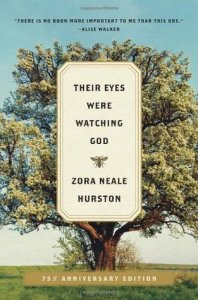
Their Eyes Were Watching GodTheir Eyes Were Watching God by Zora Neale Thurston (ebook)
One of the most important works of twentieth-century American literature, Zora Neale Hurston’s beloved 1937 classic, Their Eyes Were Watching God, is an enduring Southern love story sparkling with wit, beauty, and heartfelt wisdom. Told in the captivating voice of a woman who refuses to live in sorrow, bitterness, fear, or foolish romantic dreams, it is the story of fair-skinned, fiercely independent Janie Crawford, and her evolving selfhood through three marriages and a life marked by poverty, trials, and purpose.

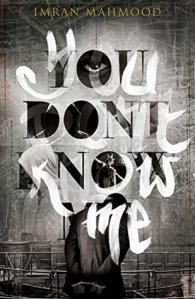
You Don't Know MeYou Don’t Know Me by Imran Mahmood (ebook)

An unnamed defendant stands accused of murder. Just before the Closing Speeches, the young man sacks his lawyer, and decides to give his own defence speech.  He tells us that his barrister told him to leave some things out. Sometimes, the truth can be too difficult to explain, or believe. But he thinks that if he’s going to go down for life, he might as well go down telling the truth.  There are eight pieces of evidence against him. As he talks us through them one by one, his life is in our hands. We, the reader – member of the jury – must keep an open mind till we hear the end of his story. His defence raises many questions… but at the end of the speeches, only one matters: Did he do it?

The Visitor at Anningley HallThe Visitor at Anningley Hall by Chris Thorndycroft (ebook)

“The door,” Elisa mumbled. “He was trying to open the front door.” “What on earth for? Was he sleepwalking?” “Oh, God!” said Elisa, her arms squeezing Roland tight to her chest. “He was trying to let it in!”

In 1904, M. R. James published The Mezzotint; a macabre short story about a picture that has a chilling tale of its own. This novella explores the horrifying events told within that picture.

Anningley Hall – a large country house in Essex – is home to Arthur Francis and his wife Elisa.  Arthur is obsessed with his new printing press and so consumed by his desire to make a name for himself as a mezzotint artist that he is oblivious to his wife’s increasing desperation and loneliness. Elisa is convinced that something sinister is coming for their infant son and will stop at nothing to protect him. When she discovers a disturbing secret pertaining to her husband’s past, she begins to question the safety of their home as a refuge from evil. And their three-year-old son is in contact with a dark presence that seems intent on entering Anningley Hall…

CharlemagneCharlemagne by in60Learning (ebook, review copy of in60Learning)

Charlemagne’s name means “Charles the Great,” a title he earned after an impressive life filled with military conquests. After the fall of the Roman Empire, invaders came from all sides, and Charlemagne fought out of loyalty to his people and the Catholic church. While he led many campaigns that helped to reunite Europe during the “Migratory Period,” Charlemagne primarily aimed just to claim land where he and his people—the Franks—could live in peace. His life inspired countless tales, including the legends that he was twenty feet tall, that he slept under the guard of 100 armed knights, and that he rose from the dead to aid in the Crusades. While these fantastical tales are false, the truth is equally fantastic: by the end of his life, Charlemagne had been king of the Franks, king of the Lombards, and the first emperor of the newly formed Holy Roman Empire.

DiscontentsDiscontents: The Disappearance of a Young Radical by James Wallace Birch (ebook, review copy courtesy of the author)
Emory is a jobless millennial who refuses to conform. When his anti-corporate Internet ramblings attract a following, he finds unlikely fame and a sense of purpose. But his fame draws the wrong kind of attention. Forced to take on an assumed identity, Emory finds himself trapped by the words he’s written.  When he meets Fletcher, a rich baby boomer longing for youthful idealism, the two embark on a plan to cause mayhem. But Emory soon thinks someone is trying to get between him, Fletcher, and their plans.

Unsure of who to trust, Emory is suspicious of the people who know him best. Having burned every bridge back to the life he once lived, he must find the strength to face the mistakes of his past if he has any chance at a future.

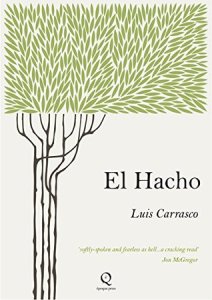
El HachoEl Hacho by Luis Carrasco (ebook, review copy courtesy of Epoque Press)
The brilliant debut novel by Luis Carrasco, El Hacho is a timeless evocation of inheritance, duty and our relationship to the landscape that defines us. Set in the stark beauty of the Andalusian mountains, it tells the story of Curro, an olive farmer determined to honour his family tradition in the face of drought, deluge and the lucrative temptations of a rapidly modernising Spain. Wonderfully crafted, El Hacho is a poignant and compelling story of struggle and hope.

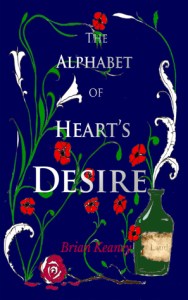
The Alphabet of Heart's DesireThe Alphabet of Heart’s Desire by Brian Keaney (ebook, NetGalley)
A visitor calls with a gift and a message from the past in this literary, historical novel. In 1802 Thomas de Quincey, a young man from a comfortable middle-class background who would go on to become one of the most celebrated writers of his day, collapsed on Oxford Street and was discovered by a teenage prostitute who brought him back to her room and nursed him to health. It was the beginning of a relationship that would introduce Thomas to a world just below the surface of London’s polite society, where pleasure was a tradeable commodity and opium could seem the only relief from poverty. Yet it is also a world where love might blossom, and goodness survive. The lives of a street girl, an aspiring writer, and a freed slave cross and re-cross the slums of London in this novel about the birth of passion, the burden of addiction, and the consolations of literature.

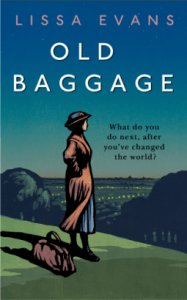
Old BaggageOld Baggage by Lissa Evans (eARC, NetGalley)

What do you do next, after you’ve changed the world?

It is 1928. Matilda Simpkin, rooting through a cupboard, comes across a small wooden club – an old possession of hers, unseen for more than a decade.  Mattie is a woman with a thrilling past and a chafingly uneventful present. During the Women’s Suffrage Campaign she was a militant. Jailed five times, she marched, sang, gave speeches, smashed windows and heckled Winston Churchill, and nothing – nothing – since then has had the same depth, the same excitement.  Now in middle age, she is still looking for a fresh mould into which to pour her energies. Giving the wooden club a thoughtful twirl, she is struck by an idea – but what starts as a brilliantly idealistic plan is derailed by a connection with Mattie’s militant past, one which begins to threaten every principle that she stands for.

Old Baggage is a funny and bittersweet portrait of a woman who has never, never given up the fight.

TThe Concubine's Childhe Concubine’s Child by Carol Jones (eARC, NetGalley)
In 1930s Malaysia, sixteen-year-old Yu Lan is in love with her best friend, Ming, whose father owns one of the busiest kopi shops in Petaling Street. But Ming’s family don’t see the apothecary’s daughter as a suitable wife – for Yu Lan’s father, Lim, spends more time playing mahjong than selling herbal remedies. It’s not long before Lim makes a terrible decision that will change Yu Lan’s life forever, selling her as a concubine to the wealthy, ageing Towkay Chan who is desperate for a male heir.

The consequences of Lim’s betrayal resonate through four generations and into the present day, where Yu Lan’s great-grandson, Nick, is searching for his lost family history. His wife, Sarah, begins to be very afraid of what he will find as past and present meld into one.

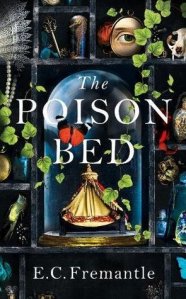
The Poison BedThe Poison Bed by E. C. Fremantle (eARC, NetGalley)

A king, his lover and his lover’s wife. One is a killer.

In the autumn of 1615 scandal rocks the Jacobean court when a celebrated couple are imprisoned on suspicion of murder. She is young, captivating and from a notorious family. He is one of the richest and most powerful men in the kingdom.  Some believe she is innocent; others think her wicked or insane. He claims no knowledge of the murder. The king suspects them both, though it is his secret at stake.

Who is telling the truth? Who has the most to lose? And who is willing to commit murder?

Lesley Thomson The Death Chamber_2018The Death Chamber (The Detective’s Daughter #6) by Lesley Thomson (ebook, review copy courtesy of Head of Zeus)
Queen’s Jubilee, 1977: Cassie Baker sees her boyfriend kissing another girl at the village disco. Upset, she heads home alone and is never seen again.

Millennium Eve, 1999: DCI Paul Mercer finds Cassie’s remains in a field. Now he must prove the man who led him there is guilty.

When Mercer’s daughter asks Stella Darnell for help solving the murder, Stella see echoes of herself. Another detective’s daughter.  With her sidekick sleuth, Jack, Stella moves to Winchcombe, where DCI Mercer and his prime suspect have been playing cat and mouse for the past eighteen years…

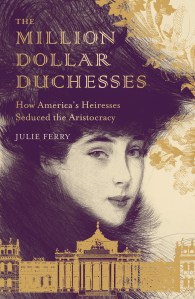
The Million Dollar DuchessesThe Million Dollar Duchesses: How America’s Heiresses Seduced the Aristocracy by Julie Ferry (ebook, review copy courtesy of Aurum Press)
Power, scandal, glamour, fame…

On 6th November 1895, the beautiful and brilliant heiress Consuelo Vanderbilt was wedded to the near-insolvent Charles Spencer-Churchill, 9th Duke of Marlborough in a dazzling yet miserable match – it glittered above all others for high society’s marriage brokers who, in this single year, forged a series of spectacular, and lucrative, transatlantic unions.

The bankrupt and ailing British aristocracy was suddenly injected with all the wealth and glamour of America’s newest dynasties. Millions of dollars changed hands as fame, money, power and privilege were all at play.  Brimful of scandal, illicit affairs, spurned loves and unexpected tragedy, The Million Dollar Duchesses reveals the closed-door bargaining which led to these most influential matches and how America’s heiresses shook-up British high society for ever.

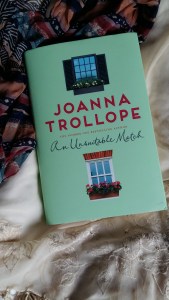
An Unsuitable MatchAn Unsuitable Match by Joanna Trollope (hardcover, giveaway prize courtesy of London Book Fair)

Rose Woodrowe is getting married to Tyler Masson—a wonderful, sensitive man who is head-over-heels in love with her. The only problem? This isn’t the first time for either of them. And when you marry later in life there are a lot more people to consider. Like Rose’s daughter, Laura, who remembers her mom’s first marriage and doesn’t want her to get hurt again. Or the twins, Emmy and Nat, who are used to their mom being there for them whenever and for whatever they need. And then there’s Tyler’s children: Mallory, a young actress who craves her father’s attention; and Seth, whose San Francisco bakery is just taking off and needs all the money he can get. Rose and Tyler are determined to get it right this time, but in trying to make everyone happy, can they ever be happy themselves?


On What Cathy Read Next last week

Blog posts

Monday – I published my review of Entanglement by Katy Mahood, the compelling story of two couples and the interconnectedness of our lives.

Tuesday – I introduced this month’s Buchan of the Month – Mr. Standfast – freely admitting this is one of my favourite books by John Buchan.

Wednesday – WWW Wednesday is the opportunity to share what I’ve just finished reading, what I’m reading now and what I’ll be reading next.   I also took part in the blog tour for Swan’s Road by Garth Pettersen with a spotlight on this historical novel full of 11th century Viking action.

Thursday – My Throwback Thursday post was a review of The Things We Learn When We’re Dead by Charlie Laidlaw, a quirky, imaginative book that has been languishing in my author review pile for far too long.

Friday – I shared my review of All the Beautiful Girls by Elizabeth J. Church, an emotional story set in the 1960s about a young woman’s life as a Las Vegas showgirl and leaving behind a traumatic childhood.

Challenge updates

  • Goodreads 2018 Reading Challenge – 39 out of 156 books read, 5 more than last week
  • Classics Club Challenge – 12 out of 50 books read, same as last week
  • NetGalley/Edelweiss Reading Challenge 2018 (Silver) – 12 ARCs read and reviewed out of 25, 1 more than last week
  • From Page to Screen– 10 book/film comparisons out of 15 completed, same as last update
  • 2018 TBR Pile Challenge – 3 out of 12 books read, same as last week
  • Historical Fiction Reading Challenge 2018 – 18 books out of 50 read, 3 more than last week
  • When Are You Reading? Challenge 2018 – 6 out of 12 books read, same as last update
  • What’s In A Name Reading Challenge – 0 out of 6 books read, same as last week
  • Buchan of the Month – 2 out of 12 books read, same as last week

On What Cathy Read Next this week

Currently reading

Planned posts

  • Review: The Gallows Pole by Benjamin Myers
  • Blog Tour/Guest Post: London Spies (Phyllis Bowden #1) by S. J. Slagle
  • Q&A: An Engineered Injustice by William L. Myers, Jr.
  • Top Ten Tuesday: Books On My Spring TBR
  • Blog Tour/Review: The Summer Will Come by Soulla Christodoulou
  • Throwback Thursday: House of Mirth by Edith Wharton
  • Review: Maiden’s Chance by Carolyn Hughes
  • Blog Tour/Review: From A Low and Quiet Sea by Donal Ryan
  • Review: Dear Mrs. Bird by A. J. Pearce

How was your week in books?  Bestseller chart or remainder pile?