This annual challenge is run by my namesake Cathy at 746 Books. This year it takes place between 1st June and 1st September 2020. I’ve participated for the past two years but never quite managed to organise/discipline my reading enough to complete my list. Last year I managed seven of my twenty. I’m determined to do better this year.
As (the other) Cathy explains, the rules are simple. Take the Books of Summer image, pick your own 10, 15 or 20 books you’d like to read and link back Cathy’s master post at 746 Books on 1st June 2020 so she knows you’re taking part. The rules are accommodating as well. Want to swap a book? Go for it. Fancy changing your list half way through? No problem. Deciding to drop your goal from 20 to 15? She’s fine with that.
In putting together my list, I decided to concentrate on four categories:
Blog tour commitments I have from June onwards
Books on my NetGalley To Read shelf publishing in the next couple of months
Books from my TBR pile
Books included in personal reading projects, i.e. Buchan of the Month and The Walter Scott Prize for Historical Fiction 2020 shortlist
You can find my list below with links to my reviews.
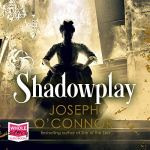
1878 – The Lyceum Theatre, London. Three extraordinary people begin their life together, a life that will be full of drama, transformation, passionate and painful devotion to art and to one another. Henry Irving, the Chief, is the volcanic leading man and impresario; Ellen Terry is the most lauded and desired actress of her generation, outspoken and generous of heart; and ever following along behind them in the shadows is the unremarkable theatre manager, Bram Stoker.
Fresh from life in Dublin as a clerk, Bram may seem the least colourful of the trio but he is wrestling with dark demons in a new city, in a new marriage, and with his own literary aspirations. As he walks the London streets at night, streets haunted by the Ripper and the gossip which swirls around his friend Oscar Wilde, he finds new inspiration. But the Chief is determined that nothing will get in the way of his manager?s devotion to the Lyceum and to himself. And both men are enchanted by the beauty and boldness of the elusive Ellen.
This exceptional novel explores the complexities of love that stands dangerously outside social convention, the restlessness of creativity, and the experiences that led to Dracula, the most iconic supernatural tale of all time.
Format: Audiobook (11h 40m) Publisher: Whole Story Audiobooks Publication date: 6th June 2019 Genre: Historical Fiction
Purchase links* Amazon UK| Hive (supporting UK bookshops)
*links provided for convenience not as part of an affiliate programme
My Review
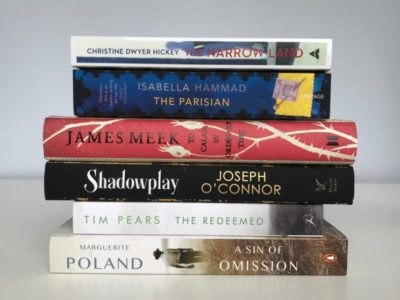
Shadowplay is one of the books on the shortlist for The Walter Scott Prize for Historical Fiction 2020. You can find more details about the other books on the shortlist here.
In this fictionalized account of the life of Bram Stoker, the author adopts some of the literary techniques of Stoker’s famous novel, Dracula, including the use of diary entries, letters and transcripts of conversations as well as more traditional third person narration. As Stoker struggles – with limited success – to achieve his literary aspirations, some of the fun is spotting names and places that will later find their way into Dracula.
The core of the novel is the relationship between Bram Stoker and the bombastic Sir Henry Irving. When famed actress, Ellen Terry, arrives on the scene it creates an even more turbulent triangle. Poor Florence, Bram Stoker’s wife, is rather left out in the cold as the Lyceum Theatre becomes central to Stoker’s life. Not to mention attending to the whims of Sir Henry Irving, an equally all-consuming occupation, the main qualification for which seems to be the ability to consume large quantities of alcohol.
I loved the descriptions of the theatrical performances and all the backstage goings on. There is a great episode where Oscar Wilde attends a performance and provokes a very raucous after show party. The author also throws in some supernatural elements and it’s all set against the backdrop of a London stalked by Jack the Ripper.
The last, quite long, section of the book transports the reader ahead a number of years and has a distinctly melancholy tone as age and infirmity catch up with the main characters. I found the end of the book poignant and rather moving.
I listened to the audiobook version, narrated by Anna Chancellor and Barry McGovern. To be fair, the latter does the majority of the narration with Anna Chancellor contributing a couple of sections purporting to be recordings of Ellen Terry’s recollections of Sir Henry Irving. These are wickedly funny and delivered in Anna Chancellor’s inimitable style. Where Ellen Terry appears elsewhere in the book, she is voiced by Barry McGovern rather than by Anna Chancellor, even in chapters told from the point of view of Ellen Terry. However, I can’t fault Barry McGovern’s representation of the rich, plummy tones of Sir Henry Irving or the soft Irish lilt of Bram Stoker.
Shadowplay is inventive, imaginative and full of Gothic atmosphere. I can definitely see why it has earned a place on The Walter Scott Prize shortlist.
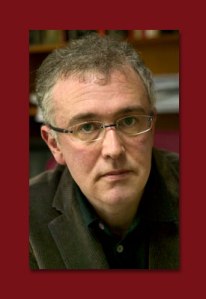
Novelist, screenwriter, playwright and broadcaster, Joseph O’Connor was born in Dublin. He is the author of nine novels including Star of the Sea, Ghost Light (Dublin One City One Book novel 2011) and Shadowplay (June 2019). Among his awards are the Prix Zepter for European Novel of the Year, France’s Prix Millepages, Italy’s Premio Acerbi, an American Library Association Award and the Irish Pen Award for Outstanding Achievement in Literature. His work has been translated into forty languages.
In 2014 he was appointed Frank McCourt Professor of Creative Writing at the University of Limerick. Twice-Booker Prize-winner Peter Carey has written, ‘There are few living writers who can take us back in time so assuredly, through such gorgeous sentences. Joseph O’Connor is a wonder, and Shadowplay is a triumph.’ (Photo/bio credit: Author website)
Barry McGovern is one of Ireland’s most skilled and experienced actors, who has had a long career in theatre, film, television and radio. He is regarded by many as one of the leading exponents of the work of Samuel Beckett. His one-man Beckett show, I’ll Go On, produced by Dublin’s Gate Theatre, has played worldwide.
He has toured with the Gate productions of Waiting for Godot, Endgame and Happy Days. In early 2012 he played Vladimir in the acclaimed production of Waiting for Godot at the Mark Taper Forum in Los Angeles which garnered him a 2012 Ovation Award Lead Actor nomination.
The Walter Scott Prize for Historical Fiction 2020 Shortlist



 About the Book
 About the Author