
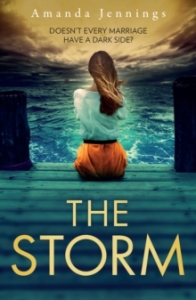
 About the Book
To the outside world Hannah married the perfect man. Behind the closed doors of their imposing house it’s a very different story. Nathan controls everything Hannah does. He chooses her clothes, checks her receipts, and keeps her passport locked away. But why does she let him?
Years before, in the midst of a relentless storm, the tragic events of one night changed everything and Hannah has been living with the consequences every since. Keeping Nathan happy. Doing as she’s told.
But the past is about to catch up with them…
Format: ebook (412 pages) Publisher: HQ Stories
Publication date: 23rd July 2020 Genre: Contemporary fiction, thriller
Find The Storm on Goodreads
Purchase links*
Amazon UK | Hive (supporting UK bookshops)
*links provided for convenience not as part of an affiliate programme
My Review
I really enjoyed Amanda Jennings’ previous book, The Cliff House, and her beloved Cornwall is once again the location for her latest novel, The Storm. Set mainly around the fishing village of Newlyn and moving between the present day and twenty years earlier, the reader witnesses how the lives of a number of people were changed by the dramatic events of one night in 1998. Fragments of that eventful night are glimpsed in the prologue but the full picture will not become clear until the end of the book.
For Hannah, the events of that night led to her marriage to Nathan, a kind of Faustian bargain she entered into to protect others. Nathan’s obsessive jealousy has seen him control every aspect of Hannah’s life. She steels herself to complicity in this out of guilt – “Our marriage is punishment for what I did” – and for the sake of their son, Alex. So she plays the part expected of her and recites her lines in order to keep the peace. Alex is pretty much the only source of joy in Hannah’s life along with her best friend, Vicky.
Nathan is one disturbing individual. Outwardly he’s a model citizen and pillar of the community, but inside he’s something quite different. As Hannah remarks, he’s “my very own Jekyll and Hyde”. A damaged individual, a traumatic event in Nathan’s childhood explains, if not excuses, his actions towards Hannah.
In the scenes set in 1998, the author vividly depicts the back-breaking work of the six-man crew aboard a small trawler and the dangers they face on a daily basis. Taking such risks out of economic necessity, a safe return to harbour is never guaranteed but when it occurs, the crew seek release through drink, and sometimes drugs, in the local pub. When the Atlantic storm of the title hits the trawler, the awesome force of the sea is evident. “Six men, no more than specks of dust on an ocean so powerful and unpredictable, so savage, they could be swallowed up in the blink of an eye.” The consequences of the storm will change lives forever.
I’m not sure which element I found more compelling: the chilling portrait of Hannah and Nathan’s toxic relationship or the scenes set on the storm-lashed trawler. The Storm is an intensely atmospheric and compelling drama that shows even the most carefully guarded secrets have a way of coming to the surface. The final lines sent chills down my spine.
I received an advance review copy courtesy of HQ Stories via NetGalley.
In three words: Dark, intense, gripping
Try something similar: The Other You by J. S. Monroe
Follow this blog via Bloglovin
 About the Author
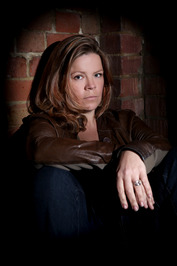
Amanda Jennings lives in Oxfordshire with her husband, three daughters, and a menagerie of animals. She studied History of Art at Cambridge and before writing her first book, was a researcher at the BBC.
With a deep fascination for the far-reaching effects of trauma, her books focus on the different ways people find to cope with loss, as well as the moral struggles her protagonists face. When she isn’t writing she can usually be found walking the dog. Her favourite place to be is up a mountain or beside the sea.
Connect with Amanda
Website | Twitter | Facebook | Instagram

 About the Book

