 About the Book
“Rebellion?”
The word is a spark. They can start a fire with it, or smother it in their fingertips. She chooses to start a fire.
You are born high, but marry a traitor’s son. You bear him twelve children, carry his cause and bury his past. You play the game, against enemies who wish you ashes. Slowly, you rise. You are Cecily.
But when the King who governs you proves unfit, what then?
Loyalty or treason – death may follow both. The board is set. Time to make your first move.
Format: eARC (384 pages) Publisher: Viking
Publication date: 29th July 2021 Genre: Historical Fiction
Find Cecily on Goodreads
Purchase links
Bookshop.org
Disclosure: If you buy a book via the above link, I may earn a commission from Bookshop.org, whose fees support independent bookshops
Hive | Amazon UK
Links provided for convenience only, not as part of an affiliate programme
My Review
I may not be part of the blog tour that starts today but I’m delighted to mark the publication of Cecily with my review of Annie Garthwaite’s debut novel. The book tells the story of Cecily Neville, the woman who married Richard Plantagenet, Duke of York, and bore him twelve children, many of whom sadly died in infancy. In doing so, Annie Garthwaite joins other writers of historical fiction such as Philippa Gregory and Anne O’Brian who have chronicled this period of history.
The book opens in 1431 as Cecily witnesses the burning to death of Joan d’Arc and later the crowning of the young King Henry VI of England as King of France, although his realm does not extend to the whole of France and a rival, King Charles of France, also claims that title.
This was a time when the sons and daughters of noble houses were married in childhood in pursuit of dynastic alliances, although such marriages may not be consummated until some years later. Indeed, Cecily was only nine years old herself when she was joined in marriage with Richard Plantagenet.
The image the author presents of the relationship between Richard and Cecily is one of trust, and of real and enduring love. More importantly, it’s a marriage of minds. As Cecily observes: ‘They’re natural allies. Watchers and listeners both. Thinkers, planners, weighers of words.’ And, my goodness, do they need to be because as the years roll on there is power play after power play with rival factions, and families, seeking the ear of a King who proves to be easily swayed.
Together Cecily and Richard make a formidable team with Cecily becoming more involved in events than would normally be expected of a wife. Not that she isn’t also expected to carry out the duties of a wife – running a large household and bearing children, preferably male heirs or, if not, daughters who can be used to make profitable alliances. The perils of childbirth are vividly depicted and, in fact, Cecily’s involvement in the political manouverings provides a distraction from her grief. ‘It has saved her, these past weeks, to be at the centre of his stratagems, poring over maps, drawing up plans, deciding the appointments of officers; weighing up men’s competence and ambition, where they will serve best and how far they can be trusted.’ Trust turns out to be a rare commodity.
The Cecily of the book is intelligent, perceptive, ruthless when needed but, most importantly, pragmatic. As she says at one point, ‘When it’s impossible to do a thing, you must simply find a way to make it happen’. Unfortunately that advice, given in a generous spirit, is ultimately turned against her. It’s the same unflinching pragmatism that sees her marry off her six-year-old daughter, Anne, to Henry Holland. ‘She will do it for a dukedom and for ever closer ties to the old royal house, for the network of affinity that will keep York strong.’
The book is packed with historical detail, especially in the latter stages, but as events are always seen through the eyes of Cecily, either witnessed by her directly or via letters from Richard, this helps to lessen the feeling one is sitting through a history lesson. In addition, Cecily’s shrewd appraisal of the twists and turns of events allows the reader to understand their implications. I also loved her sarcastic asides. ‘She gives her son-in-law [Henry Holland] the best of her smiles and asks after his dogs. She’d like to see them eat him, but there you are.’
With such an imposing figure as Cecily at the heart of the book, it would be easy for Richard to disappear into the background but the author convincingly conveys his natural charm, leadership skills and determination to fulfil what he believes is his and his family’s destiny. Students of history won’t be surprised at how Richard and Cecily’s story concludes. Neither will those who learned the mnemonic for the colours of the rainbow, Richard Of York Gave Battle In Vain. However, that doesn’t stop you wondering – mourning, even – what might have been.
Cecily is an absorbing story of a woman who wielded an unusual degree of power behind the scenes in events that shaped the history of England. And of course her legacy continued through her two sons, Edward and Richard.
I received an advance review copy courtesy of Viking via NetGalley.
In three words: Immersive, compelling, assured
Try something similar: The Sunne in Splendour by Sharon Kay Penman
Follow this blog via Bloglovin
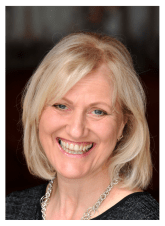 About the Author
Annie Garthwaite grew up in a working class community in the north-east of England.
A schoolgirl interest in medieval history became a lifelong obsession with Cecily Neville, so, at age fifty-five, she enrolled on the Warwick Writing MA programme. Her extraordinary debut novel Cecily is the result. During a thirty-year international business career she frequently found herself the only woman at the table, where she gained valuable insights into how a woman like Cecily might have operated.
Today she lives with her partner – and far too many animals – on the side of a green Shropshire hill close to the Yorkist stronghold of Ludlow. (Photo/bio credit: Author website)
Connect with Annie
Website | Twitter | Instagram | Facebook | Goodreads

 The Classics Club was founded in March 2012 with the aim of encouraging more people to blog about classic literature. Members are invited to create a list of at least 50 classic titles they intend to read and blog about within a maximum of five years. With characteristic over-enthusiasm, when I first enrolled in the challenge in January 2017, I set out to read the 50 classics on my list by 31st December 2018. I soon recognised that was way too ambitious and revised it to 31st December 2021.


