
I’m delighted to welcome author David Cairns of Finavon to What Cathy Read Next today to talk about his latest book, The Case of the Emigrant Niece, the first in a new series of historical mysteries featuring 19th century Scottish engineer, Findo Gask. David has written a fascinating guest post about the inspiration for the book and about the ‘freedom to explore’ that writing historical fiction brings him.
The Case of the Emigrant Niece will be published as en ebook on 1st December 2022 and is available for pre-order now.
 About the Book
A multiple murderer on the loose, an inheritance stolen
Injured at the start of the Indian mutiny in 1858, Scotsman Findo Gask finds himself in Melbourne during the fabled Gold Rush where he stumbles across the mystery of a stolen inheritance. Captivated by the pretty heiress, together with his new idiosyncratic friend, Erroll Rait he begins to investigate for her, travelling back to London, Edinburgh, the Scottish highlands and then to Melbourne again, uncovering multiple murders before falling foul of a sinister plot to add himself and his client to the list of victims.
Taking readers back to the days of steam trains and clipper ships, gas-lit Edinburgh streets and the goldfields of Australia with the unravelling of a mystery and the discovery of a relentless murderer, The Case of the Emigrant Niece is a spellbinding novel that captures the imagination and transports you back to a different age.
Format: ebook (437 pages) Publisher: Finavon Press
Publication date: 1st December 2022 Genre: Historical Fiction, Mystery
Pre-order/purchase link
Amazon UK
Link provided for convenience only, not as part of an affiliate programme
Guest Post – The Case of the Emigrant Niece by David Cairns of Finavon
This is a story I promised to myself several years ago when I was driving from Perth (in Scotland) to Glasgow. Swooping down the A9 into the fertile glen that Macbeth would have traversed hundreds of years earlier, I passed a signpost to Findo Gask – a small village off the A9 running by the River Earn – and the name struck me immediately as ideal for a swashbuckling hero. A little later that month I was driving to Dundee and again was struck by a signpost (literally, not figuratively), this time to the villages of Errol and Rait. Snap. Another name – this time conjuring up Errol Flynn of course. They sat at the back of my mind for several years and then, having completed my Helots’ Tale series I took the plunge and brought them to life, with Findo Gask and Erroll Rait meeting up on opposite sides of a cricket match in colonial Melbourne in November, 1858. I set the story in the mid 19th century for a number of reasons. I had spent almost three years researching and writing The Helots’ Tale series, which was set in the early to mid-1800s, so I was already embedded in the period, had a lot of research sources and, well, it felt like unfinished business.
The storyline came about after a Board meeting when I was considering the trust placed by us all in our lawyers. And I started to think, “What if?”. I hasten to add that I do not subscribe to that line in Shakespeare’s Henry VI, “The first thing we do, let’s kill all the lawyers”. I have good friends of high integrity who are lawyers and besides, if we start there, how long before they come after the accountants? (which is my original qualification, although it’s been a long time since I juggled the debits and credits for a living).
I have written poetry and short stories but the Emigrant Niece is my first full-length work of fiction. Previous novels have been true stories rounded out with imagined conversations and likely or at least possible events. There is something very fulfilling about bringing to life people whom you know only as entries in dusty ledgers but who you would really like to have known. However, it is writing with handcuffs. You can’t tell a true story unless you are talking with truth and when an opportunity arises to add an imagined plot to the story because it, perhaps, spices things up or creates tension or some other such literary artifice, it must be pushed away. Veracity is all. The lives of the people have to be interesting and exciting enough to carry the story on its own merits.
A work of fiction, however, has none of these restrictions and writing historical fiction, you get the best of both worlds – freedom to explore and the ability to integrate your story with real events and real people of the time. Who wouldn’t want to experience the fabulous gold rush in Ballarat or ride a horse in the first running of the world-famous Melbourne Cup or even meet Ned Kelly (hopefully not on a remote road at night)?
This story quickly follows Findo Gask from combat in the Indian mutiny, to London where a mystery is solved, setting the stage for more to come, to Edinburgh before taking us on a rugged 3-month journey across the oceans to the New World and Back Creek, north of Melbourne, bang in the middle of the fabulous gold rush.
This was the century that moulded Australia, at this time still a collection of colonies that earlier in the century had seen more than 160,000 convicts transported to serve their sentences as all but slaves – a story related in the Helots’ Tale series. The enormous wealth generated on the goldfields of Australia saw tent cities rapidly evolve into proud, prosperous Victorian towns and cities (as in Queen Victoria, not just the colony of Victoria).
On the new world frontier, Findo falls for an attractive young governess who, like him, hails from Scotland and he begins to suspect that she has been tricked out of a substantial inheritance by an unscrupulous family lawyer. One thing leads to another and he returns to Scotland with his new friend, Errol Rait, to investigate and try to set things straight. The lawyer, however, has other ideas and both men are soon drawn into a dark web of deceit and a murderous plot.
Using contemporary sources and other research the plot is intertwined with actual events and people of the time and gallops along as twists and turns, puzzles and danger keep our heroes on the trail. One early reviewer told me the “setting of the mining camp was so well done with such detail, I had to finish the chapter because I thought I had mud all over me after finishing the last sentence of the chapter”. That’s when you know you’ve got the historical detail just right!
I have just started the next book in the series, The Case of the Wandering Corpse. I’m looking forward to seeing where it takes me!
 About the Author
David Cairns, the Baron of Finavon (an ancient Scottish title), has always been a student of history. Until recently, he was a technology entrepreneur with many successful (and – as he points out – one or two unsuccessful) ventures to his credit.
He has lived and worked on four continents and as a result has experienced the history of London and Boston, the buzz of Chicago, Nashville and Silicon Valley, the pioneering atmosphere of the South African bush, the lazy lifestyle of the Bahamas, the cultural diversities of Europe and the laid-back lifestyle of Australia, which is where he makes his home these days.
He is the author of The Helots’ Tale series – Downfall and Redemption.
Connect with David
Website | Twitter


 About the Book
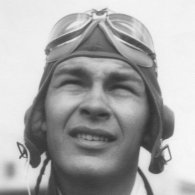 During WWII Captain Richard E. Evans was an American B-17 ‘Flying Fortress’ pilot. He flew fifty-five combat missions and was chosen to fly Field Marshal Bernard L. Montgomery to wherever he needed to be throughout North Africa and Italy. Evans and ‘Monty’ travelled together during a particularly dangerous phase of the war. The Allied forces were just beginning to turn back the brutal Axis armies that had invaded North Africa and were trying to close in on Egypt in an effort to gain control of the strategically vital Suez Canal. Over the deserts of Tunisia, Libya and Egypt, a rocky but honest and respectful friendship formed between the young American pilot and Field Marshal Montgomery, later to become 1st Viscount of Alamein.

