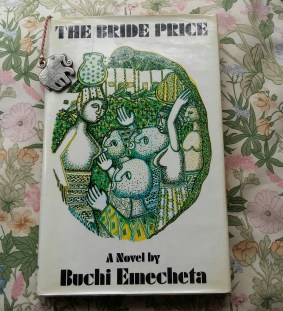
 About the Book
Aku-nna, the Ibo heroine, is thirteen when her father dies, and the city life she has always known ends abruptly. She has to return with her young brother and mother to their home village where, according to tribal custom, they are “inherited” by her father’s brother. For the year or two that remain before she will be married, Aku-nna is grudgingly allowed to continue her schooling, but only because her ambitious uncle realises that an educated girl will fetch a higher bride price – the money a man’s family must pay to the family of his prospective wife.
By the time Aku-nna is fifteen, she has fallen in love – but in circumstances that threaten deep-rooted social, sexual and religious taboos of the community. Before long, alarming things begin to happen, and Aku-nna finds that she is expected to submit to humiliating physical and mental assaults.
Escape might be the answer, but how she can escape her fear of the fate that, even today, is said to await every girl whose bride price is not paid?
Format: Hardcover (168 pages) Publisher: Allison & Busby
Publication date: 1st January 1976 Genre: Modern Classics
Find The Bride Price on Goodreads
Purchase link
Amazon UK
Link provided for convenience only, not as part of an affiliate programme
My Review
 The Bride Price was the book I chose to read for the 1976 Club hosted by Simon at Stuck in a Book and Karen at Kaggsy’s Bookish Ramblings. You can check out the reviews of all the other book bloggers taking part – and post a link to your own review – here.
I’ll admit I hadn’t heard of Buchi Emecheta before searching for books published in 1976 but I’ve now discovered a writer whose back catalogue I’m interested to explore further. The Bride Price is set in Nigeria just before it gained independence in 1960. The story of Aku-nna highlights both the inferior position of woman at that time and the conflict between traditional African values and the influence of modern Europe.
When Aku-nna’s father dies, she and her mother and brother are ‘inherited’ by her father’s brother, since it is unthinkable for a woman to be the head of a family. ‘When you have lost your father, you have lost your parents. Your mother is only a woman, and women are supposed to be boneless. A fatherless family is a family without a head, a family without shelter, a family without parents, in fact a non-existing family. Such traditions do not change very much.’ The book describes in vivid detail the traditional mourning rites and ritual demonstrations of grief that follow a death.
It is difficult for most of us today to imagine a society in which women were regarded as little more than assets to be sold or purchased, and where ‘evening visits’ by young men that might involve touching young girls of the household in an intimate way were condoned. ‘In Ibuza, every young man was entitled to his fun. The blame usually went to the girls.‘ Or that young girls could expect to be married as young as fifteen or as soon as they began menstruating, often leading to death in childbirth.
When her uncle, whom she is now expected to regard as her father, learns of Aku-nna’s relationship with Chike, a teacher at her school, he intervenes in the most extreme way to try to prevent it. Not only does he wish to extract the maximum bride price because of Aku-nna’s educational achievements but he is determined she should not marry a man who is descended from slaves. Sadly, her mother, now her uncle’s fourth wife, does nothing to protect Aku-nna, despite the fact Chike has been supporting them financially.
The intensity of Aku-nna’s and Chike’s love for each other forces Aku-nna to choose between following her heart or adhering to the traditions of her people, including the belief that a woman whose bride price is unpaid will not only bring shame upon her family but death. The events that follow Aku-nna’s decision include periods of joy but they prove to be shortlived resulting in intensely moving scenes at the end of the book.
In three words: Poignant, thought-provoking, immersive
Try something similar: Wake Me When I’m Gone by Odafe Atogun
Follow this blog via Bloglovin
 About the Author
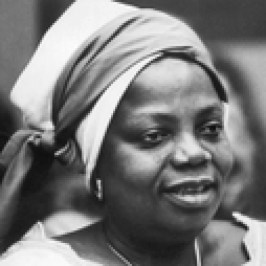
Nigerian writer Buchi Emecheta was born to Ibo parents in Lagos on 21 July 1944. She moved to Britain in 1960, where she worked as a librarian and became a student at London University in 1970, reading Sociology. She worked as a community worker in Camden, North London, between 1976 and 1978. Her first novel, the semi-autobiographical In the Ditch, was published in 1972. It first appeared in a series of articles published in the New Statesman magazine, and, together with its sequel, Second Class Citizen (1974), provides a fictionalised portrait of a poor young Nigerian woman struggling to bring up her children in London. She began to write about the role of women in Nigerian society in The Bride Price (1976), The Slave Girl (1977), winner of the New Statesman Jock Campbell Award, and The Joys of Motherhood (1979), an account of women’s experiences bringing up children in the face of changing values in traditional Ibo society.
Her other novels include Destination Biafra (1982), set during the civil war in Nigeria; The Rape of Shavi (1983), an allegorical account of European colonisation in Africa; Gwendolen (1989), the story of a young West Indian girl living in London; and Kehinde (1994), about a middle-aged Nigerian wife and mother who returns to Nigeria after living in London for many years. Her final work of fiction, The New Tribe, was published in 2000.
Buchi Emecheta was also the author of several novels for children, including Nowhere to Play (1980) and The Moonlight Bride (1980). She published a volume of autobiography, Head Above Water, in 1986. Her television play, A Kind of Marriage, was first screened by the BBC in 1976. In 1983 she was selected as one of twenty ‘Best of Young British Writers’ by the Book Marketing Council. She lectured in the United States throughout 1979 as Visiting Professor at a number of universities and returned to Nigeria in 1980 as Senior Research Fellow and Visiting Professor of English at the University of Calabar.
She ran the Ogwugwu Afor Publishing Company with her son and was a member of the Home Secretary’s Advisory Council on Race. She was a member of the Arts Council from 1982 to 1983, and was a regular contributor to the New Statesman, the Times Literary Supplement and The Guardian. Buchi Emecheta died in 2017. (Bio/photo credit: British Library)

 About the Book
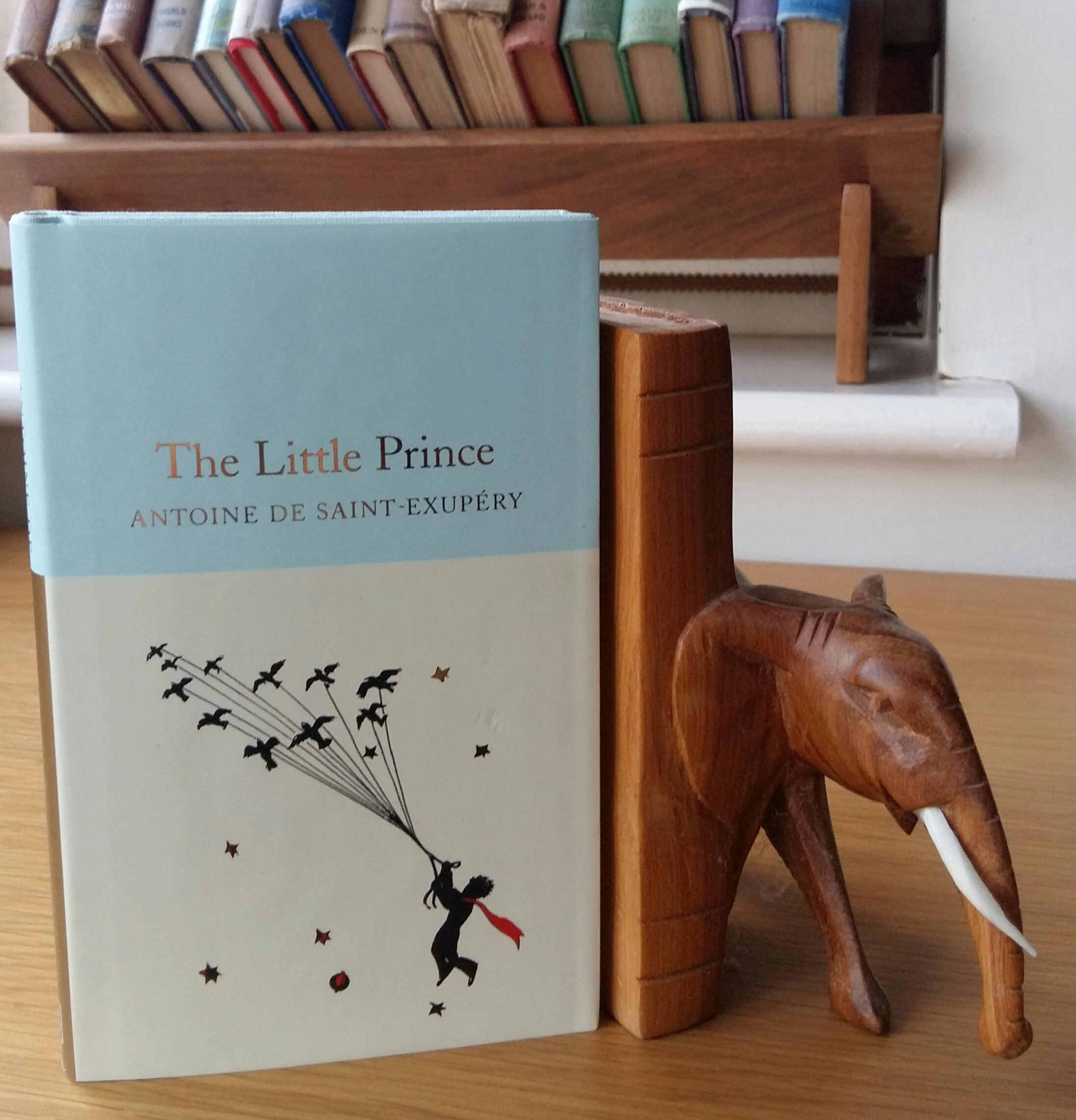 I may be one of the few people who had not read Antoine de Saint-Exupéry’s The Little Prince before reading this book but I knew it is a much-loved classic. Finding out more about the life of Antoine de Saint-Exupéry was what initially drew me to The Prince of the Skies but, once I started reading it, I knew I had to read The Little Prince so treated myself to a lovely Macmillan Collections Library edition. And how glad I am that I did because I was able to spot how cleverly Antonio Iturbe has incorporated elements of The Little Prince into The Prince of the Skies. For example, a scene in which Antoine encounters a lamplighter on the streets of Paris, or when Antoine tames a gazelle in a similar way as the little prince tames a fox. Once I started reading more about Antoine de Saint-Exupéry’s extraordinary life I was also able to appreciate how skilfully Antonio Iturbe has combined the known facts about Antoine de Saint-Exupéry’s life with his own imagining of Antoine’s thoughts and emotions.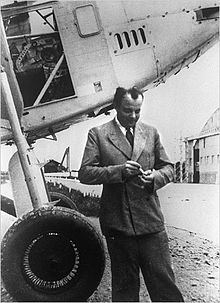
 About the Author