
On What Cathy Read Next last week
Blog posts
Monday – I shared my write-up of former politician Ed Balls’s appearance at Henley Literary Festival 2021 talking about his book, Appetite.
Tuesday – I published my review of A Woman Made Of Snow by Elisabeth Gifford as part of the blog tour.
Wednesday – WWW Wednesday is the opportunity to share what I’ve just read, what I’m currently reading and what I plan to read next… and to have a good nose around what others are reading. I also shared my review of An Extra Pair of Hands by Kate Mosse as part of the blog tour celebrating Cheltenham Literature Festival.
Thursday – I published my review of Cold As Hell by Lilja Sigurðardóttir as part of the blog tour.
Friday – Another day, another blog tour this time for The Prince of the Skies by Antonio Iturbe.
Saturday – I published my review of the book I read for the #1976Club, The Bride Price by Buchi Emecheta .
As always, thanks to everyone who has liked, commented on or shared my blog posts on social media.


New arrivals
Repeat after me: I must not go to the Oxfam bookshop to drop off books and come out with nearly as many as I donated…
 The Custard Corpses by M.J. Porter (eARC)
Birmingham, England, UK, 1943. While the whine of the air raid sirens might no longer be rousing him from bed every night, a two-decade-old unsolved murder case will ensure that Chief Inspector Mason of Erdington Police Station is about to suffer more sleepless nights.
Young Robert McFarlane’s body was found outside the local church hall on 30th September 1923. But, his cause of death was drowning, and he’d been missing for three days before his body was found. No one was ever arrested for the crime. No answers could ever be given to the grieving family. The unsolved case has haunted Mason ever since.
But, the chance discovery of another victim, with worrying parallels, sets Mason, and his constable, O’Rourke, on a journey that will take them back over twenty-five years, the chance to finally solve the case, while all around them is uncertainty, impossible to ignore.
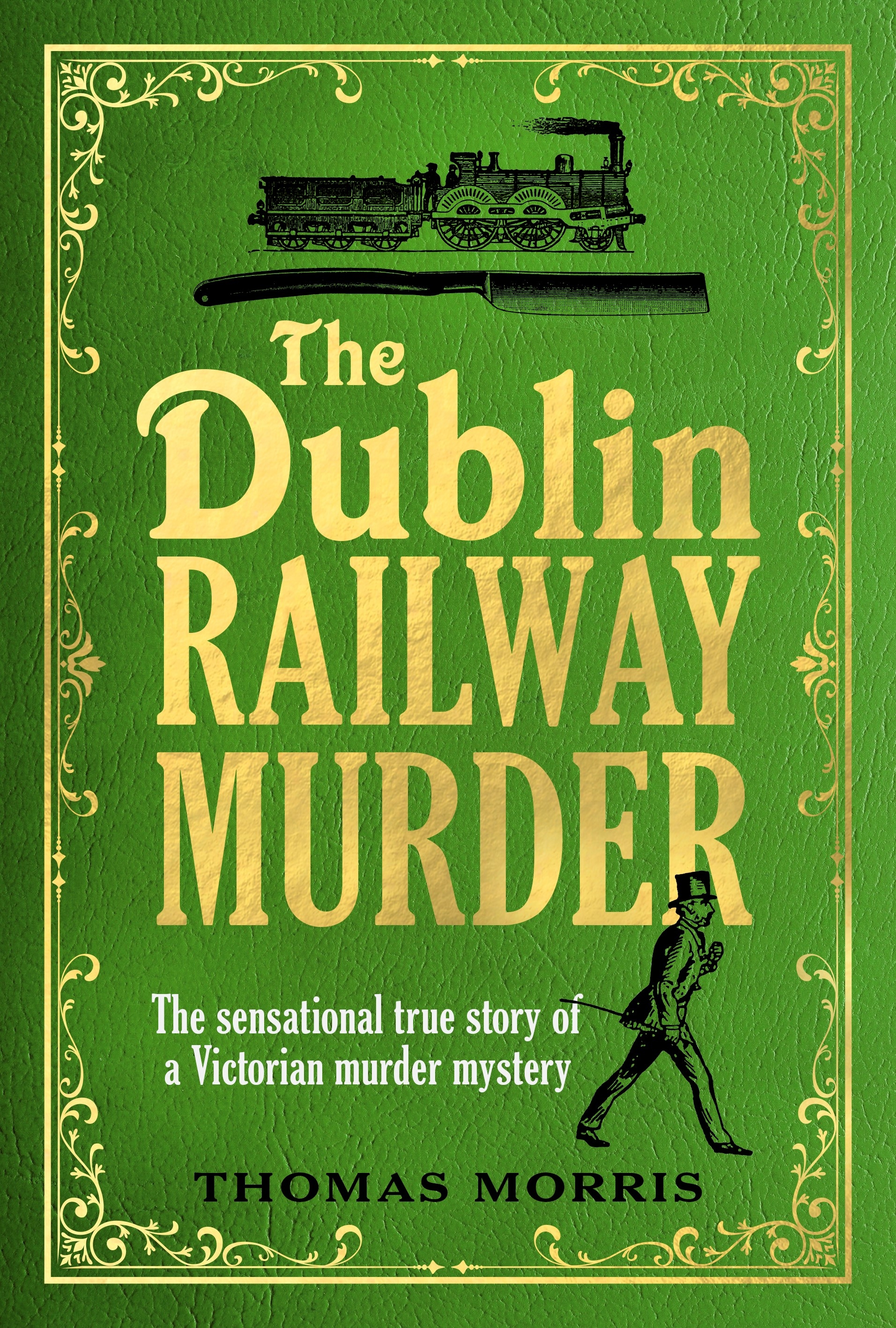 The Dublin Railway Murder by Thomas Morris (eARC, Vintage)
An astonishing real-life locked-room murder mystery set in Victorian Dublin, packed with gripping, perplexing twists. This meticulously researched true-crime tale reads like a quintessential Victorian thriller and is perfect for fans of The Suspicions of Mr Whicher.
One morning in November 1856 George Little, the chief cashier of the Broadstone railway terminus in Dublin, was found dead, lying in a pool of blood beneath his desk. His head had been almost severed; a knife lay nearby, but strangely the office door was locked, apparently from the inside. This was a deed of almost unheard-of brutality for the peaceful Irish capital: while violent crime was commonplace in Victorian London, the courts of Dublin had not convicted a single murderer in more than thirty years.
From the first day of the police investigation it was apparent that this was no ordinary case. Detectives struggled to understand how the killer could have entered and then escaped from a locked room, and why thousands of pounds in gold and silver had been left untouched at the scene of the crime. Three of Scotland Yard’s most celebrated sleuths were summoned to assist the enquiry, but all returned to London baffled. It was left to Superintendent Augustus Guy, the head of Ireland’s first detective force, to unravel the mystery.
Five suspects were arrested and released, with every step of the salacious case followed by the press, clamouring for answers. Under intense public scrutiny, Superintendent Guy found himself blocked at almost every turn. But then a local woman came forward, claiming to know the murderer…
 The Quiet People by Paul Cleave (eARC, Orenda Books)
Cameron and Lisa Murdoch are successful crime-writers. They have been on the promotional circuit, joking that no-one knows how to get away with crime like they do. After all, they write about it for a living.
So when their 7 year old son Zach goes missing, naturally the police and the public wonder if they have finally decided to prove what they have been saying all this time – are they trying to show how they can commit the perfect crime?
 Sherlock Holmes & the Singular Affair by M.K. Wiseman (eARC)
Before Baker Street, there was Montague.
Before partnership with a former army doctor recently returned from Afghanistan, Sherlock Holmes had but the quiet company of his own great intellect. Solitary he might be but, living as he did for the thrill of the chase, it was enough. For a little while, at the least, it was enough.
That is, until a client arrives at his door with a desperate plea and an invitation into a world of societal scandal and stage door dandies. Thrust deep in an all-consuming role and charged with the safe-keeping of another, Holmes must own to his limits or risk danger to others besides himself in this the case of the aluminium crutch.
 Tangerine by Christine Mangan (Paperback)
The last person Alice Shipley expected to see since arriving in Tangier with her new husband was Lucy Mason. After the horrific accident at Bennington, the two friends – once inseparable roommates – haven’t spoken in over a year. But Lucy is standing there, trying to make things right. Perhaps Alice should be happy. She has not adjusted to life in Morocco, too afraid to venture out into the bustling medinas and oppressive heat. Lucy, always fearless and independent, helps Alice emerge from her flat and explore the country.
But soon a familiar feeling starts to overtake Alice – she feels controlled and stifled by Lucy at every turn. Then Alice’s husband, John, goes missing, and Alice starts to question everything around her: her relationship with her enigmatic friend, her decision to ever come to Tangier, and her very own state of mind.
 The Secret Scripture by Sebastian Barry (Paperback)
Nearing her one-hundredth birthday, Roseanne McNulty faces an uncertain future, as the Roscommon Regional Mental hospital where she’s spent the best part of her adult life prepares for closure. Over the weeks leading up to this upheaval, she talks often with her psychiatrist Dr Grene, and their relationship intensifies and complicates.
Told through their respective journals, the story that emerges is at once shocking and deeply beautiful. Refracted through the haze of memory and retelling, Roseanne’s story becomes an alternative, secret history of Ireland’s changing character and the story of a life blighted by terrible mistreatment and ignorance, and yet marked still by love and passion and hope.
 Silverview by John le Carré (Hardcover)
Julian Lawndsley has renounced his high-flying job in the City for a simpler life running a bookshop in a small English seaside town. But only a couple of months into his new career, Julian’s evening is disrupted by a visitor. Edward, a Polish émigré living in Silverview, the big house on the edge of town, seems to know a lot about Julian’s family and is rather too interested in the inner workings of his modest new enterprise.
When a letter turns up at the door of a spy chief in London warning him of a dangerous leak, the investigations lead him to this quiet town by the sea . . .
Silverview is the mesmerising story of an encounter between innocence and experience and between public duty and private morals. In his inimitable voice John le Carré, the greatest chronicler of our age, seeks to answer the question of what we truly owe to the people we love.
On What Cathy Read Next this week
Currently reading


Planned posts
- Book Review: The Mercies by Kiran Milgrave Harwood
- Book Review: The Writer’s Cats by Muriel Barbery
- Book Review: Oh William! by Elizabeth Strout
- Book Review: Black Drop by Leonora Nattrass

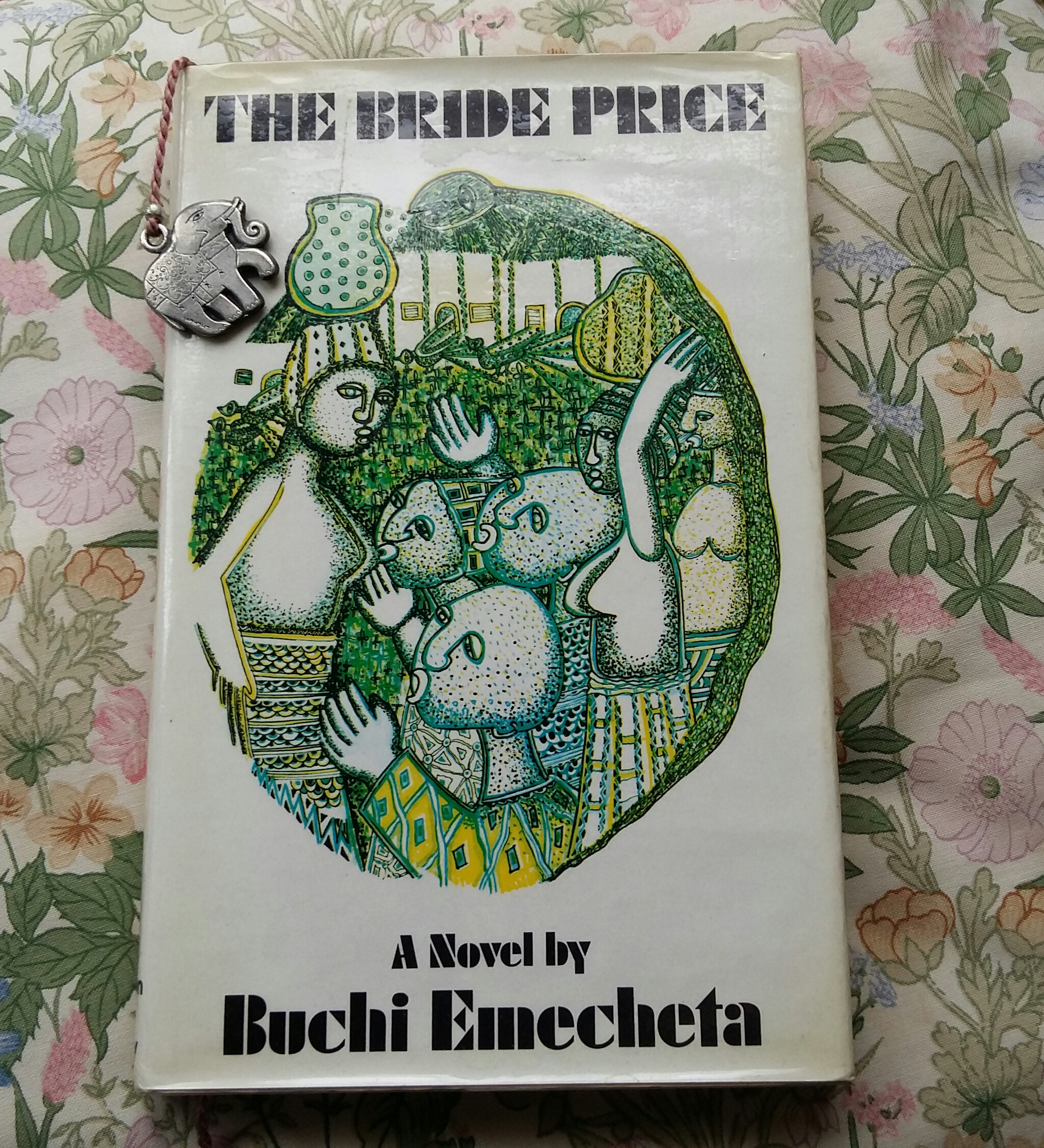 About the Book
 The Bride Price was the book I chose to read for the 1976 Club hosted by Simon at
  About the Author

