

Reading is entertainment but it can also be education – new words, myth that turns out to be reality and vice versa. Here are just a few of the things I learned from the books I read this week. Click on the title of the book to read my review.
In Forsaking All Other by Catherine Meyrick, the heroine of the book, Bess Stoughton, finds herself in conflict with her role as dutiful daughter when her father insists she marry a man she despises but who will bring financial benefit to her family. Widowed, she has no money of her own because the family of Myles Stoughton, the man she married, have refused to pay something called a ‘jointure’. Bess protests to her father, “An unmarried woman brings a dowry to her marriage, a widow her jointure. The Stoughtons have cheated us. They took the dowry you offered but refused to pay the jointure that is my right now Myles is dead.” I wasn’t familiar with the term jointure but have since learned that it refers to a form of marriage settlement in which land or money was settled on a couple often ‘in survivorship’, meaning it should be held by the survivor if widowed.
Source: Tudor Times blog
In the same book, I came across references to something I’ve previously wondered about, namely ‘small beer’. Curiously it seemed to be often drunk at breakfast. So, my second fascinating fact is that ‘small beer’ was the name given to ale or beer produced from the third mash (the fermented mixture of water and barley). The strongest ale was produced from the first mash and an average strength brew from the second mash. Being the product of the third mash, small ale or beer was weak and therefore appropriate for being imbibed at breakfast or even by children. It was also a good source of vitamin B.
Source: Tudor Times blog
One of the things I enjoyed about Summer of Love by Caro Fraser, set mainly in the London of the late 1950s and 1960s, was the walk-on parts for now famous figures from art, fashion and music. In one scene, set in 1962, Avril, one of the main characters in the book, is taken to a basement club in Soho. There she and her companion, Philip, see on stage ‘a young man in a corduroy jacket backed by three guitarists and a drummer’. When the song ends, Avril is asked by Philip, “Do you like it?” and she replies diplomatically, “They’re very dynamic”. She asks what the group is called. He replies, “I’m not sure. But the singer chappie is Mick Jagger. He sometimes sings with another blues band that plays here”. This prompted me to find out more about The Rolling Stones’ first appearance on the music scene. It turns out it was on 12th July 1962 at the Marquee Club in Oxford Street. They were standing in for Alex Korner’s band who had been offered a prestigious spot on BBC Radio’s Jazz Club.
Source: udiscovermusic blog
Sugar Money by Jane Harris is set partly in Martinique and partly in Grenada in the 1760’s. It has some great descriptions of the landscape, wildlife, culture and people of Grenada. What particularly caught my eye was mention of the sound of tree frogs at night. In fact, I’ve learnt that Grenada has two species of tree frog: the delightfully named Johnstone’s whistling frog and the Highland piping frog. They are both nocturnal and create a ‘chirping’ sound throughout the night.
Source: Grenada Cultural Foundation
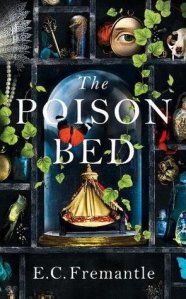
In The Poison Bed by E. C. Fremantle, part of the struggle for power and influence by the various factions in the court of James I is over the appointment of an individual to the position of Master of the Horse. To a modern day reader this doesn’t sound like a particularly prestigious position but in the Tudor and Stuart period it was an important role in the Sovereign’s household. The Master of the Horse was the third dignitary of the court, it was an office of cabinet rank and the holder would be a peer and a privy councillor. In the UK today, the role is primarily ceremonial and only relevant on state occasions when the Sovereign is mounted.
Source: Wikipedia
What did you learn from your reading this week?


 About the Book
 About the Author


