Buchan of the Month/Book Review: Memory Hold-the-Door by John Buchan

Buchan of the Month

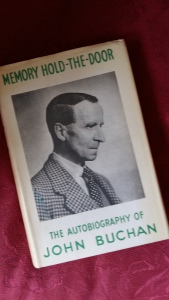
MemoryHoldTheDoorAbout the Book

John Buchan, 1st Baron Tweedsmuir (1875-1940) completed his autobiography not long before his death. A highly accomplished man, his was a life of note. Although now known by many chiefly as an author, he was also an historian, Unionist politician and Governor General of Canada. Although he stated that it was not strictly an autobiography, Memory Hold-the-Door provides a reflective, personal account of his childhood in Scotland, his literary work from his time at Oxford University to the famous Hannay and Leithen stories and his extensive public service in South Africa, Scotland, France in the Great War, and Canada. Known in the United States as Pilgrim’s Way, Memory Hold-the-Door was reportedly one of the favourite books of John F. Kennedy.

Format: Hardcover         Publisher: Hodder & Stoughton
Published: 1964 [1940]  Genre: Nonfiction, Memoir

Purchase Links*
Amazon.co.uk ǀ Amazon.com
*links provided for convenience, not as part of any affiliate programme

Find Memory Hold-the-Door on Goodreads


My Review

Memory Hold-the-Door is the penultimate book in my Buchan of the Month reading project for 2018.  You can find out more about the project plus my reading list for 2018 here and read my introduction to the book here.   Memory Hold-the-Door is also one of the books I read for Nonfiction November.

On 5th February 1940, Buchan wrote to his sister, Anna, ‘I have finished my novel [Sick Heart River] and my autobiography’. The following day, Buchan suffered the cerebral thrombosis that ultimately proved fatal and he died on 12th February.  Some time before Buchan had told a correspondent that Memory Hold-the-Door was ‘not an ordinary autobiography or any attempt to tell the unimportant story of my life; but rather an attempt to pick out certain high lights and expound the impressions made upon me at different stages’.

Buchan made a deliberate choice not to write about anyone still alive, including family members, so there are only a few passing mentions of his wife and children in Memory Hold-the-Door.  There is, however, this lovely sentiment: ‘I have been happy in many things, but all my other good fortune has been as dust  in the balance compared with the blessing of an incomparable wife.’

There are generous and astute pen pictures of contemporary figures of note with whom Buchan came into contact during a life and career that encompassed the law, colonial administration, publishing, journalism, work in military intelligence, service as an MP and as Governor-General of Canada, as well as the writing for which he is now best known.  Such figures include Lord Grey, Arthur Balfour, Lord Haig and King George V.

Of the latter, Buchan writes: ‘He did me the honour to be amused by my romances [by which Buchan means his adventure stories and historical novels], and used to make acute criticisms on questions of fact.  Of one, a poaching story of the Highlands [which I assume to be John Macnab], he gave me a penetrating analysis, but he approved of it sufficiently to present many copies of it to his friends.’

I particularly enjoyed Buchan’s portrait of his friendship with T. E. Lawrence which to me appears insightful despite Buchan’s own remark that ‘there is no brush fine enough to catch the subtleties of his mind, no aerial viewpoint high enough to being into one picture the manifold of his character’.   Buchan recalls, ‘He would turn up without warning at Elsfield [Buchan’s Oxfordshire home] at any time of the day or night on his motor-cycle Boanerges, and depart as swiftly and mysteriously as he came’.  Buchan remembers Lawrence’s ‘delightful impishness’ but also his depression following what he considered his failure on behalf of the Arabs.  Buchan writes: ‘In 1920 his whole being was in grave disequilibrium.  You cannot in any case be nine time wounded, four times in an air crash, have many bouts of fever and dysentery, and finally at the age of twenty-nine take Damascus at the head of an Arab army, without living pretty near the edge of your strength’.  Quite.

Most touching are the portraits of friends, many of whom sadly died in the First World War (as did one of Buchan’s brothers, Alastair) .  Some of these portraits also appear in Buchan’s book These For Remembrance, originally privately printed.

Elsewhere in Memory Hold-the-Door he writes about his student days (including some high jinks) at Oxford University, his admiration for America and its people, his love of fishing and mountaineering, and his experience of the absurdities of the House of Commons (which I suspect may be largely unchanged).  ‘There are seats for only about three-fourths of the members, and these seats are uncomfortable; the ventilation leaves the head hot and the feet cold; half the time is spent dragging wearily in and out of lobbies, voting on matters about which few members know anything; advertising mountebanks can waste a deal of time; debates can be as dull as a social science congress in the provinces…’  However, for balance, he does go on to say that ‘speeches are shorter and of a far higher quality than in any other legislative assembly’.

The book is written in Buchan’s customary effortless prose style and while some of the people he writes about may no longer be familiar to or of interest to the modern reader, it does give a fascinating insight into an admittedly elite stratum of society of that time and Buchan’s personal philosophy and beliefs or his ‘creed’ as he refers to it.  About his own writing, he describes himself as a ‘copious romancer’ and ‘a natural story-teller, the kind of man who for the sake of his yarns would in prehistoric days have been given a seat by the fire and a special chunk of mammoth’.

One of Buchan’s last acts as Governor-General of Canada was to sign that country’s entry into the Second World War.  With remarkable prescience, he writes in the final chapters of Memory Hold-the-Door of his fears for the future.  ‘We have lived by toleration, rational compromise and freely expressed opinion, and we have lived very well.  But we had come to take these blessings for granted, like the air we breathed. […] Today we have seen those principles challenged… We have suddenly discovered that what we took for the enduring presuppositions of our life are in danger of being destroyed.’   Indeed, Buchan had remarked earlier in the book that ‘the study of [history] is the best guarantee against repeating it’.

Next month’s Buchan of the Month is Sick Heart River, Buchan’s last novel which was published posthumously.  Along with Mr. Standfast, it is my favourite of his novels.  Look out for my introduction to the book next week and my review towards the end of the month.

Follow my blog with Bloglovin

In three words: Reflective, friendship, personal

Try something similar…Unforgettable, Unforgotten by Anna Buchan
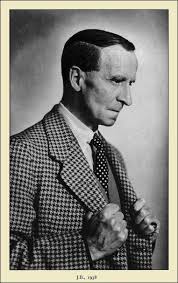

John BuchanAbout the Author

John Buchan (1875 – 1940) was an author, poet, lawyer, publisher, journalist, war correspondent, Member of Parliament, University Chancellor, keen angler and family man.  He was ennobled and, as Lord Tweedsmuir, became Governor-General of Canada.  In this role, he signed Canada’s entry into the Second World War.   Nowadays he is probably best known – maybe only known – as the author of The Thirty-Nine Steps.  However, in his lifetime he published over 100 books: fiction, poetry, short stories, biographies, memoirs and history.

You can find out more about John Buchan, his life and literary output by visiting The John Buchan Society website.

WWW Wednesdays – 28th November ‘18

WWWWednesdays

Hosted by Taking on a World of Words, this meme is all about the three Ws:

  • What are you currently reading?
  • What did you recently finish reading?
  • What do you think you’ll read next?

Why not join in too?  Leave a comment with your link at Taking on a World of Words and then go blog hopping!


Currently reading

So Much Life Left OverSo Much Life Left Over by Louis de Bernières (hardcover)

A sweeping, heartbreaking novel following Daniel in his troubled marriage with Rosie as they navigate the unsettled time between the World Wars.

Rosie and Daniel have moved to Ceylon with their little daughter to start a new life at the dawn of the 1920s, attempting to put the trauma of the First World War behind them, and to rekindle a marriage that gets colder every day. However, even in the lush plantation hills it is hard for them to escape the ties of home and the yearning for fulfilment that threatens their marriage.

Back in England, Rosie’s three sisters are dealing with different challenges in their searches for family, purpose and happiness. These are precarious times, and they find themselves using unconventional means to achieve their desires. Around them the world is changing, and when Daniel finds himself in Germany he witnesses events taking a dark and forbidding turn.

By turns humorous and tragic, gripping and touching, So Much Life Left Over follows a cast of unique and captivating characters as they navigate the extraordinary interwar years both in England and abroad.

TBR#7SugarintheBloodSugar in the Blood: A Family’s Story of Slavery and Empire by Andrea Stuart (hardcover)

In the late 1630s, lured by the promise of the New World, Andrea Stuart’s earliest known maternal ancestor, George Ashby, set sail from England to settle in Barbados. He fell into the life of a sugar plantation owner by mere chance, but by the time he harvested his first crop, a revolution was fully under way: the farming of sugar cane, and the swiftly increasing demands for sugar worldwide, would not only lift George Ashby from abject poverty and shape the lives of his descendants, but it would also bind together ambitious white entrepreneurs and enslaved black workers in a strangling embrace. Stuart uses her own family story—from the seventeenth century through the present—as the pivot for this epic tale of migration, settlement, survival, slavery and the making of the Americas.

As it grew, the sugar trade enriched Europe as never before, financing the Industrial Revolution and fueling the Enlightenment. And, as well, it became the basis of many economies in South America, played an important part in the evolution of the United States as a world power and transformed the Caribbean into an archipelago of riches. But this sweet and hugely profitable trade – “white gold,” as it was known -had profoundly less palatable consequences in its precipitation of the enslavement of Africans to work the fields on the islands and, ultimately, throughout the American continents.

Interspersing the tectonic shifts of colonial history with her family’s experience, Stuart explores the interconnected themes of settlement, sugar and slavery with extraordinary subtlety and sensitivity. In examining how these forces shaped her own family–its genealogy, intimate relationships, circumstances of birth, varying hues of skin–she illuminates how her family, among millions of others like it, in turn transformed the society in which they lived, and how that interchange continues to this day. Shifting between personal and global history, Stuart gives us a deepened understanding of the connections between continents, between black and white, between men and women, between the free and the enslaved. It is a story brought to life with riveting and unparalleled immediacy, a story of fundamental importance to the making of our world.


Recently finished (click on title for review)

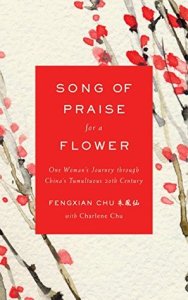
Song of Praise for a FlowerSong of Praise for a Flower: One Woman’s Journey through China’s Tumultuous 20th Century by Fengxian Chu with Charlene Chu (ebook, courtesy of the authors)

For nearly two decades, this manuscript lay hidden in a Chinese bank vault until a long-lost cousin from America inspired 92-year-old author Fengxian Chu to unearth it.

Song of Praise for a Flower traces a century of Chinese history through the experiences of one woman and her family, from the dark years of World War II and China’s civil war to the tragic Great Leap Forward, Cultural Revolution, and beyond. It is a window into a faraway world, a sweeping epic about China’s tumultuous transformation and a harrowing yet ultimately uplifting story of a remarkable woman who survives it all and finally finds peace and tranquillity.

6Degrees_MemoryHoldTheDoorMemory Hold-the-Door by John Buchan (hardcover)

John Buchan, 1st Baron Tweedsmuir (1875-1940) completed his autobiography not long before his death. A highly accomplished man, his was a life of note. Although now known by many chiefly as an author, he was also an historian, Unionist politician and Governor General of Canada.

Although he stated that it was not strictly an autobiography, Memory Hold-the-Door provides a reflective, personal account of his childhood in Scotland, his literary work from his time at Oxford University to the famous Hannay and Leithen stories and his extensive public service in South Africa, Scotland, France in the Great War, and Canada. Of great interest are his accounts of key contemporary figures, including Lord Grey, Lord Haldane, Earl Balfour, Lord Haig, T.E. Lawrence and King George V. (Review to follow)

A Light of Her OwnA Light of Her Own by Carrie Callaghan (ebook, courtesy of Historical Fiction Virtual Book Tours)

In Holland 1633, a woman’s ambition has no place.

Judith is a painter, dodging the law and whispers of murder to try to become the first woman admitted to the Haarlem painters guild. Maria is a Catholic in a country where the faith is banned, hoping to absolve her sins by recovering a lost saint’s relic.

Both women’s destinies will be shaped by their ambitions, running counter to the city’s most powerful men, whose own plans spell disaster. A vivid portrait of a remarkable artist, A Light of Her Own is a richly-woven story of grit against the backdrop of Rembrandt and an uncompromising religion.

States of PassionStates of Passion by Nihad Sirees (paperback, Reading in Heels subscription box)

The world is so strange. The strangest things are the stories you overhear.

When a hapless bureaucrat finds himself stranded in the countryside during a raging storm, he seeks refuge in a grand yet isolated mansion, inhabited by only an elderly gentleman and his unwelcoming servant.

The tale of family secrets he encounters while sheltering there begins with a faded photograph in yellowed newspaper, of a beautiful woman stepping off a train at Aleppo station many years ago. It transports him to Syria’s golden age, to the heart of the mysterious, unconventional banat al-ishreh – the infamous women who live, dance and play music together – and into a tangled web of forbidden love. (Review to follow)

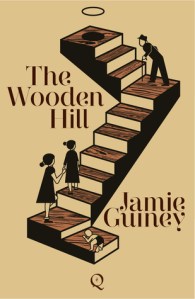
The Wooden HillThe Wooden Hill by Jamie Guiney (eARC, courtesy of Epoque Press)

As we climb the wooden hill to bed each night we trace our life’s journey from birth, then each step toward death, the final sleep.

This collection of short stories explores what it is to be human at every stage of life, from the imminence of a new birth in ‘We Knew You Before You Were Born’, through to adolescence and the camaraderie of youthful friendships as portrayed in ‘Sam Watson & The Penny World Cup’.

Ultimately, all of our lives stride towards old age and the certainty of death, as poignantly evoked in the title story, ‘The Wooden Hill’. (Review to follow)

Pre-order The Wooden Hill from Waterstones UK


What Cathy (will) Read Next

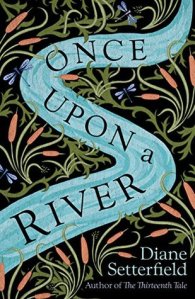
Once Upon A RiverOnce Upon A River by Diane Setterfield (proof copy, courtesy of Doubleday and Random Things Tours)

A dark midwinter’s night in an ancient inn on the Thames. The regulars are entertaining themselves by telling stories when the door bursts open on an injured stranger. In his arms is the drowned corpse of a little child.

Hours later the dead girl stirs, takes a breath and returns to life.

Is it a miracle? Is it magic? Or can it be explained by science?

Replete with folklore, suspense and romance, as well as with the urgent scientific curiosity of the Darwinian age, Once Upon a River is as richly atmospheric as Setterfield’s bestseller The Thirteenth Tale.

The Cold North SeaThe Cold North Sea (Ingo Finch Mystery #2) by Jeff Dawson (eARC, courtesy of Canelo and NetGalley)

A game of spies, a brutal murder, the fate of an Empire…

The North Sea, October 1904 – When Russian warships bombard the Hull trawler fleet, killing innocent fishermen, public outrage pushes Britain and Russia to the brink of war, the sparks from which could inflame the entire Continent.

Doctor Ingo Finch, once of the Royal Army Medical Corps, is long done with military adventuring. But when a stranger seeks him out, citing a murderous conspiracy behind the infamous “Dogger Bank Incident”, Finch is drawn back into the dark world of espionage.

With Whitehall, St Petersburg and rival Bolsheviks vying to manipulate the political crisis, the future of Britain, and Europe, is at stake…