
About the Book
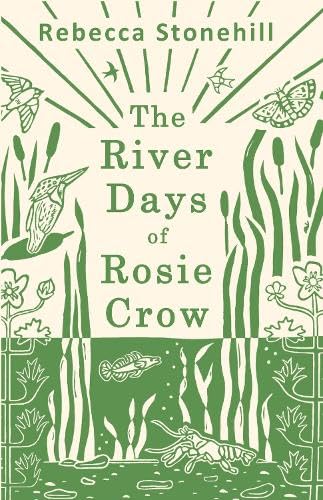
Two women’s lives interweave in the wilds of rural Norfolk, separated by almost two hundred years but bound by their inability to conform to society’s expectations and love of storytelling.
Rosie Crow is spirited, illiterate and deeply connected to the land. She believes the river communicates with her, but rural poverty and superstition set her up as scapegoat for her village’s discontent. What Rosie cannot know is the impact her life will have on a grief-stricken woman many years later…
Format: Paperback (256 pages) Publisher: Stairwell Books
Publication date: 30th March 2026 Genre: Historical Fiction
Find The River Days of Rosie Crow on Goodreads
Purchase The River Days of Rosie Crow from Stairwell Books
My Review
I really enjoyed the author’s previous novel The Secret Life of Alfred Nightingale (read my review here) so I was delighted when Rebecca got in touch to let me know about her latest novel.
I often struggle with dual timeline historical novels finding I much prefer the one set in the past to that set in the present day; the latter even sometimes feeling like an add-on. No such fears here because I thought the ratio between the two was perfectly judged with Rosie’s story, set in the 1820s, taking up the majority of the book and the connections between the two storylines feeling meaningful and unforced.
Rosie and her father live in poverty, her father scraping a living from weaving cloth on a hand loom. It’s backbreaking work and a dying trade due to increasing mechanisation. Rosie can scarcely remember her mother who died when she was young. Instead it was Old Clara, a woman skilled in herbal remedies, who brought Rosie up and who understands her unique connection with the natural world, in particular the River Mermaid. It’s where Rosie spends much of her time, listening to the stories the river tells her that in turn inspire her own stories. But this, along with her stature and striking features, mark her out as different. And Old Clara knows what it’s like to be viewed with suspicion because you don’t conform. As she explains to Rosie, ‘Folks are scared of different. People that en’t the same as them.’ Rural life is becoming harder as a result of the enclosure of common land by farmers. No wonder that people look to find scapegoats for their woes giving rise to a shocking event that will mark Rosie for the rest of her life.
Not everyone views Rosie with suspicion or fear. In Caleb, a young blacksmith, Rosie finds a steadfast and loyal friend. He’s someone with whom she can share her stories and who accepts her for who she is. I found their relationship moving but also heartbreaking.
Equally moving is the companionship that develops between Rose and her best friend’s great uncle George, a still sprightly eighty-six-year-old who, we discover, has experienced his own share of personal tragedy. George gently encourages Rose to unpack the trauma of a relationship breakdown that has left her feeling rootless and with a low sense of self-worth.
Stories and storytelling are themes that permeate the book. There’s a wonderful scene in which Rosie is given a glimpse of the power of books to enthrall. It fuels her own passion for reading. And what a revelation it is to discover there is such a thing as an ‘authoress’, legitimising in a way her own compulsion to create and share stories.
The book has many delightful touches such as each chapter heading being the name of a wildflower, reflecting their use in one of Old Clara’s herbal remedies or evoking a memory of a life event. And there are many clever elements to the progression of the two storylines. For example, Rosie’s story moves from rural Norfolk to the hustle and bustle of London whilst Rose’s moves in the exact opposite direction. The companionship of animals becomes important to both women – Rosie with her cat Jup and Rose with George’s dog Max. For Rosie writing stories is a compulsion but it’s only the idea of telling her story that reawakens Rose’s interest in writing. Oh, and there’s a brilliant literary ‘Easter egg’ towards the end of the book.
The River Days of Rosie Crow is an enchanting novel about storytelling and the healing properties of the natural world.
I received a proof copy courtesy of Stairwell Books.
In three words: Engaging, poignant, compelling
About the Author
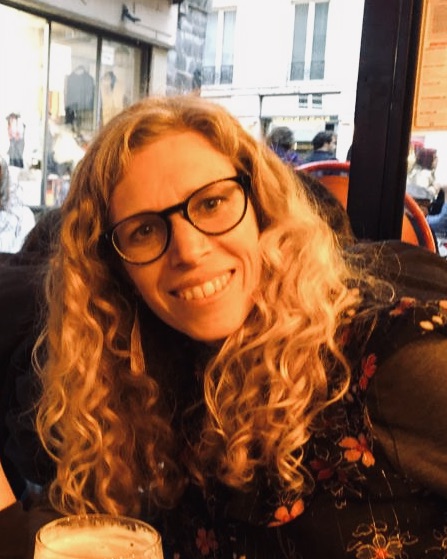
As a little girl, Rebecca avidly subscribed to the Puffin Club magazine. She once decided to enter a competition in which children were asked to write a story about a zany family. She didn’t have to think too hard about it; she penned a thinly veiled fictional tale about her own family and won. The following year she read Harriet the Spy by Louise Fitzhugh and from that moment on, knew she had to be a writer. She hung out of trees, hid beneath beds and in dark, musty cupboards spying on family and friends and scribbling notes about them all.
Fast forward twenty years and that burning desire to be an author was but a distant dream. But then something happened which was to change her life: she had a terrible skiing accident, shattering her left heel bone to smithereens. Finding herself in a wheelchair, she was told she may never walk again and in the face of that terrifying prospect, poured all her energies into that long-forgotten dream. She started to write her first novel and found she couldn’t stop. So she didn’t.
Rebecca is out of her wheelchair and has had three novels published, a non fiction books as well as many short stories, poems and non-fiction articles. Her next book, The River Days of Rosie Crow, will be published by Stairwell Books in March 2026. She lives in Norfolk with her husband and three teenage children where she runs creative writing workshops for kids and young people, reads like a woman possessed, swims in rivers (whatever the season), works in the family allotment, seeks out stunning spots to go walking, struggles in the mornings, plays the piano, cooks up a storm in the kitchen and practises yoga and meditation. She can’t do any balancing poses on her left foot, but reckons that’s a small price to pay for being reunited with her greatest love of writing. (Photo/bio: Author website)
Connect with Rebecca
Website | Facebook | Instagram

 What Cathy Read Next...