
About the Book
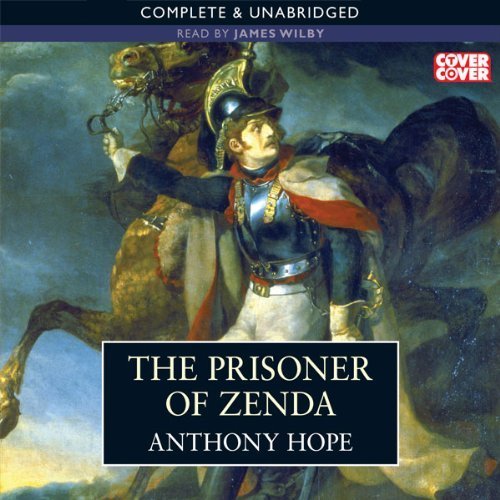
English gentleman Rudolph Rassendyll bears a striking resemblance to Rudolf Elphberg who is about to be crowned King of Ruritania. When the rival to the throne, Black Michael of Strelsau, attempts to seize power by imprisoning Elphberg in the Castle of Zenda, Rassendyll is obliged to impersonate the King to uphold the rightful sovereignty and ensure political stability.
Rassendyll endures a trial of strength in his encounters with the notorious Rupert of Hentzau, and a test of a different sort as he grows to love the Princess Flavia.
Format: Audiobook (5h 31m) Publisher: Audible
Publication date: 24th August 2008 [1894] Genre: Classics
Find The Prisoner of Zenda on Goodreads
My Review
The Prisoner of Zenda was the book chosen for me in the latest Classics Club Spin. First published in 1894, the book has been filmed five times. The Prisoner of Zenda is set in the fictional country of Ruritania, located somewhere in Central Europe. It actually spawned a genre, the ‘Ruritanian romance’, inspiring many similar books.
English gentleman Rudolf Rassendyll, distantly related to the ruling house of Ruritania, and having nothing better to occupy himself with, travels from London to witness Rudolf Elphberg being crowned King of Ruritania. Rassendyll bears an uncanny resemblence to the King, notably his shock of red hair, and when the King is drugged and kidnapped by his brother, the Duke of Strelsau (known by the soubriquet ‘Black Michael’), Rassendyll takes the King’s place. He carries it off with aplomb, no-one noticing the swap, not even the Princess Flavia whom the King has been expected to wed. Black Michael of course knows about the deception but cannot reveal it without exposing himself as the kidnapper of the King.
Despite his best efforts, Rassendyll falls in love with Princess Flavia but there is a rival for her affections – Black Michael. When Michael’s mistress learns of this, she reveals to Rassendyll the location where the King is being kept prisoner – the Castle of Zenda. Rassendyll and his compatriots embark on a mission to free the King from the seemingly impregnable castle. To do this they must overcome ‘The Six’, highly skilled mercenaries employed by Black Michael. One of these is the dashing Rupert of Henzau, the subject of the book’s sequel.
The Prisoner of Zenda is an enjoyably swashbuckling adventure. It’s a story in which the women are beautiful, the villains are dastardly and there are narrow escapes galore. I was reminded of John Buchan’s description of what he referred to as his ‘shockers’, such as The Thirty-Nine Steps, as tales ‘where the incidents defy the probabilities, and march just inside the borders of the possible’.
As it happens Buchan wrote his own homage to The Prisoner of Zenda, his 1935 novel The House of the Four Winds, set in the fictional country of Evallonia. Ursula Buchan, Buchan’s granddaughter and biographer, described it as ‘probably JB’s worst novel’ and as ‘Ruritania without the charm’. I’m afraid I felt much the same when I read it.
I listened to the audiobook version ably narrated by James Wilby.
About the Author
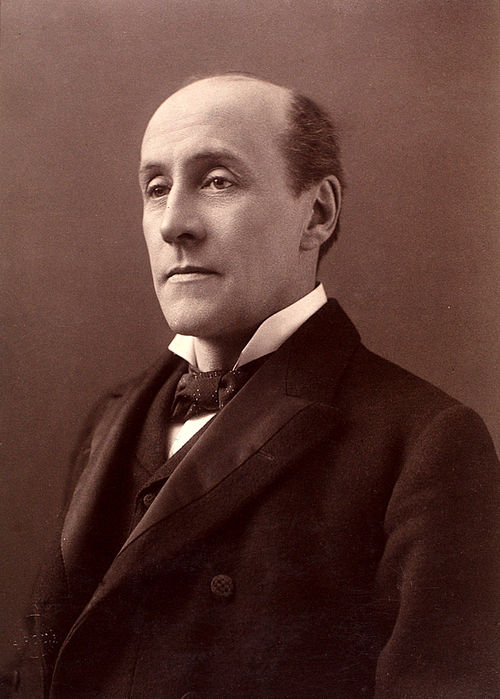
Sir Anthony Hope Hawkins was born in 1863 and was a prolific writer of adventure novels although he is best known for The Prisoner of Zenda (1894) and its sequel Rupert of Henzau (1898).
Hope trained as a lawyer and barrister but eventually turned to writing. His short pieces appeared in periodicals but he was forced to self-publish his first novel. It is said the idea for The Prisoner of Zenda came to him whilst walking in London, completing the first draft in just a month.
Hope wrote and co-wrote many plays and political non-fiction during the First World War, some for the Ministry of Information. He died in 1933.

 What Cathy Read Next...