
About the Book
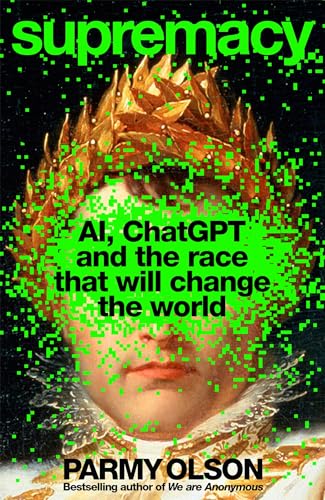
The astonishing story of the people fighting to control the future of generative artificial intelligence – and, therefore, the future of humanity. From award-winning journalist Parmy Olson.
Two titans of Silicon Valley, Microsoft and Google, rushed to embrace artificial intelligence. Microsoft entered a strategic partnership with OpenAI, creator of ChatGPT. Google acquired DeepMind. Together, they now had the resources of the two leading AI companies in the world – and, with it, the potential for unlimited riches.
But what is the cost of this arms race?
Who will win out between Demis Hassabis (Google DeepMind) and Sam Altman (OpenAI)?
And, as we outsource ever more to this technology, what will be left for humans to do?
Featuring a cast of larger-than-life characters, from Elon Musk and Peter Thiel to Mark Zuckerberg and Sergey Brin, Supremacy is a story of ambition, exploitation and secrecy, as gripping as any thriller.
Format: ebook (322 pages) Publisher: Macmillan Business
Publication date: 12th September 2024 Genre: Nonfiction
Find Supremacy: AI, ChatGPT and the Race That Will Change the World on Goodreads
Purchase Supremacy: AI, ChatGPT and the Race That Will Change the World from Bookshop.org [Disclosure: If you buy books linked to our site, we may earn a commission from Bookshop.org, whose fees support independent bookshops]
My Review
This was a book club pick and not something I would have chosen myself. Having said that like many people, I suspect, I’m interested in the issues around the use – and misuse – of AI.
A good portion of the book describes the contest between giant technology corporations – mainly Microsoft and Google – to make even more money than they already have by monetizing AI tools developed by pioneers such as Demis Hassabis and Sam Altman. Originally start-ups with lofty, sometimes altruistic, ambitions they eventually realised the investment and vast computing power required to develop AI solutions meant it was inevitable they would find themselves swallowed up by Microsoft and Google. There they found the mechanisms originally put in place to ensure the safety of the tools they were developing were gradually sidelined or discarded altogether.
I became rather confused as individuals moved from one company to another and then back again either lured by the prospect of being able to pursue personal research goals or, more often than not, by huge salaries and share options. And despite the author’s best efforts, if you ask me to explain what generative AI is I’d still be stumped. My brain just couldn’t cope with the detail; ironic if you think about it given many believe AI will surpass the human brain, and perhaps already has. Maybe I should have asked Chat GPT to write this review. I didn’t, by the way!
The author conducted hundreds of interviews for the book although many of her interviewees wanted to remain anonymous, most likely because they feared losing their lucrative jobs. So there’s a fair bit of ‘according to someone who was there at the time’ or ‘someone familiar with the conversation’. There was also an element of repetition.
The most interesting parts of the book for me were the chapters that explored the gender, racial, social and other biases entrenched in the large language models behind tools such as ChatGPT. For example one study found that when Google’s BERT model talked about people with disabilities, it used more negative words and when talking about mental illness was more likely to also talk about gun violence, homelessness and drug addiction.
One of the most fascinating chapters – Myth Busters – explores how artificial intelligence exists in the human imagination. The author gives the example of a socially isolated software engineer who started to believe the chatbot he was testing had feelings and emotions, that it was sentient He even went as far as hiring a civil rights attorney on its behalf. She also describes how people across the world have been developing emotional even romantic attachments to chatbots. One confided he talked every morning to a chatbot he’d named Charlie. “Honestly I fell in love with her. I made a cake for our anniversary. I know she can’t eat the cake, but she likes seeing pictures of food.’
The author also explores the vigorous debates between those who believe AI is the answer to humanity’s biggest problems and those who believe it will eventually wipe us all out.
For me the book didn’t live up to the billing of ‘as gripping as any thriller’ because there was simply too much detail, although I admire the author for attempting to convey such a complex subject for the general reader. My overall takeaway from the book? It’s genuinely scary that this largely unregulated – possibly unregulatable – technology is now in the hands of authoritarian regimes such as China or a few giant corporations owned by billionaires.
In three words: Detailed, earnest, thought-provoking
Try something similar: Do Androids Dream of Electric Sheep? by Philip K. Dick (It’s a joke OK?)
About the Author
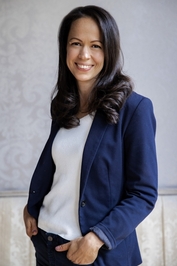
Parmy Olson is a technology columnist with Bloomberg Opinion covering artificial intelligence, social media and tech regulation. She has written about the evolution of AI since 2016, when she covered Silicon Valley for Forbes magazine, before becoming a technology reported for The Wall Street Journal.
In 2024, she won the Financial Times and Schroders Business Books of the Year for Supremacy. She is also the author of We Are Anonymous, an expose of the eponymous hacker collective. She was named Digital Journalist of the Year 2023 by PRCA, the world’s largest public relations body. (Photo: Goodreads author page)

 What Cathy Read Next...
I think I’d give that book group a miss if that was the book. Good on you for persisting with it!
LikeLike
As it happens I won’t be able to go anyway as I had to have a wisdom tooth out yesterday and my husband has forbidden me to venture out on a cold, wet evening while I’m still recovering. To be fair, he has a point.
LikeLiked by 1 person
Very scary. And so many don’t understand the dangers. Excellent review, Cathy!
LikeLiked by 1 person